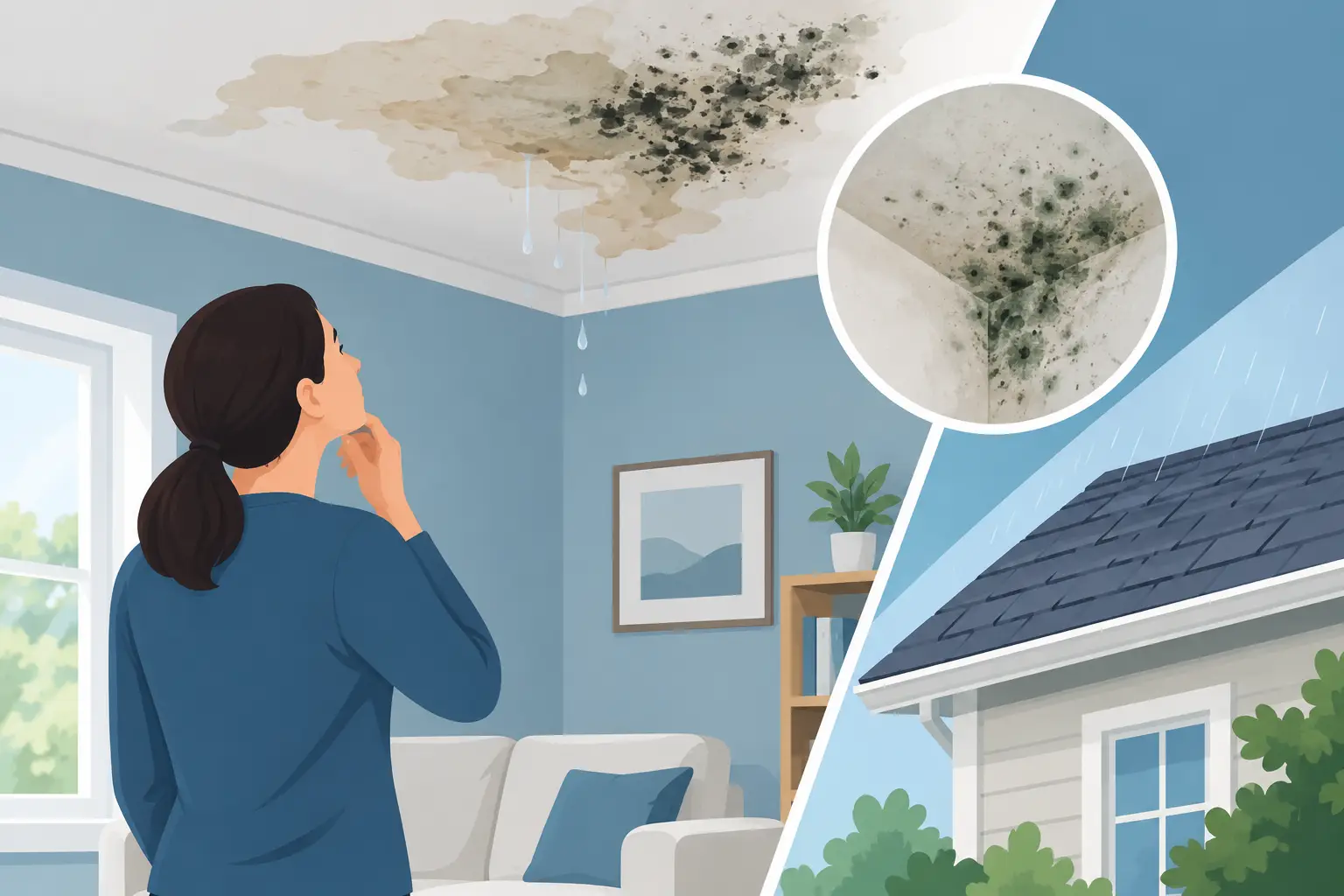
A roof leak does not always announce itself with water dripping through the ceiling. In many New Jersey homes, the first top roof leak mold signs appear quietly in the attic, behind insulation, or around a ceiling fixture after a heavy storm. By the time staining or a musty odor reaches a living area, moisture may have already affected framing, drywall, insulation, and indoor air quality.
Northern and Central New Jersey roofs face repeated rain, snow, freeze-thaw cycles, wind-driven storms, and humid summer conditions. A small flashing failure or damaged shingle can allow enough water inside to support mold growth, especially where materials stay damp for more than 24 to 48 hours. Recognizing the warning signs early protects your home, your property value, and the people who live in it.
Top Roof Leak Mold Signs to Take Seriously
A persistent musty odor near the attic or upper floors
A musty, earthy smell is often one of the earliest clues that moisture is supporting mold growth. Pay attention if the odor is strongest in an attic, upstairs bedroom, closet, or hallway near the roofline. It may become more noticeable after rain, during humid weather, or when your heating and cooling system begins circulating air.
Odor alone does not identify the type or extent of mold. However, it does justify a closer inspection. Mold can be present inside wall cavities, beneath insulation, or on the back side of ceiling drywall where it cannot be seen from the room below.
Yellow, brown, or gray ceiling stains
Water stains are clear evidence that moisture has traveled through building materials. A ceiling stain may look yellow or brown at first, then darken over time. Rings around the stain can indicate repeated wetting and drying, which is common with intermittent roof leaks.
A stain is not necessarily active mold, but it should never be dismissed as merely cosmetic. Drywall paper, joint compound, and ceiling texture can support mold when they remain wet. If a stain expands, feels soft, bubbles, or returns after being painted, the source has likely not been corrected.
Peeling paint, bubbling walls, or warped trim
Moisture from a roof leak can move beyond the obvious point of entry. Paint that blisters near a ceiling, wallpaper that loosens, or crown molding that separates from the wall may signal water intrusion behind finished surfaces. In upper-story rooms, these changes are especially concerning after storms.
The trade-off is that similar symptoms can result from plumbing leaks, high indoor humidity, or poor ventilation. A professional assessment helps distinguish a roof-related moisture pathway from another source before remediation begins.
Visible dark spotting in the attic
Attics are one of the most common places for roof leak mold to develop unnoticed. Look for dark green, gray, brown, or black spotting on roof sheathing, rafters, insulation, or around roof penetrations. Mold does not always appear black, and color alone cannot determine species or risk.
Condensation can also cause attic mold, particularly where bathroom exhaust fans vent into the attic, insulation is uneven, or ventilation is inadequate. Whether the moisture comes from a roof leak or condensation, the corrective plan must address the moisture source. Cleaning visible growth without correcting the underlying condition invites recurrence.
Damp, compressed, or discolored insulation
Insulation can absorb and retain water long after the roof surface appears dry. Wet fiberglass insulation may look flattened, darker than surrounding material, or clumped together. Cellulose insulation can become matted or show discoloration. Because wet insulation loses performance, the home may also feel draftier or harder to heat and cool.
If mold has affected insulation, removal may be necessary. The right decision depends on the material, the extent of contamination, and whether moisture reached adjacent framing or drywall. Disturbing suspect insulation without containment can spread dust and spores into other areas of the home.
Soft drywall or a sagging ceiling
A ceiling that feels soft when gently pressed, looks swollen, or begins to sag requires prompt attention. This can mean drywall has absorbed substantial water and may no longer be structurally sound. A sagging section can also conceal a pocket of trapped water.
Do not puncture or pull down a compromised ceiling without evaluating the area safely. Water-damaged materials may contain mold, and a sudden collapse can create a larger contamination and cleanup issue. If the ceiling is actively bulging or leaking, keep people out of the immediate area and arrange for qualified help.
Symptoms that seem worse in one room
Mold-related health symptoms vary widely, and no symptom can diagnose mold exposure by itself. Still, recurring irritation of the eyes, nose, throat, or respiratory system that seems worse in a particular upper-floor room can be meaningful when paired with odors, stains, or known leak history.
People with asthma, allergies, compromised immune systems, or chronic respiratory conditions may be more sensitive to poor indoor air quality. Rather than guessing at the cause, consider certified mold inspection and appropriate air or surface sampling where conditions warrant it.
Why Roof Leaks Create Hidden Mold Problems
Water does not always travel straight down from a damaged roof area. It can run along rafters, roof decking, electrical pathways, and framing before appearing at a ceiling stain several feet away. This is why the visible mark in a bedroom may not be the actual leak location.
Mold needs moisture, an organic food source, and time. Roof sheathing, wood framing, paper-faced drywall, dust, and insulation debris can provide favorable conditions once water enters. New Jersey’s humid summers can slow drying, while winter ice dams and freeze-thaw damage can create repeated moisture events that homeowners may not notice immediately.
A roof repair is essential, but it is only one part of the solution. Fixing the exterior opening stops new water from entering. It does not confirm that damp materials have dried properly or that hidden mold growth has been identified and addressed.
What to Do When You Suspect Mold From a Roof Leak
Start by documenting what you see and smell. Take photos of ceiling stains, attic conditions, and any visible growth before painting, cleaning, or removing materials. Note when the issue becomes worse, particularly after rain or snowmelt. This information can help identify the moisture pattern.
If water is actively entering the home, address the roof leak quickly through a qualified roofing professional. Then arrange for a mold-focused inspection when there is visible growth, persistent odor, water-damaged building material, more than a small isolated area of concern, or uncertainty about how far moisture traveled.
Professional mold inspection goes beyond a visual check. A trained inspector can evaluate moisture conditions, inspect accessible attic and ceiling areas, identify likely pathways, and determine whether air or surface sampling is useful for the situation. Sampling is not needed for every small, obvious patch, but it can provide valuable documentation when contamination is hidden, extensive, disputed, or relevant to a real estate or landlord-tenant matter.
Avoid spraying bleach, fogging the area, or painting over suspect mold as a first response. These approaches may mask staining or odor while leaving moisture and contamination within porous materials. They can also make it harder to assess the original condition. Safe remediation focuses on source correction, containment when needed, removal or cleaning of affected materials using appropriate methods, and verification that the area is dry.
When Professional Remediation Is the Safer Choice
A small amount of surface mold on a nonporous item may be manageable after the moisture source is resolved. Roof leak situations are often more complicated because contamination may be concealed in insulation, drywall cavities, roof decking, and ventilation pathways. The larger or less accessible the affected area, the stronger the case for professional remediation.
Certified remediation is particularly appropriate when there is significant water damage, recurring mold, a strong odor with no visible source, contaminated insulation, structural deterioration, or occupants with heightened health sensitivities. For homeowners and property stakeholders in Morris, Sussex, Warren, Somerset, and surrounding New Jersey counties, a professional evaluation provides a defensible understanding of what happened and what the property needs next.
Mold Remedy approaches these cases with the goal of identifying the full moisture and contamination picture, not simply treating the spot that is easiest to see. That matters when a roof leak has been active through more than one storm season.
If you notice a ceiling stain after the next rainfall, treat it as useful evidence rather than a minor annoyance. Acting before the stain spreads can limit demolition, protect indoor air quality, and give you a clearer path back to a dry, safe home.
Leave a Reply