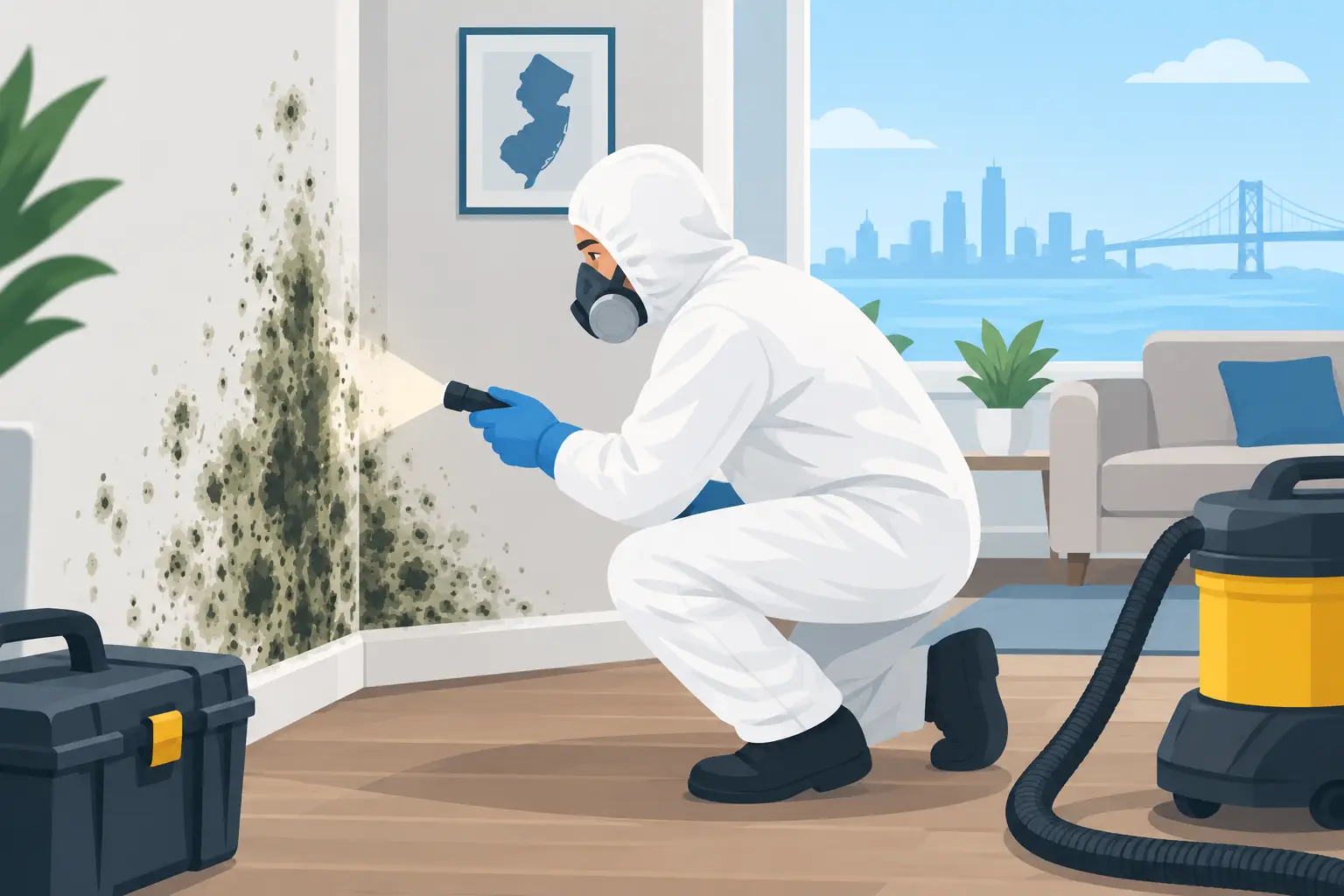
A dark patch beneath a basement window, a musty smell after a summer storm, or peeling paint around a bathroom ceiling can all signal the same issue: moisture has been present long enough for mold to grow. Mold cleanup is not simply a cleaning project when growth is recurring, widespread, or connected to a hidden leak. For New Jersey homeowners, landlords, and property managers, the real priority is finding the moisture source and confirming that affected materials and indoor air are handled correctly.
Why Mold Cleanup Is More Than Surface Cleaning
Mold needs moisture, a food source, and time. Homes provide plenty of organic materials for growth, including drywall paper, wood framing, carpeting, insulation, dust, and fabrics. The visible growth may be limited to one corner, but moisture can travel behind walls, under flooring, and through ceiling cavities.
That is why bleach, air fresheners, and a quick wipe-down often produce a false sense of resolution. They may change the appearance or odor temporarily without correcting the leak, humidity problem, or water-damaged material that allowed mold to develop. If the underlying condition remains, the growth can return.
Professional cleanup begins with assessment, not demolition. A qualified mold professional considers the location of the growth, the size of the affected area, the history of water intrusion, the type of materials involved, and whether occupants have noticed persistent odors or changes in indoor air quality. Testing may be appropriate when there is no visible source, when hidden contamination is suspected, or when baseline and post-remediation information is needed.
Common New Jersey Conditions That Lead to Mold
Northern and Central New Jersey homes face a familiar mix of moisture pressures. Heavy rain, snowmelt, aging drainage systems, humid summers, basement seepage, plumbing failures, and roof leaks can all create conditions that support mold. Older homes may have stone foundations, limited exterior drainage, aging pipe connections, or poorly insulated areas where condensation forms.
Basements are a frequent concern in Morris, Sussex, Warren, and Somerset counties. A basement does not need to flood dramatically to develop a mold issue. Slow seepage at a foundation wall, elevated humidity, or a dehumidifier that cannot keep up may be enough to affect stored belongings, finished walls, carpeting, or framing.
Bathrooms, laundry rooms, attics, and areas near HVAC equipment also deserve attention. Condensation around ductwork, an unvented bathroom, a disconnected dryer vent, or a small roof leak can create hidden damage before stains become obvious. After storm damage or a plumbing leak, drying should start promptly. The longer porous materials stay wet, the more difficult the remediation can become.
When Homeowners Can Clean and When They Should Stop
A small, isolated patch on a nonporous surface may be manageable after the moisture source has been fixed. For example, minor mildew on tile grout caused by poor bathroom ventilation can often be cleaned safely with appropriate protective equipment and a product suitable for that surface. The key is that the issue is limited, accessible, and not tied to water-damaged building materials.
The situation changes when mold covers a larger area, keeps returning, appears after a flood or leak, affects drywall or insulation, or has a strong musty odor with no visible explanation. Porous materials such as drywall, ceiling tiles, carpet padding, insulation, and particleboard may need controlled removal rather than surface treatment. Disturbing these materials without containment can spread dust and mold particles into unaffected rooms.
Call a certified mold professional when you see extensive growth, discover mold in an HVAC-related area, suspect contamination behind walls, or need documentation for a tenant dispute, real estate transaction, insurance question, or post-water-loss restoration plan. Professional assessment is also the prudent choice when an occupant has heightened sensitivity concerns and you need clear, property-specific information rather than guesswork.
What Professional Mold Cleanup Should Include
A credible remediation plan is based on the conditions in the home, not a one-size-fits-all promise. The scope should distinguish between correcting the water source, removing affected materials, cleaning salvageable structural surfaces, and verifying that the area is dry and properly contained.
A standards-based process commonly includes these core steps:
- Identifying and addressing the source of moisture, such as a plumbing leak, roof intrusion, drainage issue, or chronic humidity problem.
- Establishing containment when needed to reduce the chance of cross-contamination during removal and cleaning.
- Removing unsalvageable porous materials and cleaning remaining surfaces using methods appropriate to the material and extent of impact.
- Using air management and detailed cleaning practices to address dust and debris created during the work.
- Confirming that the affected area is dry, repairs are complete, and post-remediation evaluation is considered when the project calls for it.
Testing is not a substitute for remediation, and remediation is not a substitute for correcting moisture. Air and surface sampling can help answer specific questions, but results need expert interpretation alongside a visual inspection and moisture investigation. A single sample without context does not tell the whole story.
Why Containment and Drying Matter
One of the most overlooked parts of mold cleanup is preventing the problem from spreading during the work. Opening a mold-affected wall can release debris into nearby rooms if the area is not properly isolated. Professional containment, controlled work practices, and careful cleaning protect the rest of the property while affected materials are removed.
Drying is just as critical. A wall that looks dry may still hold moisture behind trim, under flooring, or within insulation. Moisture meters, thermal imaging where appropriate, and a careful inspection help identify conditions that are not visible from the room. Rebuilding before materials are sufficiently dry can trap the problem inside the home.
There are trade-offs. Removing more material than necessary raises costs and disruption, while removing too little can leave damaged materials behind. This is where experience matters. The goal is not to tear out every surface near a leak. It is to define the actual impact, isolate it, remove what cannot be restored, and return the space to a dry, clean condition.
Protecting Your Property Before and After Remediation
If you suspect mold, avoid aggressively scrubbing large areas, sanding stained drywall, or running fans that may push debris into other parts of the home. Take clear photos, note the timing of leaks or odors, and move unaffected belongings away from the area if it can be done without disturbing visible growth. If water is still entering the property, address that emergency first.
After professional remediation, prevention becomes a maintenance issue. Keep indoor humidity controlled, use bathroom and kitchen exhaust fans, repair plumbing drips promptly, maintain gutters and grading, and inspect attics and basements after major storms. A dehumidifier can be useful in a damp basement, but it is not a cure for active seepage or a foundation drainage failure.
For landlords and property stakeholders, documentation matters. Records of inspections, moisture repairs, remediation scope, invoices, and any appropriate clearance or post-remediation evaluation can demonstrate that the issue was addressed responsibly. For homeowners preparing to sell, handling a moisture concern correctly protects more than appearance. It supports confidence in the condition of the property.
Get Clear Answers Before the Problem Grows
Mold concerns are stressful because the visible spot is rarely the only question. You need to know where moisture came from, whether building materials are affected, and what work is actually necessary. A professional inspection and, when appropriate, targeted testing can replace uncertainty with a defensible plan.
For homes across Northern and Central New Jersey, timely action is the best protection. Address the water source, avoid shortcuts that spread contamination, and rely on certified remediation practices when the scope goes beyond a small surface-cleaning task. A dry, properly evaluated home is the result worth protecting.
Leave a Reply