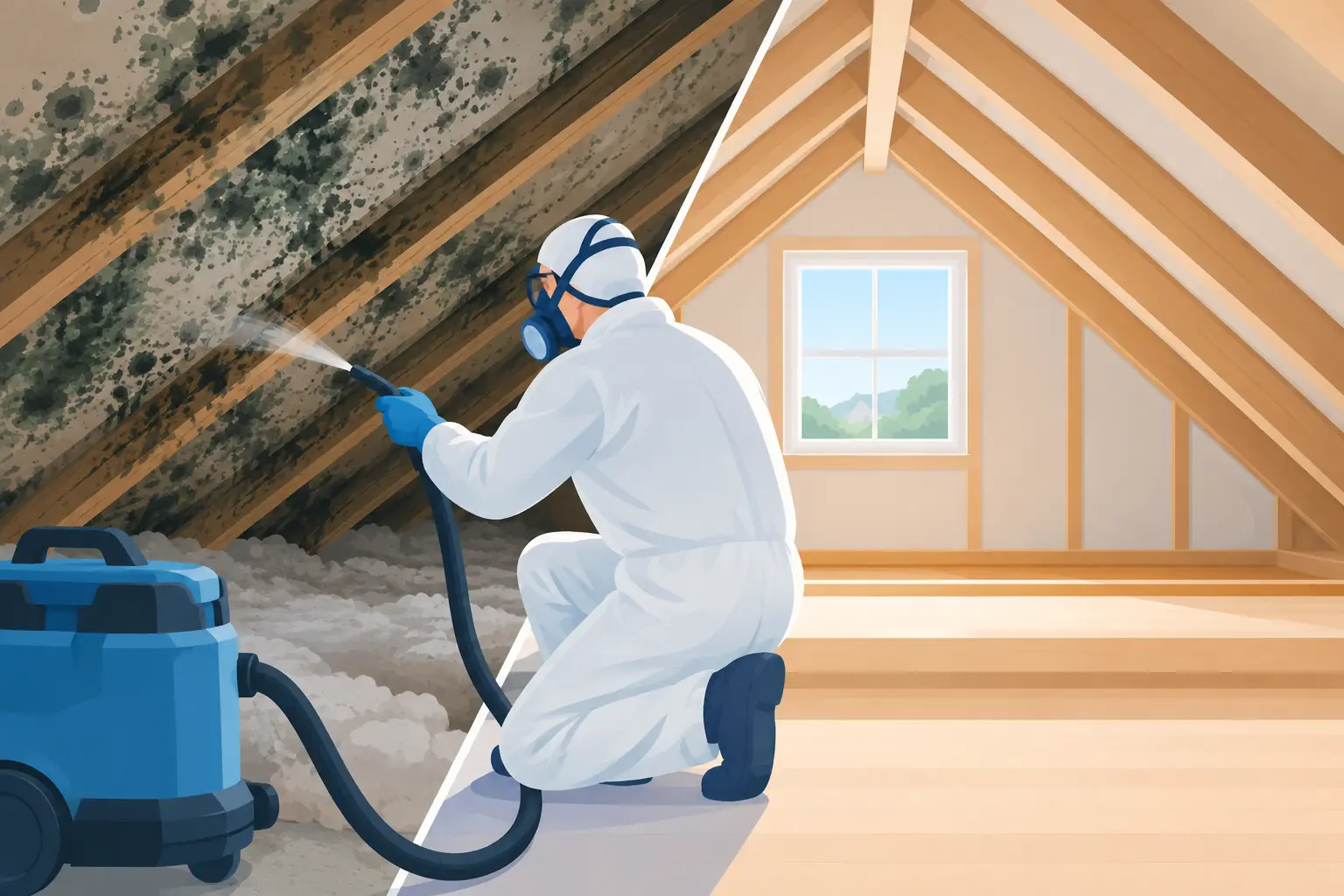
A dark stain on attic sheathing can look like a minor housekeeping issue, but attic mold remediation examples often reveal a larger moisture problem hidden above the living space. In Northern and Central New Jersey, cold winters, humid summers, roof leaks, ice dams, and poorly managed bathroom exhaust are common contributors. The visible growth matters, but the conditions that allowed it to develop matter just as much.
A professional assessment separates mold from ordinary wood discoloration, identifies the moisture source, and determines how far the condition extends. That is the difference between cleaning a surface temporarily and correcting an attic environment that may continue to support growth.
What Professional Attic Mold Remediation Looks Like
A proper remediation plan begins with inspection, not immediate spraying or painting. A qualified professional evaluates the roof system, insulation, ventilation layout, sheathing, framing, ductwork, and penetrations around pipes, lights, and vents. When conditions call for it, air and surface sampling can help document the indoor mold concern and guide the scope of work.
The remediation process generally includes source correction, controlled removal or cleaning of affected materials, containment when necessary, HEPA vacuuming, detailed cleaning, and verification that the attic is dry and stable. The exact approach depends on the material involved, the size of the affected area, whether insulation is contaminated, and whether mold has spread beyond the attic.
Painting over discoloration, applying bleach, or fogging an attic without correcting moisture is not a professional remediation strategy. These shortcuts can leave active growth, conceal evidence of a leak, or introduce moisture into already vulnerable materials.
Attic Mold Remediation Examples Homeowners Commonly See
Example 1: Condensation on Roof Sheathing From Poor Ventilation
A homeowner in Morris County notices black spotting across the underside of roof sheathing near the ridge. There is no obvious roof leak, and the shingles appear to be in good condition. The attic feels stale, insulation is uneven, and the soffit vents are blocked by insulation.
In this situation, warm moist air from the home enters the attic during winter. When it contacts cold roof sheathing, condensation forms. Repeated condensation can create widespread surface mold, especially on the north-facing side of the roof where materials stay cooler and dry more slowly.
Professional work may involve establishing safe access, isolating work areas as appropriate, HEPA vacuuming affected surfaces, mechanically cleaning the sheathing, and applying an approved treatment where warranted. Just as important, the remediation plan addresses airflow: clearing blocked soffit ventilation, evaluating ridge ventilation, and identifying air leaks from the home below. If bathroom fans, recessed lights, or attic hatches are allowing conditioned air into the attic, those gaps need correction.
The trade-off is clear. Increasing ventilation without air-sealing the ceiling plane can still allow humid household air into the attic. Air-sealing alone without adequate roof ventilation can also leave moisture trapped. A professional evaluation considers the entire system.
Example 2: Bathroom Exhaust Fan Venting Into the Attic
This is one of the most preventable attic mold conditions. A bathroom exhaust fan may terminate near an attic gable, disconnect from its duct, or discharge directly into the attic. After months or years of showers, the surrounding framing, insulation, and sheathing develop moisture staining and mold growth.
Remediation begins by confirming the duct route and assessing whether wet insulation must be removed. Contaminated or compressed insulation may no longer perform as designed and can hold moisture against building materials. The affected structural surfaces are then cleaned using methods appropriate for the material and extent of growth.
The lasting repair is to route the exhaust through a properly installed, insulated duct that terminates outdoors, not at a soffit where moisture can be drawn back into the attic. The duct should be secured and configured to reduce condensation. In New Jersey winters, an uninsulated or sagging duct can collect water and release it back into the attic, recreating the same problem.
Example 3: Roof Leak After Wind, Heavy Rain, or Storm Damage
A small roof leak does not always produce a ceiling stain right away. Water can travel along rafters, drip onto insulation, and wet roof sheathing in a limited area. A homeowner may first notice a musty odor, damp insulation, or a patch of mold near a chimney, vent pipe, skylight, or roof valley.
In this example, the roof repair and mold remediation are related but separate tasks. The roof leak must be repaired first or at least stabilized before remediation begins. A remediation professional then determines whether the damage is limited to surface growth on framing or whether insulation, drywall, or other porous materials need removal.
If the leak was recent and addressed quickly, the affected area may be relatively contained. If it went unnoticed through a season of rain or snowmelt, the growth can extend farther than the initial stain suggests. Moisture mapping and careful inspection help avoid leaving affected materials behind.
Example 4: Ice Dam Moisture at the Eaves
New Jersey homes with uneven attic insulation and air leaks can develop ice dams after snow events. Heat escaping from the house melts snow on the upper roof. Water then refreezes at colder eaves, allowing meltwater to back up under shingles. The resulting moisture often affects the lower roof deck, exterior wall tops, insulation, and soffit areas.
This attic mold condition is not solved by cleaning the stained sheathing alone. The remediation work may include removal of wet insulation, cleaning of affected framing and sheathing, and drying measures. The corrective plan should also address insulation coverage, air leakage from the living space, and roof ventilation performance.
An ice dam is a building-envelope warning sign. If the underlying heat loss is ignored, future winter weather can lead to another water intrusion event and another round of mold growth.
Example 5: Long-Term Humidity in a Finished Attic
Finished attics create a different set of risks. A converted room may have inadequate insulation, poor vapor control, limited ventilation, or HVAC ducts that sweat during humid weather. Mold can develop behind knee walls, under flooring, inside wall cavities, or on the back side of drywall where a homeowner cannot see it.
Here, visible mold may represent only part of the issue. Professional testing and targeted inspection can help determine whether the condition is localized or whether moisture has affected concealed areas. Depending on findings, remediation may require selective drywall removal, insulation replacement, cleaning of framing, and correction of HVAC or ventilation deficiencies.
This is not a situation for guesswork. Opening the wrong area can spread dust and disturb mold without addressing the source. A controlled, documented approach protects occupants and gives property owners a clearer record of what was found and corrected.
When an Attic Needs More Than Surface Cleaning
Small isolated marks on dry, sound lumber may not require the same scope as widespread growth across an entire roof deck. However, professional attention is strongly recommended when there is a persistent musty odor, active leak, wet insulation, visible growth across multiple areas, recent storm damage, or a household member with heightened respiratory sensitivity.
Landlords and sellers should also consider the documentation value of professional inspection and remediation. An attic issue can become a point of concern during a sale, lease dispute, insurance discussion, or post-repair evaluation. Clear findings and a standards-based scope are more useful than an unsupported claim that the mold was simply cleaned.
Protecting Your Home After Remediation
Once the attic is remediated, the goal is to maintain dry conditions. Check that bathroom and kitchen exhaust terminate outdoors, keep soffit vents free of insulation, repair roof defects promptly, and investigate new ceiling stains or musty odors without delay. After major storms, inspect the attic safely from the access point for wet insulation, drips, or new staining.
Do not enter a heavily affected attic without appropriate protection or disturb suspect materials to see how far the growth reaches. What appears to be a small attic issue can involve hidden moisture paths, contaminated insulation, and ventilation failures that need trained evaluation.
If your attic shows staining, odor, or signs of moisture, a certified inspection can provide the clear next step. Acting before the next humid season or winter storm helps protect your indoor air, your roof structure, and the value of your New Jersey home.
Leave a Reply