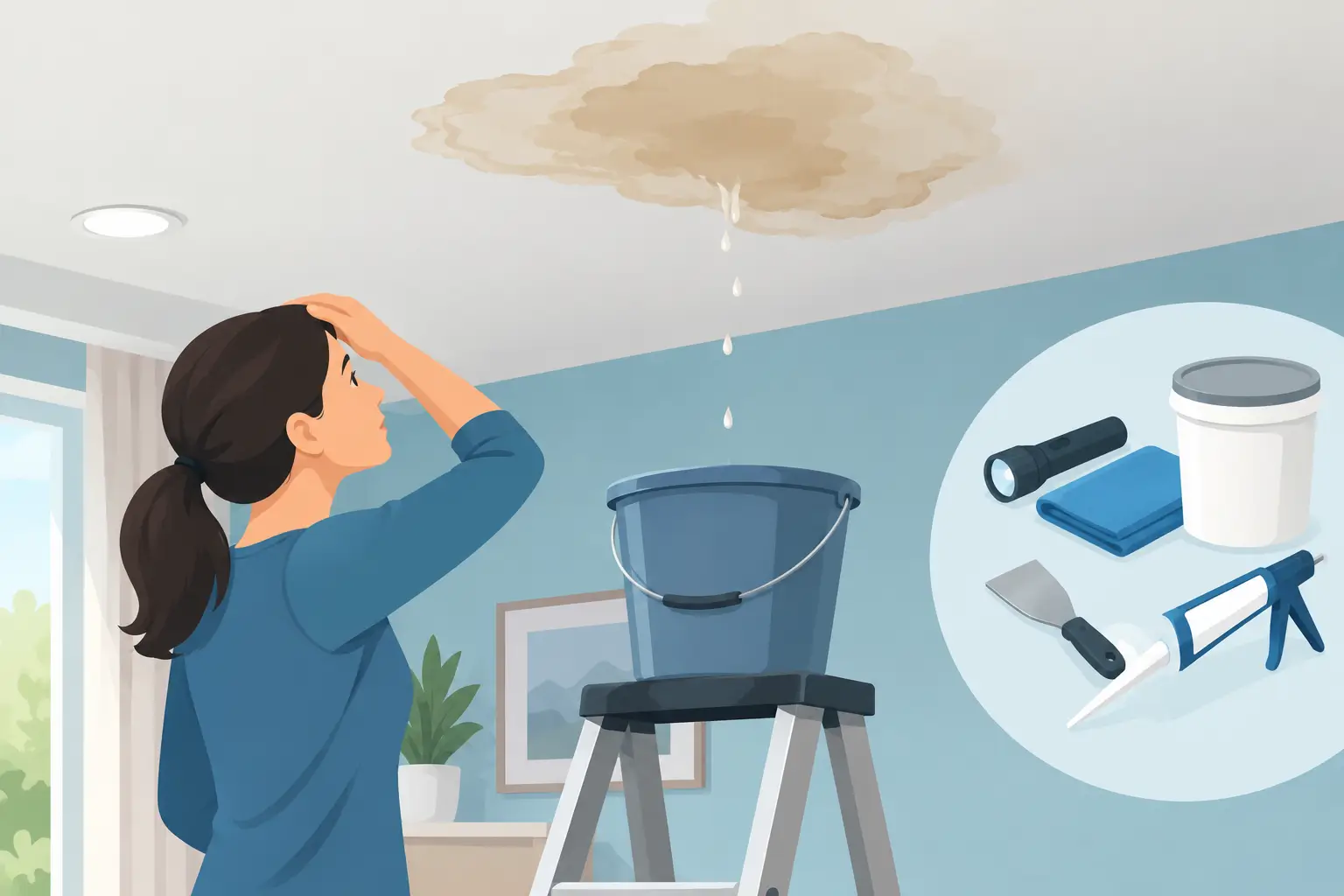
A brown ring over a bedroom, hallway, or finished basement ceiling is not just a cosmetic issue. When you respond to ceiling water stains quickly, you have a better chance of limiting structural damage and stopping the damp conditions that allow mold to grow. In Northern and Central New Jersey, roof leaks, ice dams, plumbing failures, bathroom moisture, and storm-driven water intrusion can all leave the same visible warning sign.
The stain may be old, or it may be evidence of an active leak hidden above the drywall. The difference matters. Painting over it before finding the moisture source can trap you in a cycle of recurring stains, odors, damaged materials, and potential mold contamination.
Respond to Ceiling Water Stains by Treating Them as Active Until Proven Otherwise
A ceiling stain deserves prompt attention, especially if it is spreading, feels soft, appears after rain, or sits below a bathroom, attic, or plumbing line. Start by looking for signs that water is still moving: a darkening edge, droplets, peeling paint, sagging drywall, a musty odor, or staining that expands after using a shower or appliance.
If the ceiling is bulging, water may be collecting above it. Keep people, furniture, and electronics away from the area. Do not stand beneath a weakened ceiling or try to open it if there is any possibility of electrical wiring nearby. Place a bucket below a drip if it can be done safely, and contact the appropriate emergency plumbing, roofing, or water-damage professional to stop the source.
Four immediate steps protect the property while help is arranged:
- Move belongings away from the affected area and protect what cannot be moved with plastic sheeting.
- Document the stain and any active dripping with dated photos, particularly if an insurance claim may be necessary.
- Reduce indoor humidity by running ventilation where safe and using dehumidification after the leak has been stopped.
- Avoid painting, caulking, or applying stain blocker until the ceiling materials have been evaluated and dried.
Turning off water to a fixture may be appropriate when a supply-line leak is suspected. However, homeowners should not enter a wet attic, work around exposed wiring, or remove damaged ceiling sections without understanding what is above the surface. A small stain can conceal widespread wet insulation, compromised drywall, or mold growth in the ceiling cavity.
Find the Source Before Repairing the Surface
The location of a stain provides clues, but it does not prove the cause. A stain directly below a bathroom could come from a leaking toilet seal, shower pan, drain connection, supply line, failed grout, or condensation from an uninsulated pipe. A stain near an exterior wall may point to roof flashing, damaged shingles, clogged gutters, ice dams, siding gaps, or wind-driven rain.
Timing often helps narrow the investigation. If staining appears or worsens after rain, roof and exterior-envelope defects deserve close attention. If it appears after showering, flushing, or running a washing machine, plumbing is more likely. If the problem develops during cold weather without an obvious leak, attic condensation, poor insulation, or inadequate ventilation may be involved.
This is where a professional moisture assessment has real value. Moisture meters, thermal imaging, and careful inspection can help identify damp materials beyond the visible outline. The goal is not simply to identify where water showed up. It is to determine where it entered, how far it traveled, and whether building materials can be safely dried or need removal.
For New Jersey homes, this investigation can be particularly important after heavy rain, snowmelt, or storms. Water can travel along framing, pipes, and insulation before it reaches the ceiling below. The visible stain may be several feet from the actual entry point.
When a Ceiling Stain May Indicate Mold
Mold needs moisture and a food source such as paper-faced drywall, wood framing, dust, or insulation backing. A water-stained ceiling does not automatically mean mold is present, but a delayed response raises the risk considerably. Materials that stay wet for more than a day or two can support microbial growth, particularly in warm, enclosed spaces with limited airflow.
Watch for a persistent musty odor, discoloration that returns after cleaning or painting, visible spotting around the stain, crumbling drywall, or symptoms of ongoing moisture in the attic or room above. Mold can also grow on the back of drywall or within insulation where it is not visible from the room below.
A professional inspection is especially appropriate when the leak duration is unknown, the affected area is extensive, occupants have heightened sensitivity concerns, or there has been repeated water damage. Landlords and property managers should also document conditions carefully, since a concealed moisture problem can affect multiple units or common building systems.
Testing is not necessary for every small, promptly dried plumbing drip. It is most useful when an inspection needs to determine whether suspicious growth is present, what type of conditions exist in concealed areas, or whether indoor air and surfaces show evidence of an unresolved contamination issue. Qualified inspectors may use visual assessment, moisture mapping, air sampling, or surface sampling based on the circumstances. Sampling should answer a specific question, not replace a proper inspection.
Drying, Removal, and Remediation Are Different Jobs
Once the source is repaired, the ceiling still needs to be evaluated. A minor leak that was stopped quickly may only require controlled drying and cosmetic repair. If drywall is saturated, sagging, delaminating, or contaminated with mold, drying the face of the ceiling may not solve the problem. Wet insulation above the drywall can hold moisture against framing and continue to create poor indoor air conditions.
Professional remediation focuses on correcting the conditions that support mold, not just making the ceiling look clean. Depending on the extent of damage, that can include containment, removal of affected porous materials, HEPA vacuuming, detailed cleaning, drying verification, and repair after the area is cleared for reconstruction. The appropriate scope depends on the amount of damage, the type of materials affected, and whether the area has been contaminated.
Be cautious with quick cosmetic fixes. Bleach, household sprays, and paint may alter a visible mark, but they cannot correct a wet ceiling cavity, damaged insulation, or recurring leak. They can also make it harder to see whether the underlying issue is returning. If material is soft or visibly deteriorated, do not assume it can be saved because the stain seems small.
Protect Your Home Before the Next Stain Appears
Ceiling water damage often begins with maintenance issues that are easy to overlook. Annual roof and flashing inspections, clean gutters, functional bathroom exhaust fans, attic ventilation, pipe insulation, and prompt repair of plumbing drips all reduce the chance of concealed moisture. After major storms, inspect attic spaces and top-floor ceilings before a small intrusion turns into a larger repair.
For homes with prior leaks, ask for confirmation that materials reached acceptable moisture levels before drywall is closed or repainted. A dry-looking surface is not always a dry assembly. Moisture can remain in framing and insulation long after the ceiling appears normal.
A ceiling stain is your home asking for investigation, not touch-up paint. Address the source quickly, verify that the area is truly dry, and bring in qualified mold inspection or remediation professionals when the history, extent, or hidden conditions are unclear. That careful response protects the structure, the value of the property, and the people living inside it.
Leave a Reply