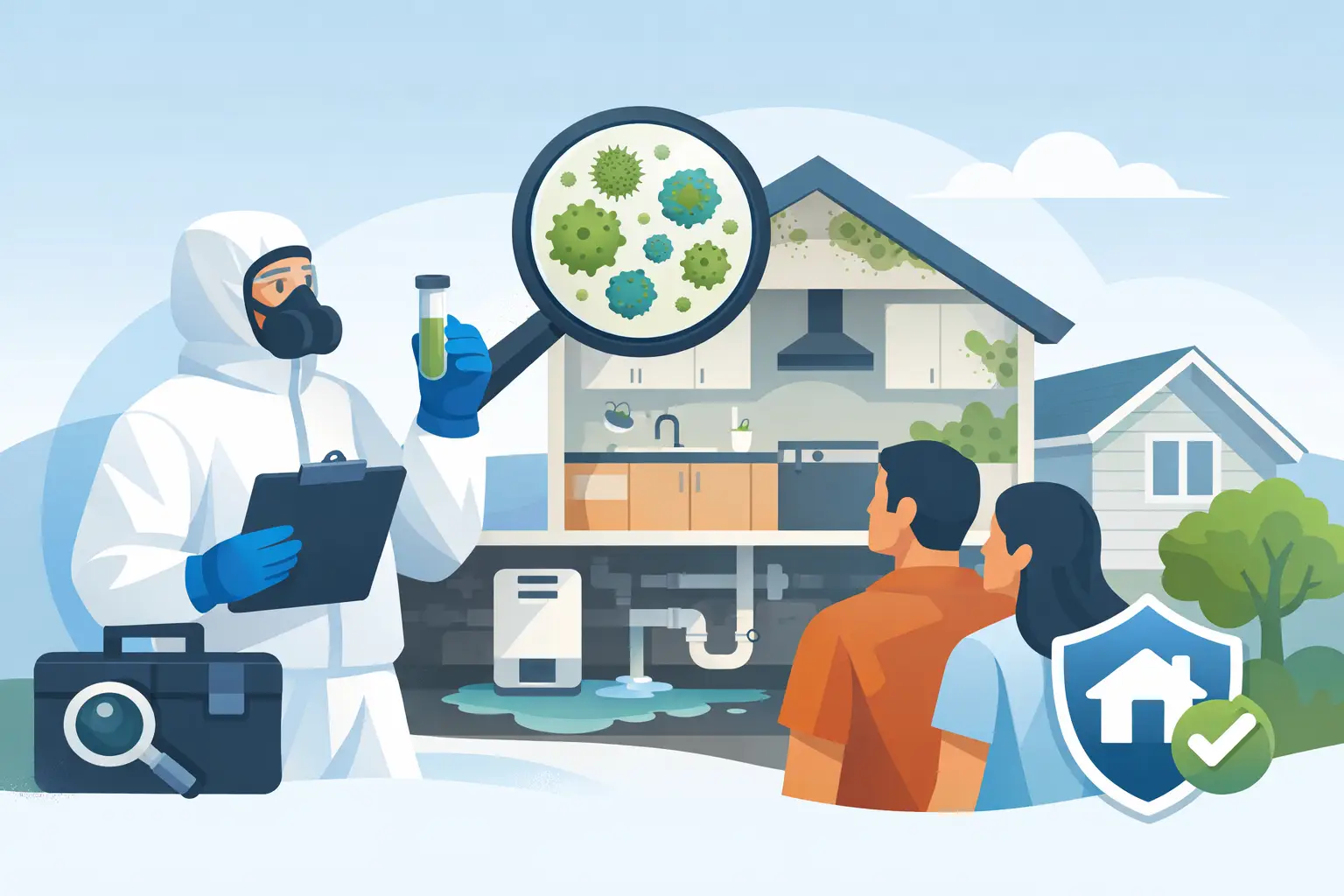
That musty smell in a basement after heavy rain is not something to guess at. Licensed mold testing gives homeowners a clear answer when they are dealing with suspicious odors, water damage, visible staining, or ongoing allergy-like symptoms inside the home. In New Jersey, where humid summers, wet basements, roof leaks, and storm-related moisture are common, accurate testing can be the difference between a contained repair and a much larger indoor air quality problem.
A lot of property owners first ask the same question: do I really need testing, or can I just clean what I see? The answer depends on the situation. If mold is obvious on a small, isolated surface and the moisture source is clear, testing may not always be the first step. But when the growth is widespread, recurring, hidden behind walls, connected to a leak, or affecting indoor air, professional testing becomes far more valuable. It helps confirm the extent of the issue and supports the right remediation plan.
What licensed mold testing actually does
Testing is not just about proving mold exists. Mold is a natural part of the environment, and spores are present both indoors and outdoors. The real job of a licensed or certified mold professional is to determine whether mold levels or conditions inside the property point to an abnormal problem, where it is likely coming from, and what type of response makes sense.
That usually starts with inspection, not sampling. A qualified inspector looks at the home as a building system. They assess where moisture is entering, how long it may have been present, whether ventilation problems are contributing, and which materials may be affected. In homes across Morris, Sussex, Warren, and Somerset counties, this often means checking basements, crawl spaces, attics, around windows, under sinks, near sump pumps, and in areas with prior flooding or ice dam damage.
Sampling may then be used to support what the inspection reveals. Air samples can help compare indoor conditions to outdoor conditions and identify whether elevated spore counts are present in living spaces. Surface samples can help identify the type of growth found on building materials or contents. In some cases, cavity samples are used when hidden mold is suspected behind walls or ceilings.
When licensed mold testing is worth it
Homeowners do not need testing for every stain or every old water mark. But there are situations where it becomes especially important.
One is when there is a persistent musty odor and no visible source. Odor alone can suggest hidden mold in wall cavities, under flooring, or inside HVAC components. Another is after water damage that was not dried quickly or completely. Mold can begin developing within a short window when materials stay wet.
Testing is also useful when a home sale or purchase is involved. Buyers want documentation. Sellers want to avoid surprises during inspection. Landlords may need objective findings when tenants report concerns, and property managers often need a clearer scope before authorizing cleanup.
There is also a health and liability side to consider. Mold affects people differently. Some occupants notice irritation, congestion, headaches, coughing, or worsening asthma symptoms, while others may notice very little. Testing does not diagnose a medical condition, but it can provide environmental information that helps explain why a space feels unsafe or unhealthy.
Why certification matters more than a cheap test kit
The biggest mistake homeowners make is treating mold testing like a simple retail purchase. A store-bought kit may collect a sample, but it does not inspect the property, identify moisture conditions, interpret building failure, or create a reliable path toward remediation. Without context, a test result can be confusing or misleading.
Professional licensed mold testing is different because it combines technical sampling with trained interpretation. The person inspecting the home understands how mold behaves in real structures. They know how leaks travel, how humidity affects enclosed areas, and how air movement can change where spores settle. That matters in older New Jersey homes, split-levels with partially below-grade spaces, and finished basements where hidden moisture can go unnoticed for months.
Certification also matters because remediation decisions should be based on standards, not guesswork. If testing is done poorly, the cleanup plan can be too small and miss hidden contamination or too broad and create unnecessary cost. Neither outcome protects the homeowner.
What happens during a professional mold inspection and test
Licensed mold testing steps you can expect
A professional visit usually begins with questions about the property history. The inspector may ask about roof leaks, plumbing failures, basement seepage, recent storms, prior remediation, HVAC issues, or rooms that feel damp. This background helps narrow down likely sources.
Next comes a visual inspection. That includes looking for visible mold growth, moisture staining, warped materials, condensation, and signs of poor ventilation. Moisture meters, thermal imaging, or other diagnostic tools may be used to identify damp areas that are not obvious from the surface.
If sampling is appropriate, the inspector selects locations based on evidence, not random convenience. Air samples may be taken in suspect rooms and compared to an outdoor control sample. Surface samples may be collected from visible growth or settled dust in areas of concern. The samples are then sent to a laboratory for analysis.
Once results are available, the findings should be explained in plain language. That includes what was found, whether the levels suggest an indoor mold problem, which areas appear affected, and whether remediation is recommended. Good reporting does not just name spores. It connects the data to the conditions inside the home.
What licensed mold testing cannot do
Testing is valuable, but it is not magic. It cannot tell you exactly how every individual will react to mold exposure. It also cannot solve the problem by itself. If moisture remains, mold usually returns.
It is also true that sampling has limits. Mold levels can vary based on weather, HVAC operation, occupancy, and disturbance in the home. That is why a licensed professional does not rely on samples alone. Inspection, moisture detection, building history, and visible conditions all need to be part of the picture.
This is another reason homeowners should be careful with very low-cost testing offers. A sample without a thorough inspection can produce data, but not necessarily useful answers.
New Jersey homes have mold risks that are easy to underestimate
Northern and Central New Jersey homes face a mix of conditions that make mold growth common. Summer humidity raises indoor moisture. Older basements often allow water intrusion during heavy rain. Snow melt, frozen gutters, attic ventilation issues, and storm damage all create opportunities for hidden moisture.
In Morris County and surrounding areas, one of the most common patterns is a basement that smells musty seasonally, then gradually starts affecting nearby finished spaces. Another is a bathroom or laundry area with chronic humidity that never quite dries out. Homeowners may wipe down visible spots and assume the issue is under control, while the real moisture source remains active behind drywall or under flooring.
That is why local experience matters. A professional who understands regional building patterns and moisture problems is more likely to identify the true cause quickly. Testing should not happen in isolation from the real-world conditions of the property.
How to choose the right mold testing company
Start with qualifications and experience, not price alone. Ask whether the company performs certified mold inspections and whether they explain how and why samples are taken. A credible provider should be able to describe the inspection process, the lab analysis, and how the results guide next steps.
It is also worth asking whether they understand remediation standards and post-remediation verification. Even if testing and cleanup are handled separately, the testing company should know what a proper remediation process looks like. That helps ensure the recommendations are practical and safety-focused.
Clear communication matters too. Homeowners under stress need direct answers. If a company cannot explain findings in a way you understand, that is a problem. Professional service should reduce confusion, not add to it.
For many New Jersey homeowners, the right next step is not guessing, scrubbing, or waiting for the smell to go away. It is getting the property inspected correctly so you know what is happening behind the walls, under the flooring, or in the air your family breathes. Mold Remedy focuses on that kind of clear, standards-based guidance for local properties where moisture problems are rarely as simple as they first appear.
If you suspect mold, treat the moisture source and the testing process with the same level of seriousness. A careful inspection today can prevent a much more expensive and disruptive problem later.
Leave a Reply