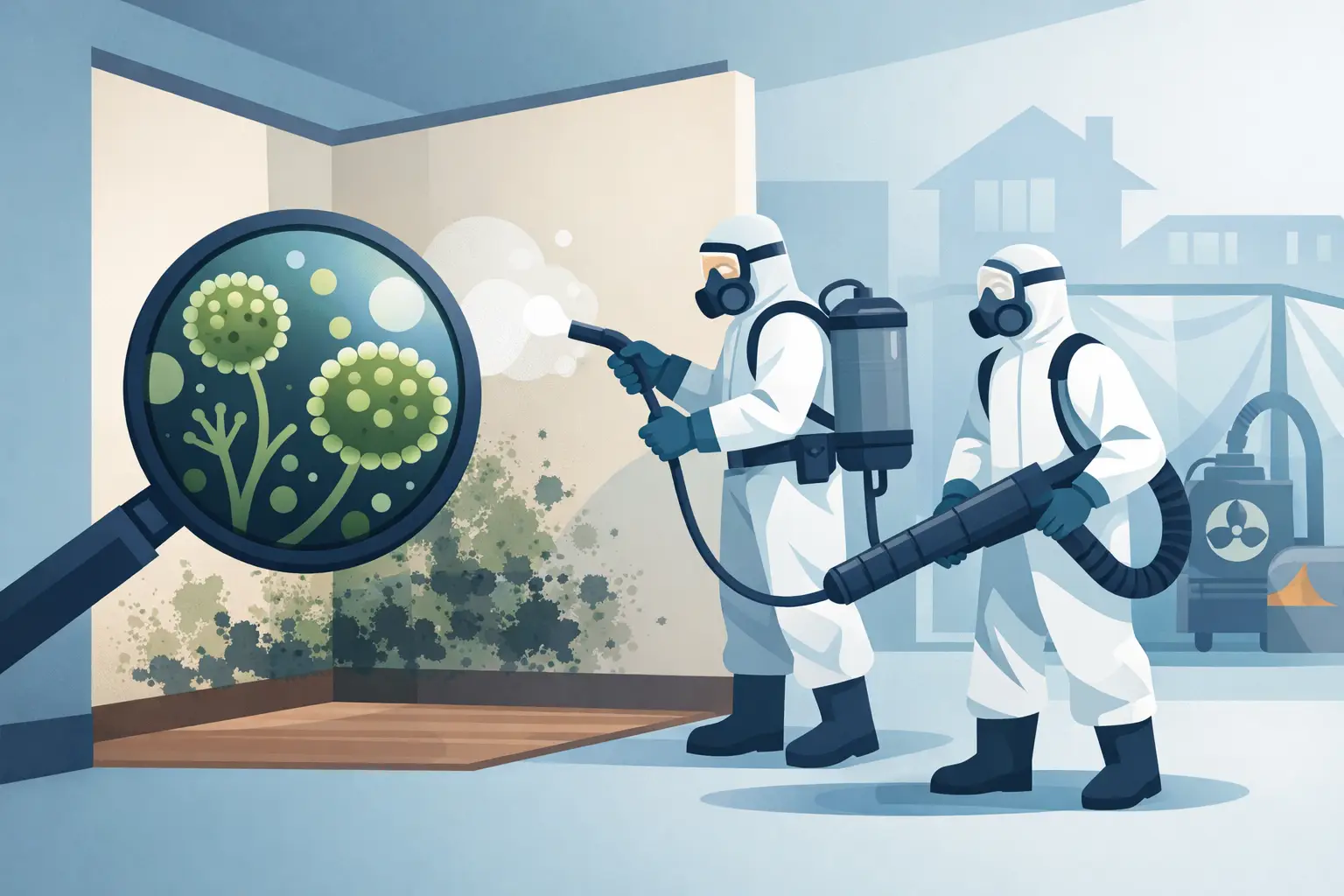
That musty smell in the basement after a heavy rain is not something to watch for a few weeks and hope it fades. In many New Jersey homes, it is the first sign that professional mold remediation may be necessary, especially when moisture has been building behind drywall, under flooring, or around foundation walls where damage is easy to miss.
Homeowners in Morris, Sussex, Warren, and Somerset County often deal with the same pattern. A small leak, stormwater intrusion, high basement humidity, or poor ventilation creates the right conditions for mold growth. What starts as a patch on a wall or a persistent odor can spread through porous materials and affect indoor air quality long before the full extent of contamination is visible.
This is where experience matters. Mold is not just a cleaning issue. It is a moisture issue, an air quality issue, and in many cases a hidden structural issue. Proper remediation is not about spraying a surface and moving on. It is about identifying the source, defining the affected area, containing contamination, removing damaged materials when necessary, and verifying that the space has been properly addressed.
What professional mold remediation actually means
Professional mold remediation is a controlled process designed to remove mold contamination safely and prevent it from returning. That distinction matters. Many homeowners use the term loosely to describe wiping off visible growth with bleach or a store-bought product, but that is not remediation. Surface cleaning may remove staining in a small, isolated area, yet it does not address spores distributed through the air, mold growth inside materials, or the moisture conditions that allowed the problem to begin.
A professional approach starts with assessment. In some cases, that means a detailed visual inspection is enough to confirm a known issue. In others, air sampling, surface sampling, or moisture mapping helps determine how far contamination has spread and whether hidden growth is likely. Testing is not always required for every project, but accurate identification is critical when the source is unclear, the affected area is larger, or occupants are concerned about air quality.
Once the scope is understood, remediation follows recognized procedures. That typically includes isolating the work area, using engineering controls such as negative air pressure and HEPA filtration, removing contaminated materials that cannot be salvaged, cleaning remaining structural surfaces, and addressing the moisture source that caused the growth. If the moisture problem is not corrected, mold often returns.
Why DIY methods often fail
Homeowners are often tempted to handle mold themselves, especially when the visible area seems small. That instinct is understandable. No one wants a minor moisture issue to turn into a major repair bill. The problem is that visible mold is often only part of the picture.
A stained section of drywall might be the outer edge of a larger problem inside a wall cavity. Carpet padding may hold moisture below a surface that looks dry. Basement framing can support hidden growth after repeated condensation or seepage. In these situations, scrubbing what you can see may disturb spores and spread contamination without removing the source.
There is also a safety concern. Improper handling can expose occupants to elevated airborne particles during cleanup. It can also contaminate adjacent rooms if there is no containment. For households with children, older adults, or individuals with asthma, allergies, or respiratory sensitivities, that risk should not be minimized.
DIY efforts also tend to focus on products instead of conditions. The product is rarely the real solution. If the home still has elevated humidity, an active leak, poor drainage, or wet building materials, the mold problem remains active even after the stain appears lighter.
Signs you need professional mold remediation
Some situations clearly call for professional help. If mold covers a large area, returns after cleaning, follows a plumbing leak, appears after flooding, or is tied to a persistent odor with no visible source, the issue should be professionally evaluated. The same is true when mold is present in HVAC-adjacent areas, attics, crawl spaces, basements, or behind finished materials.
Real estate and landlord situations also require a higher level of documentation and care. If tenants have reported health complaints, if there is a dispute about water damage, or if a home is being prepared for sale, professional inspection and remediation provide clarity that guesswork cannot.
In New Jersey, older homes and below-grade spaces create added complexity. Stone foundations, aging drainage systems, sump issues, and seasonal humidity can all contribute to recurring moisture conditions. Storm exposure and winter condensation also play a role. A proper remediation plan needs to reflect how homes in this region actually behave.
How the professional mold remediation process works
Every project is different, but the best remediation work follows a logical sequence. First, the affected area is assessed and the source of moisture is identified. Without that first step, cleanup is incomplete by definition.
Next comes containment. This protects unaffected parts of the home from cross-contamination during demolition and cleaning. Depending on the scope, professionals may set up plastic containment barriers, negative air machines, and HEPA-filtered equipment to control airborne spread.
Then the damaged materials are addressed. Non-porous and semi-porous surfaces may be cleaned when appropriate, but porous materials such as drywall, insulation, and carpet padding often need to be removed if mold growth is established. This is one of the biggest differences between professional remediation and cosmetic cleanup. Sometimes removal is the safest and most effective path.
After demolition and cleaning, the area must be dried and stabilized. Moisture meters, humidity control, and careful inspection help confirm that the environment no longer supports active growth. In some projects, post-remediation verification or follow-up testing is recommended, especially when there are health concerns, prior widespread contamination, or a need for third-party documentation.
That final verification step can be extremely valuable. It gives homeowners confidence that the work was not only performed, but performed to an appropriate standard.
Why certification and standards matter
Not all mold contractors operate at the same level. That is a critical point for homeowners trying to make the right call under stress. Professional mold remediation should be performed by trained, certified personnel who understand containment, safe removal practices, air quality protection, and moisture diagnostics.
Certification matters because mold work involves more than cleanup. It requires judgment. A contractor needs to know when materials can be cleaned versus removed, how to prevent cross-contamination, when sampling is useful, and how to align remediation with recognized industry standards. A vague promise to “treat” mold is not enough.
This is especially important in occupied homes. Families are often living around the problem while trying to schedule repairs, manage work obligations, and protect children or pets. A qualified team should be able to explain what is happening, what safety measures are being taken, and what homeowners should expect before, during, and after the project.
Professional mold remediation in New Jersey homes
New Jersey properties present mold risks that are both common and local. Basements are a major one. Many homes in Northern and Central New Jersey have partially below-grade living areas, unfinished utility rooms, or storage spaces with chronic dampness. Even without major flooding, repeated minor moisture exposure can support mold growth over time.
Attics are another trouble spot. In winter, poor ventilation and insulation issues can create condensation that goes unnoticed until staining or odor appears. Bathrooms, laundry rooms, and areas around windows also see recurring moisture, especially in homes with limited airflow.
For property owners in this region, professional mold remediation should be tied to a broader moisture-control strategy. That may include improving drainage, repairing leaks, adjusting ventilation, controlling indoor humidity, or reassessing how a basement or crawl space is being used. If the home stays damp, remediation becomes a temporary fix instead of a lasting one.
A local, service-driven company such as Mold Remedy understands these regional patterns and can evaluate the problem in the context of New Jersey construction, weather, and moisture history rather than treating every project as if it were the same.
The real goal is a safer home
Most homeowners do not call because they want technical explanations about spores or building science. They call because something feels wrong in the house. There is an odor that was not there before. A child is coughing more in a downstairs bedroom. A tenant reports visible growth after a leak. A finished basement no longer feels clean, even after repeated wiping and repainting.
Professional remediation is about resolving that uncertainty with a clear, defensible process. It protects indoor air quality, reduces the chance of recurrence, and helps preserve the value and livability of the property. Just as important, it replaces guesswork with documented action.
If you suspect mold, the safest next step is not to cover it, scrub it harder, or wait for it to dry on its own. It is to find out exactly what is happening and address it correctly before a contained problem becomes a larger one.
Leave a Reply