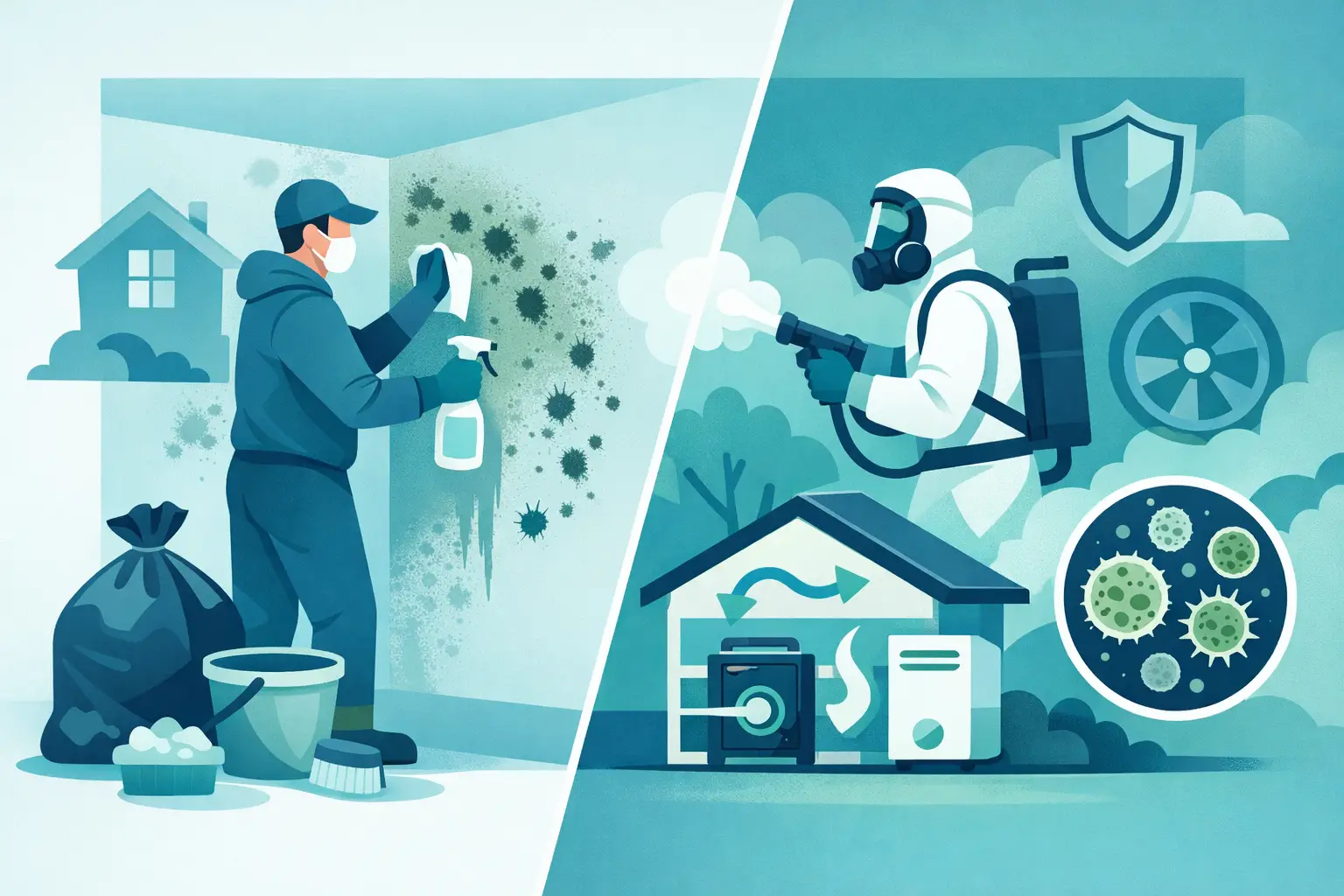
A dark patch on a basement wall, a musty smell after a roof leak, or fuzzy growth beneath a bathroom vanity can make any homeowner want the mold gone immediately. But what is the difference between mold removal and mold remediation? The distinction matters because removing what you can see is not always enough to protect your indoor air, preserve building materials, or prevent the problem from returning.
For New Jersey homes, moisture often has more than one source. Summer humidity, older basements, plumbing leaks, ice-dam damage, storm-driven water intrusion, and poor ventilation can all create conditions for mold growth. A professional response needs to address the full moisture event, not simply the visible staining.
Mold removal is one part of the work
Mold removal generally describes the physical act of taking mold-contaminated material out of a property or cleaning mold from a surface. Depending on the material and the extent of contamination, that may mean removing damaged drywall, insulation, carpeting, ceiling tiles, or personal contents. On hard, non-porous surfaces, it can involve detailed cleaning using appropriate methods and products.
The phrase sounds final, but it can be misleading. Mold spores occur naturally indoors and outdoors. The goal is not to create a home with zero mold spores, which is not realistic. The real goal is to remove abnormal mold growth and contaminated materials, control dust and spores during the work, and return the affected area to normal conditions.
Removal is necessary when materials cannot be effectively cleaned or when damage is extensive. For example, wet drywall that has supported mold growth often needs to be removed because mold can grow into the paper facing and wall cavity. A solid surface such as tile may be cleanable, but only after the moisture source and any hidden damage have been properly evaluated.
Mold remediation is the complete corrective process
Mold remediation is the broader, standards-based process used to identify, contain, remove, clean, and correct a mold problem. Mold removal is a step within remediation, but remediation also addresses why the growth occurred and how to keep contamination from spreading during cleanup.
A proper remediation project begins with an assessment of the affected area. Professionals look beyond the obvious growth to determine the likely water source, the materials involved, and whether contamination may extend behind walls, under flooring, into insulation, or through HVAC pathways. In a Morris County basement, for instance, a small visible area of mold may be connected to chronic foundation seepage, a failed sump pump, or condensation around uninsulated pipes.
When conditions warrant it, air and surface sampling can provide useful information about the indoor environment and suspected materials. Testing is not a substitute for a thorough inspection, and it is not necessary for every small, clearly defined incident. However, it can be valuable when there is a persistent odor, hidden growth is suspected, occupants are concerned about air quality, or the scope of work needs to be documented before and after remediation.
What a professional remediation process includes
The details depend on the property, the moisture source, and the size of the affected area. Still, professional mold remediation typically includes several connected stages:
- Identifying and correcting the moisture source, such as a plumbing leak, roof leak, foundation intrusion, or inadequate ventilation.
- Establishing containment to limit the movement of dust and spores into clean parts of the home.
- Using appropriate protective equipment and controlled work practices while removing contaminated materials.
- Cleaning remaining structural surfaces and contents that can be safely restored.
- Drying the area thoroughly and verifying that the conditions supporting mold growth have been corrected.
- Conducting post-remediation evaluation or clearance testing when the project, occupants, insurer, or property transaction calls for documented confirmation.
Containment is one of the clearest differences between a basic removal effort and a remediation plan. If workers pull out moldy drywall without isolating the work area, debris and spores can travel into hallways, bedrooms, and ventilation systems. Professional containment may use barriers, controlled entry points, and negative air equipment to keep the work zone separated from occupied areas.
The work should also be matched to the material. Porous materials, including drywall, insulation, carpet padding, and some upholstered items, may need to be discarded if contamination is significant. Non-porous and semi-porous surfaces may be cleaned and restored when their condition allows. There is no responsible one-size-fits-all answer, which is why an inspection matters before demolition begins.
Why “killing mold” is not the same as remediation
Homeowners sometimes assume a spray, bleach solution, fogging treatment, or deodorizer will solve the issue. These products may change the appearance or odor of surface mold, but they do not repair the water problem, remove contaminated porous materials, or confirm that hidden areas are dry and clean.
Bleach is especially misunderstood. It is not a complete mold remediation strategy, particularly on porous materials. Applying a chemical to visible growth can leave the underlying source untouched and may create a false sense of security. If the wall cavity remains damp after a leak, mold can return even if the surface looks better for a short time.
Fogging also has limits. It may be used as part of a professionally designed protocol in specific situations, but it does not replace source removal, cleaning, containment, and moisture correction. A musty odor can temporarily be masked while active growth continues behind a wall or beneath flooring.
The difference between mold removal and mold remediation in real homes
Consider a homeowner who finds mold under a kitchen sink after a slow supply-line leak. If the cabinet base and nearby drywall are dry, the growth is limited, and the leak has been repaired, targeted cleaning or material removal may resolve the issue. That is a relatively contained project.
Now consider a homeowner who notices a musty basement after repeated heavy rain. There may be visible mold along one wall, but the larger concern is whether water has moved behind finished walls, into insulation, under flooring, or into stored belongings. Remediation would involve identifying the water pathway, assessing the extent of impact, establishing containment before opening materials, removing damaged components, drying the space, and correcting the moisture condition that caused the growth.
The second situation is not simply “more mold removal.” It requires a coordinated process that protects the rest of the property and reduces the chance of recurrence.
Why moisture control determines long-term results
Mold needs moisture to grow. That makes moisture control the foundation of successful remediation. A cleaned area can become contaminated again if a pipe continues to drip, a bathroom fan does not vent properly, gutters discharge near the foundation, or basement humidity remains high.
Northern and Central New Jersey properties are especially vulnerable to seasonal humidity and water intrusion. Older homes may have unfinished basements, aging plumbing, limited exterior drainage, or insulation gaps that encourage condensation. After storms or flooding, drying should begin quickly, but drying equipment alone does not replace an assessment when building materials have been wet for an extended period.
A qualified professional can help distinguish between a manageable surface issue and a larger moisture-driven problem. That protects more than the appearance of the home. It helps safeguard indoor air quality, reduce unnecessary material loss, and preserve the value of the property.
When to call for professional assessment
Professional inspection and remediation are strongly recommended when mold covers a large area, returns after cleaning, follows a flood or major leak, affects HVAC components, or is accompanied by persistent musty odors. The same is true when you suspect hidden damage behind walls or beneath floors, or when occupants have health concerns that make careful exposure control especially important.
Landlords, sellers, buyers, and property managers may also need clear documentation of the conditions found and the work performed. In those cases, inspection findings, sampling when appropriate, a written remediation scope, and post-work verification can provide confidence that the response was thorough rather than cosmetic.
If you can see mold or smell persistent dampness in your New Jersey home, treat it as a moisture warning, not just a cleaning task. A prompt professional assessment can identify what needs to be removed, what can be restored, and what must be corrected so your home stays dry after the work is finished.
Leave a Reply