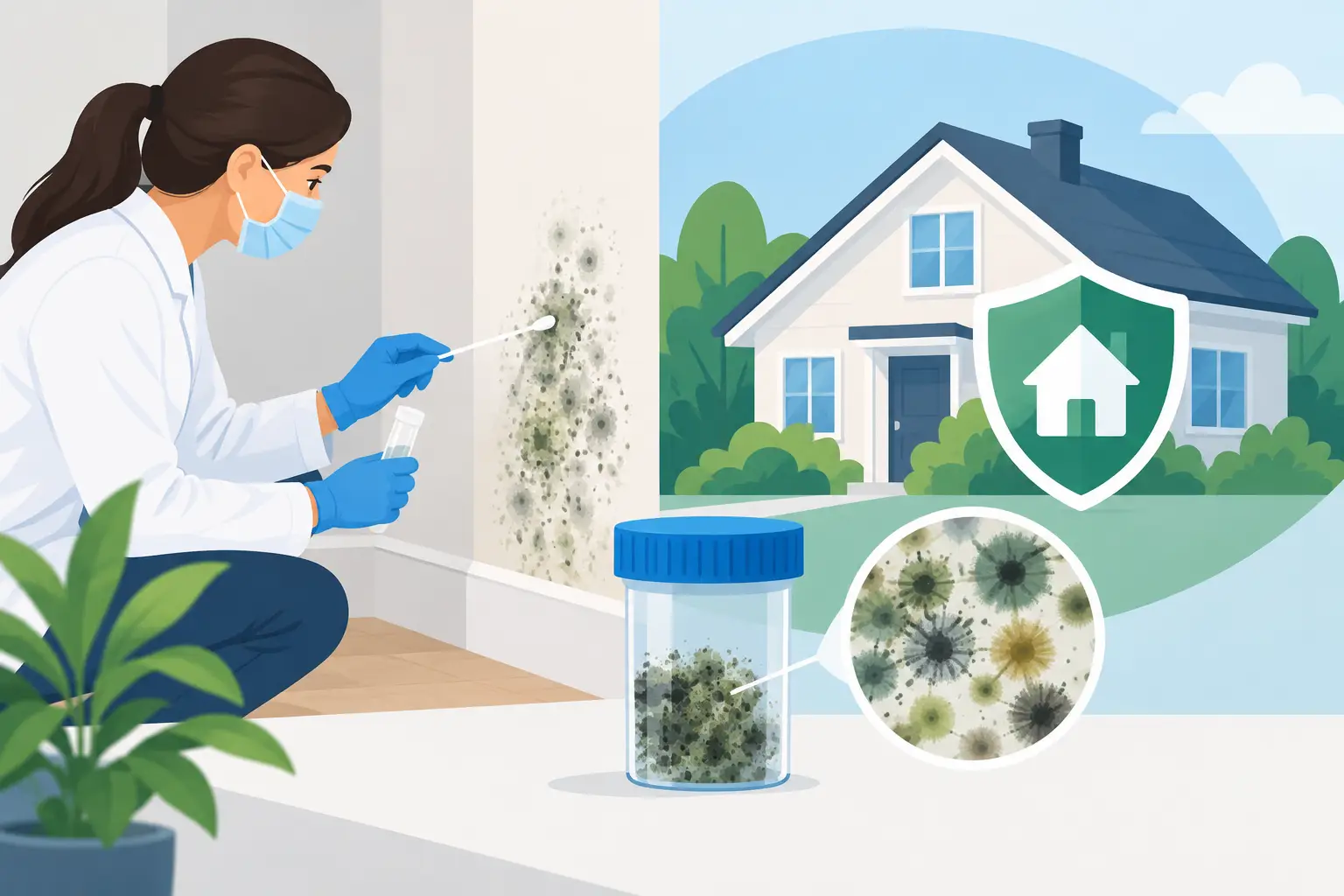
A musty basement after a Morris County rainstorm, a ceiling stain below a slow roof leak, or recurring bathroom spotting can all raise the same question: is there a mold problem beyond what you can see? Mold sampling accuracy is what turns that concern into useful information. A sample is only as valuable as the inspection plan behind it, the way it is collected, and the professional interpretation of the laboratory findings.
For New Jersey homeowners and property managers, reliable testing matters because moisture conditions can change quickly. Humid summers, wet basements, plumbing leaks, storm damage, and poorly ventilated bathrooms create different mold risks in different parts of the home. Testing should identify the source and scope of the concern, not simply produce a report with confusing spore counts.
What Mold Sampling Can and Cannot Tell You
Mold sampling is a diagnostic tool, not a stand-alone verdict on whether a property is safe. Air, surface, bulk, and dust samples can provide evidence of mold growth, help compare indoor conditions with outdoor conditions, and support a remediation plan when the extent of contamination is unclear.
However, a single sample cannot prove that every room is free of mold. Mold levels vary by hour, season, weather, activity, ventilation, and whether a door or window was recently opened. A surface swab may confirm growth where it was taken, but it cannot reveal hidden damage behind a wall. An air sample may suggest an indoor source, but it does not pinpoint the exact location without a thorough inspection.
Visible mold and an active moisture source often provide enough evidence to begin corrective action without waiting for a laboratory result. In those cases, the priority is stopping the water intrusion, safely addressing affected materials, and confirming that the area is properly cleaned. Sampling is most helpful when there is a musty odor without visible growth, a history of water damage, a dispute over conditions, or concern that contamination has spread beyond the obvious area.
What Determines Mold Sampling Accuracy?
Accurate results begin before any cassette, swab, or tape lift is used. A qualified inspector first looks for the conditions that allow mold to grow: elevated moisture, water staining, deteriorated materials, condensation, poor drainage, plumbing failures, and ventilation problems. This building-focused assessment guides where samples should be collected and which method makes sense.
The right sample type for the question
Air sampling is commonly used to evaluate whether airborne mold particles inside a building differ meaningfully from outdoor air or from other areas of the property. It can be useful near suspected hidden growth, after a water event, or during post-remediation verification. Because air conditions change, a comparison sample and carefully documented conditions are often essential.
Surface sampling is more direct when discoloration or suspect residue is present. Tape lifts, swabs, and bulk samples can help identify whether a material contains mold and may help distinguish mold from dirt, staining, or other debris. The trade-off is limited coverage: the result applies to the specific location sampled, not the entire room.
Dust sampling may be appropriate in more specialized investigations, particularly when evaluating long-term settling patterns. It should not be treated as a shortcut around a complete property inspection. Each method answers a different question, and selecting the wrong one can make a technically valid lab result practically unhelpful.
Sample location and timing
A good sampling plan targets areas supported by evidence. That may include the lower section of a wall below a leak, the air near a persistently damp basement, an HVAC area with condensation concerns, or a room that develops a strong odor after rainfall. Randomly testing convenient locations can miss the actual source.
Timing also matters. Sampling immediately after aggressive cleaning, fogging, or the use of strong chemicals can alter findings without resolving the moisture problem. Likewise, opening windows throughout the home shortly before air sampling can influence indoor air conditions. A professional should document relevant site conditions, including weather, HVAC operation, recent water events, visible damage, odors, and occupant observations.
Proper equipment and collection procedures
Sampling equipment has to be used at the correct flow rate and for an appropriate duration. Too little air may not collect a representative amount of particulate. Too much air can overload a sample, making microscopic analysis more difficult. Surface samples also require clean handling and proper labeling so the laboratory can connect each result to the exact location inspected.
Chain-of-custody documentation and use of a qualified laboratory protect the integrity of the process. Home test kits may seem convenient, but they frequently lack controlled collection methods, outdoor comparisons, building context, and professional interpretation. A kit that finds mold spores tells a homeowner very little when mold spores are naturally present in most indoor and outdoor environments.
Professional interpretation, not just numbers
Lab reports can list mold categories, structures, and concentrations. Those numbers are not universal pass-or-fail thresholds. There is no single airborne mold count that defines a healthy home in every situation. The meaningful question is whether the results are consistent with the building conditions, visible evidence, moisture readings, and likely sources found during the inspection.
For example, elevated indoor concentrations of water-damage-associated molds compared with an outdoor control may support concern about an indoor amplification source. But a low air count does not automatically rule out hidden mold behind a wall or beneath flooring. Growth that is enclosed, inactive, or undisturbed may not be strongly represented in the air at the moment of testing.
Common Reasons Mold Test Results Mislead Homeowners
The most common mistake is treating a sample as a substitute for an inspection. Mold growth needs moisture. If the report is reviewed without identifying why the area became wet, remediation can become temporary cleanup instead of a lasting solution.
Another issue is overreliance on one sample. A basement, attic, crawlspace, and living area behave differently. In homes across Sussex, Warren, Morris, and Somerset Counties, foundation seepage may affect a finished basement while ice-dam leaks or roof failures affect upper levels. The sampling plan should reflect the property’s history and layout.
False reassurance can also follow a negative result. Sampling represents conditions at a particular time and place. If staining, odor, elevated moisture, or repeated water intrusion is present, those observations deserve attention even when a limited sample does not detect elevated airborne spores.
On the other hand, a positive result should not trigger panic or indiscriminate demolition. Professionals use the findings alongside the inspection to define the work area, protect unaffected spaces, correct the moisture source, and determine whether post-remediation verification is appropriate.
When Professional Mold Testing Is Worth It
Professional testing is especially valuable when the situation is uncertain or the stakes are higher. This includes unexplained odors, suspected hidden growth after a leak, water damage that was not dried promptly, recurring mold after cleaning, HVAC-related concerns, real estate transactions, tenant complaints, and documentation needs following a storm or insurance event.
It is also useful when remediation planning needs clearer boundaries. Sampling may help determine whether an affected area is isolated or whether additional investigation is warranted. For landlords and property stakeholders, an objective inspection record can clarify the condition of the property and support appropriate corrective action.
A certified mold professional should explain why samples are being recommended before collecting them. The goal is not to sell unnecessary tests. The goal is to gather evidence that answers a specific question and leads to a safer, more defensible next step.
After the Results: Focus on Moisture Control
Whether testing confirms mold growth or points to a limited concern, the next step is controlling moisture. Repair leaks, address drainage and foundation seepage, dry wet materials promptly, improve bathroom and laundry ventilation, and correct condensation issues around cold surfaces. Cleaning without correcting the water source invites the problem to return.
When contamination is significant, hidden, or tied to damaged building materials, professional remediation provides the containment, cleaning methods, and safety procedures needed to avoid spreading debris through the home. Post-remediation sampling may be appropriate when an independent assessment is needed to confirm that the work area meets the project goals.
A reliable mold assessment does more than hand you a laboratory report. It gives you a clear path from the first sign of moisture to informed repairs and safe remediation, so your home can be protected with confidence.
Leave a Reply