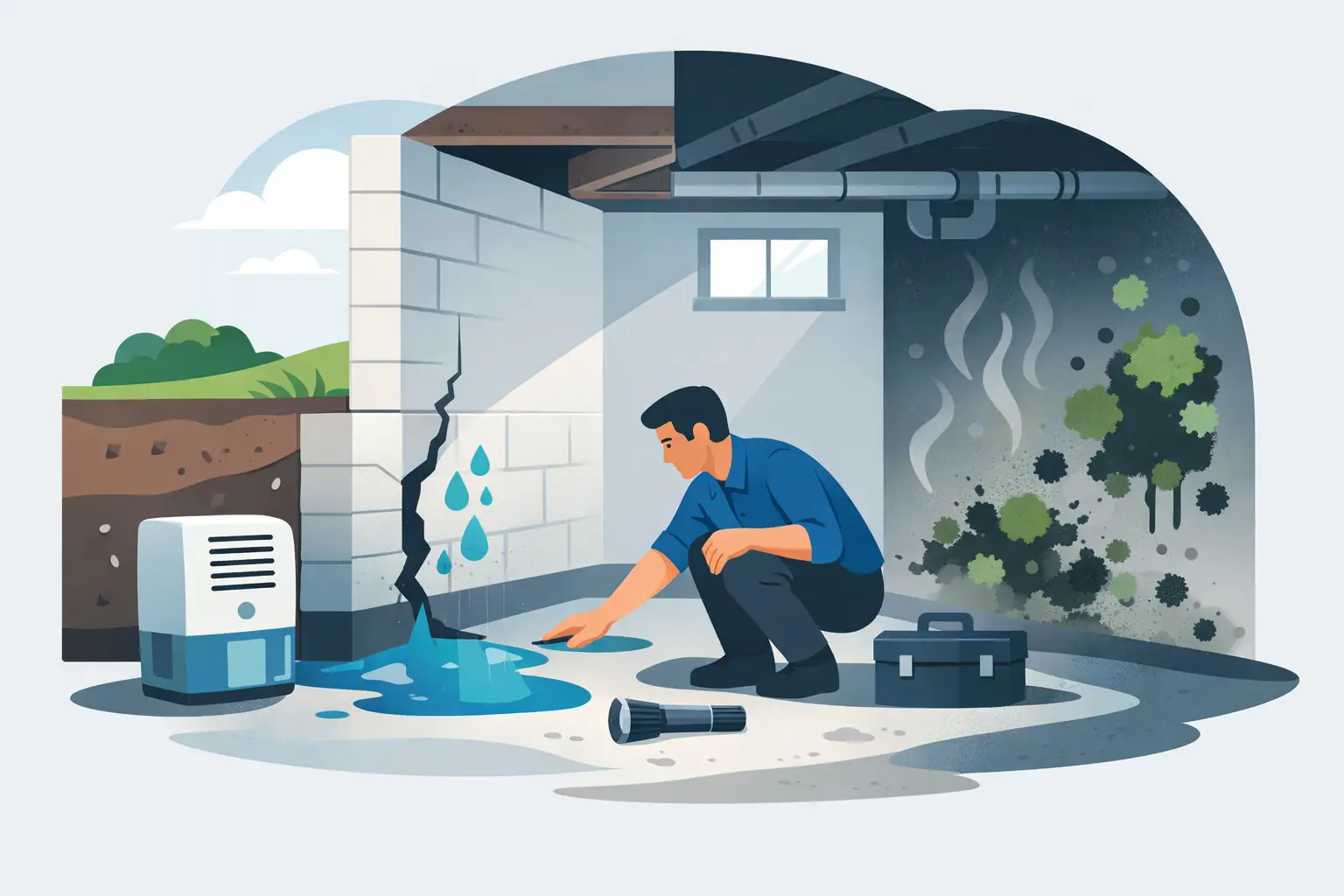
A damp basement is not a cosmetic issue to put off until the next renovation. Knowing how to handle basement moisture quickly can protect your home’s structure, indoor air quality, stored belongings, and resale value. In Northern and Central New Jersey, heavy rain, snowmelt, high summer humidity, and aging foundations can create moisture conditions that allow mold to develop out of sight.
The first priority is to find out whether you are dealing with a one-time water event, ongoing seepage, condensation, or a hidden plumbing leak. Drying the visible area matters, but it will not solve a moisture problem that continues behind finished walls, beneath flooring, or around a foundation.
Start by identifying the source of moisture
Basement moisture usually leaves clues. A musty odor, peeling paint, white powdery residue on masonry, warped baseboards, rust on appliances, damp carpeting, and recurring spots on walls all point to a condition that needs investigation. Visible mold may be present, but its absence does not mean moisture has not affected concealed materials.
After a storm, inspect the basement perimeter, window wells, floor drains, utility areas, and any walls that meet exterior soil. Water entering at the same location after rain often suggests drainage, grading, gutter, window-well, or foundation-waterproofing concerns. Water that appears near a water heater, washing machine, bathroom, or supply line may indicate a plumbing issue instead.
Condensation behaves differently. It often forms on cool foundation walls, pipes, ductwork, or concrete floors when humid indoor air contacts a colder surface. This is common during New Jersey’s humid summer months, especially in basements that are poorly ventilated or cooled too aggressively. The fix may involve humidity control and insulation rather than exterior water management.
Do not assume every stain tells the whole story. Moisture can travel along framing, behind insulation, or beneath flooring before becoming visible. A professional inspection helps determine the likely source and the full extent of affected materials.
How to handle basement moisture safely after a leak or flood
If water has entered the basement, act promptly. Mold can begin growing on wet drywall, carpet backing, wood, paper-faced insulation, and stored cardboard within a relatively short period. The right response depends on the amount of water, where it came from, and how long materials remained wet.
First, stop the source if it is safe to do so. Shut off a leaking appliance or water supply line, and keep people away from electrical hazards. If the water may involve sewage, a backed-up drain, or floodwater, avoid direct contact. These situations require more than basic drying because contamination can affect both surfaces and porous contents.
Remove standing water using appropriate equipment, then begin drying immediately. Open access to wet areas, move salvageable belongings away from damp surfaces, and use dehumidification and air movement where conditions allow. Do not simply place a household fan in a wet, enclosed basement and assume the job is complete. Wet cavities, carpet padding, insulation, and wall materials can hold moisture long after a floor feels dry.
For a small, clean-water spill caught immediately, homeowners may be able to dry hard, nonporous surfaces thoroughly. The trade-off is that DIY cleanup becomes less reliable when water has soaked into porous materials, affected a large area, returned repeatedly, or produced a musty odor. At that point, professional assessment is the safer decision.
Control humidity before condensation becomes mold growth
A basement should not feel clammy, smell stale, or maintain persistent humidity. Aim to keep relative humidity generally below 50 percent when possible. A properly sized dehumidifier can help, but it is not a substitute for correcting water entry or a leaking pipe.
Place the dehumidifier where air can circulate, keep doors and filters maintained, and make sure the collection bucket is emptied or the drain line is functioning. If the unit runs continuously without improving conditions, the basement may have a larger moisture load than the equipment can manage.
Insulating cold water pipes can reduce surface condensation. Sealing obvious gaps around utility penetrations and basement windows may also help reduce humid outdoor air entering the space. However, avoid sealing a basement blindly when there is active seepage in the walls. Trapped moisture can worsen deterioration and create concealed mold conditions.
Finished basements deserve special attention. Drywall, carpet, wood trim, and insulation can hide elevated moisture levels until stains or odors appear. If a finished basement has had recurring dampness, a professional moisture assessment can identify whether materials behind walls need further evaluation.
Fix exterior drainage problems at their source
Many basement moisture problems begin outside the home. Rainwater should move away from the foundation, not collect beside it. Check gutters for clogs, confirm downspouts discharge well away from the house, and look for overflowing water during rain. A downspout that empties next to the foundation can saturate the soil and increase pressure against basement walls.
The ground around the home should slope away from the foundation. Settling soil, landscaping changes, patio work, and poorly placed mulch can create low areas that direct water toward the house. In Morris, Sussex, Warren, and Somerset County, seasonal storms and freeze-thaw cycles can expose weak drainage patterns that were not obvious during dry weather.
Window wells should be clear of leaves and debris, properly drained, and protected from direct runoff. If water enters through foundation cracks or wall-floor joints, document when it happens and how much water appears. That information helps a qualified contractor determine whether repairs, drainage improvements, or waterproofing measures are appropriate.
Know when mold testing or inspection is warranted
A visible patch of mold after a minor, quickly resolved moisture event may not always require extensive sampling. But testing and inspection become especially valuable when the source is unclear, odors persist, occupants report respiratory irritation, mold keeps returning, or moisture may be hidden behind finished materials.
Professional mold inspection is not just a visual walkthrough. A thorough process may include moisture measurements, identification of water pathways, assessment of affected building materials, and targeted air or surface sampling when it will answer a specific question. Sampling should support a clear inspection objective, such as comparing indoor conditions to an outdoor reference or evaluating a suspected concealed area.
Be cautious of anyone who treats a single air sample as a complete diagnosis. Results need to be interpreted alongside the building’s history, visible conditions, moisture readings, and the location of affected materials. Accurate identification is what allows remediation to address the cause, not merely remove what can be seen.
If mold remediation is needed, the work should include containment where appropriate, removal or cleaning of affected materials using established methods, control of dust and spores, and correction of the underlying moisture source. Painting over staining, spraying fragrance, or applying a surface product without drying the structure does not constitute proper remediation.
Protect your home while you wait for help
If you suspect hidden mold or have a persistent damp-basement problem, limit unnecessary disturbance of affected areas. Do not tear into moldy drywall, pull wet carpet, or run fans that may spread dust through the home without understanding the conditions. Keep children, older adults, and people with respiratory sensitivities away from visibly affected spaces when possible.
Take dated photos of water entry, staining, and damaged belongings. Note whether the issue follows rainfall, plumbing use, or changes in weather. This record can help identify patterns and may be useful for contractors or insurance discussions.
A dry basement is created by controlling water, humidity, and the materials that have already been affected. When the source is uncertain or mold may be present, a certified inspection and a standards-based remediation plan provide the clarity needed to protect both the property and the people living in it.
Leave a Reply