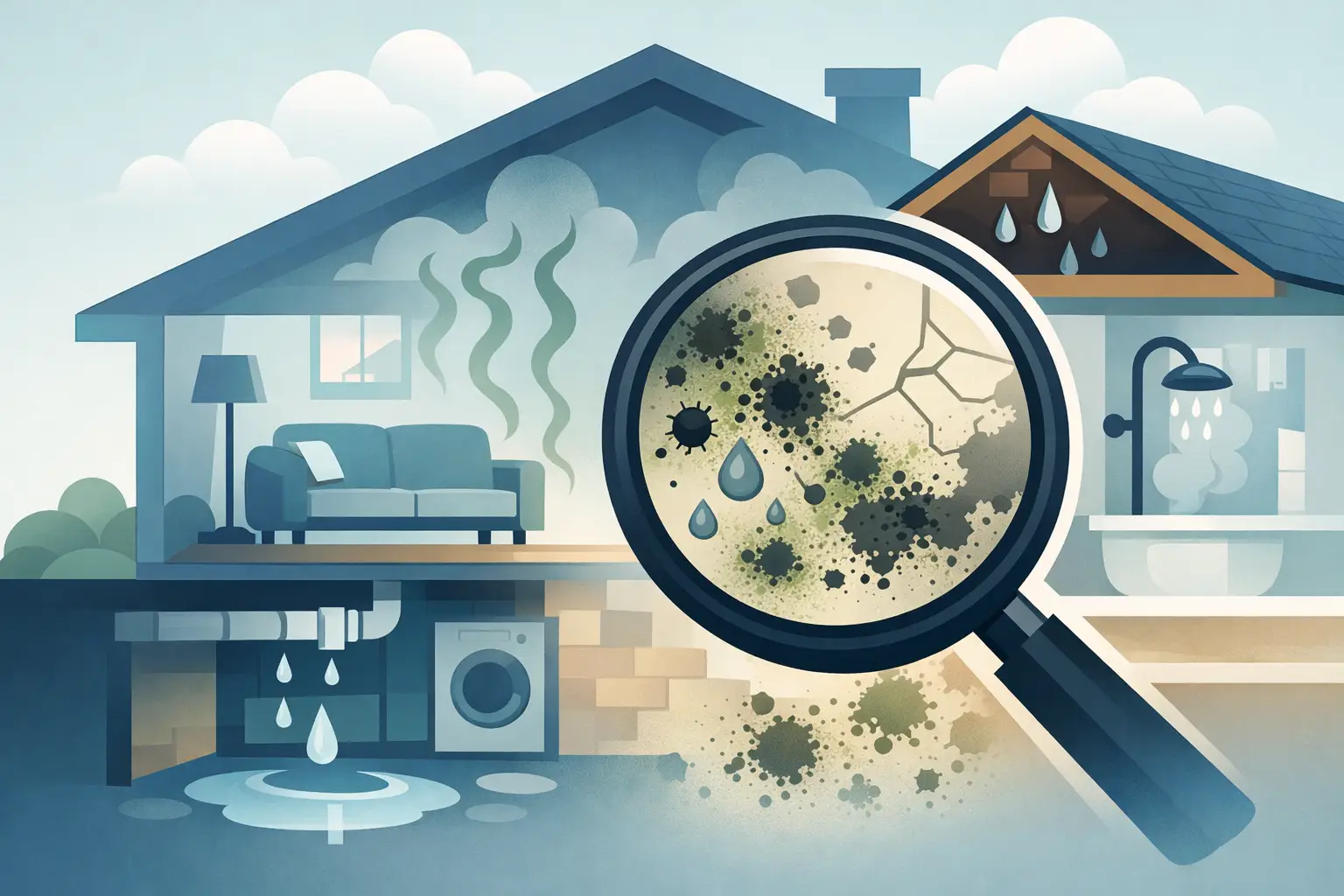
A basement can look clean, dry, and completely ordinary while a musty smell tells a different story. Musty odor mold warning signs are often the first indication that moisture is lingering behind walls, under flooring, inside ductwork, or in areas homeowners rarely inspect. In Northern and Central New Jersey, where humid summers, wet basements, roof leaks, and storm-driven water intrusion are common, that odor deserves a timely response.
A musty smell does not automatically prove there is an active mold problem. Damp cardboard, old carpets, wet insulation, sewage issues, and poor ventilation can create unpleasant odors too. But when the smell persists, returns after cleaning, or becomes stronger after rain or when the air conditioning runs, professional mold assessment is the safest way to identify what is happening and where.
Why a Musty Smell Can Signal Hidden Mold
Mold growth produces microbial volatile organic compounds, often called MVOCs. These gases can create an earthy, damp, stale, or mildew-like odor. The odor may be strongest in a closed room, basement, crawl space, closet, attic, or near a wall that has experienced a leak.
The challenge is that odor does not reveal the full extent of a problem. A small visible spot can be connected to moisture and mold growth inside a wall cavity. Conversely, an odor may come from a wet building material without substantial mold growth. That is why a visual inspection alone is not always enough to make a reliable decision about cleanup.
A certified inspection can help determine whether there is an active moisture source, whether materials have been affected, and whether air or surface sampling is appropriate. The goal is not to treat every smell as an emergency. It is to avoid ignoring a condition that can spread, damage building materials, and affect indoor air quality.
Musty Odor Mold Warning Signs to Watch For
The odor itself matters most when it appears alongside evidence of water or humidity problems. Homeowners should pay close attention to changes that suggest moisture is trapped somewhere in the structure.
The Smell Returns After You Clean or Air Out the Room
If you wash surfaces, remove old belongings, run a dehumidifier, or open windows and the smell quickly returns, the source is likely still present. Air fresheners and scented cleaners can cover an odor temporarily, but they do not dry wet materials or correct a leak.
A recurring smell in a finished basement is especially concerning. Carpet padding, drywall, wood framing, insulation, and stored contents can retain moisture after a minor flood, plumbing leak, or foundation seepage. By the time the odor becomes noticeable, the original water event may be weeks or months in the past.
The Odor Gets Worse After Rain or During Humid Weather
New Jersey homes often experience basement dampness after prolonged rain, snowmelt, or storm events. If the musty odor becomes more noticeable after wet weather, water may be entering through foundation cracks, window wells, poor grading, failed gutters, or a sump system issue.
Humidity can also reactivate odors from materials that were never fully dried. A basement that smells fine in January but musty in July may have an underlying ventilation or moisture-control problem, even if there is no standing water.
There Are Water Stains, Peeling Paint, or Warped Materials
Discoloration on ceilings or walls, bubbling paint, soft drywall, warped baseboards, and loose flooring are not cosmetic problems to dismiss. They can indicate repeated moisture exposure. Even when visible mold is not present, these conditions justify a closer inspection.
Pay particular attention to areas below bathrooms, around washing machines, beneath kitchen sinks, near water heaters, and around windows. Slow plumbing leaks can remain hidden for a long time and cause damage behind cabinets or walls before a homeowner notices an odor.
You See Spots, Fuzzy Growth, or Dark Staining
Visible growth may appear black, green, gray, white, or brown. Color alone cannot identify the type of mold or determine risk. What matters is the presence of moisture and growth on building materials.
Avoid aggressively scrubbing a large affected area or disturbing damaged drywall, insulation, or carpet. Disturbance can spread spores and contaminated dust to other areas of the home. Small, isolated surface growth may have a different response than widespread damage after water intrusion, which is why the extent and cause must be evaluated before remediation begins.
Your Home Has a History of Water Events
A prior basement flood, roof leak, burst pipe, appliance overflow, or sewage backup raises the likelihood of hidden moisture damage. Even if the visible water was removed quickly, materials may not have been dried to an acceptable standard.
This is particularly relevant after storm damage. Water can migrate beneath flooring, behind wall finishes, and into insulation. A home may appear restored on the surface while moisture remains in concealed materials. A musty odor after a past water event should not be treated as normal.
Rooms Where Mold Odors Often Hide
Basements are a common source because they are below grade, cooler, and more prone to dampness. However, musty odors can originate anywhere moisture is able to collect without adequate airflow.
Bathrooms may develop odor issues from leaking shower pans, failed caulk, plumbing connections, or exhaust fans that do not vent effectively. Attics can be affected by roof leaks, condensation, or bathroom fans exhausting into the wrong space. Laundry rooms and utility closets may conceal appliance leaks or high humidity. Even a bedroom closet along an exterior wall can develop mold if condensation or water intrusion reaches the wall cavity.
Heating and cooling systems deserve attention as well. A dirty drain pan, condensate line problem, wet filter area, or moisture around ducts can create odors that become noticeable when the system turns on. The source may be mechanical, structural, or both, so the inspection should follow the odor rather than assume the cause.
When Professional Mold Testing Makes Sense
Testing is most useful when it answers a specific question. If there is obvious widespread mold growth and a known moisture source, the priority may be to identify the extent of damage and plan proper remediation rather than simply collect a sample. If an odor is present but the source is hidden, targeted air and surface sampling can help support the investigation.
Professional testing should be paired with a detailed inspection of moisture conditions. Samples without context can be misleading. Outdoor conditions, room use, ventilation, recent cleaning, and the location of suspected growth all affect results. A qualified professional interprets findings alongside what is observed in the property.
For landlords, buyers, sellers, and property managers, documentation can also be valuable when a leak, tenant concern, or prior remediation requires an objective assessment. The right scope depends on the building, the water history, and the areas affected.
What to Do Before an Inspection
Do not try to mask the smell before an inspection. Avoid heavy fragrance products, ozone machines, fogging treatments, and unnecessary demolition. These actions can make it harder to locate the source and may spread contaminants or create additional indoor air concerns.
You can take practical steps to limit further damage. Address active leaks if it is safe to do so, remove wet belongings from unaffected areas, and document where and when the odor is strongest. Note whether the smell changes after rain, after running the HVAC system, or in certain rooms. This information helps guide a more efficient inspection.
If you recently had a water event, act quickly. Drying is time-sensitive, and materials that stay wet can become a larger remediation project. Do not assume a fan pointed at a damp area has fully resolved moisture behind walls or beneath flooring.
A Musty Odor Is a Reason to Investigate, Not Panic
The right response is measured and professional. A musty smell may have a simple source, but it can also be the only early warning before visible mold, damaged materials, or poor indoor air quality become more difficult to address. For New Jersey homeowners, especially those with basements, older plumbing, storm exposure, or a recent leak, early evaluation protects both the home and the people living in it.
If the odor persists or returns, treat it as useful information from your home. Finding the moisture source and correcting it properly is the step that turns uncertainty into a clear path forward.
Leave a Reply