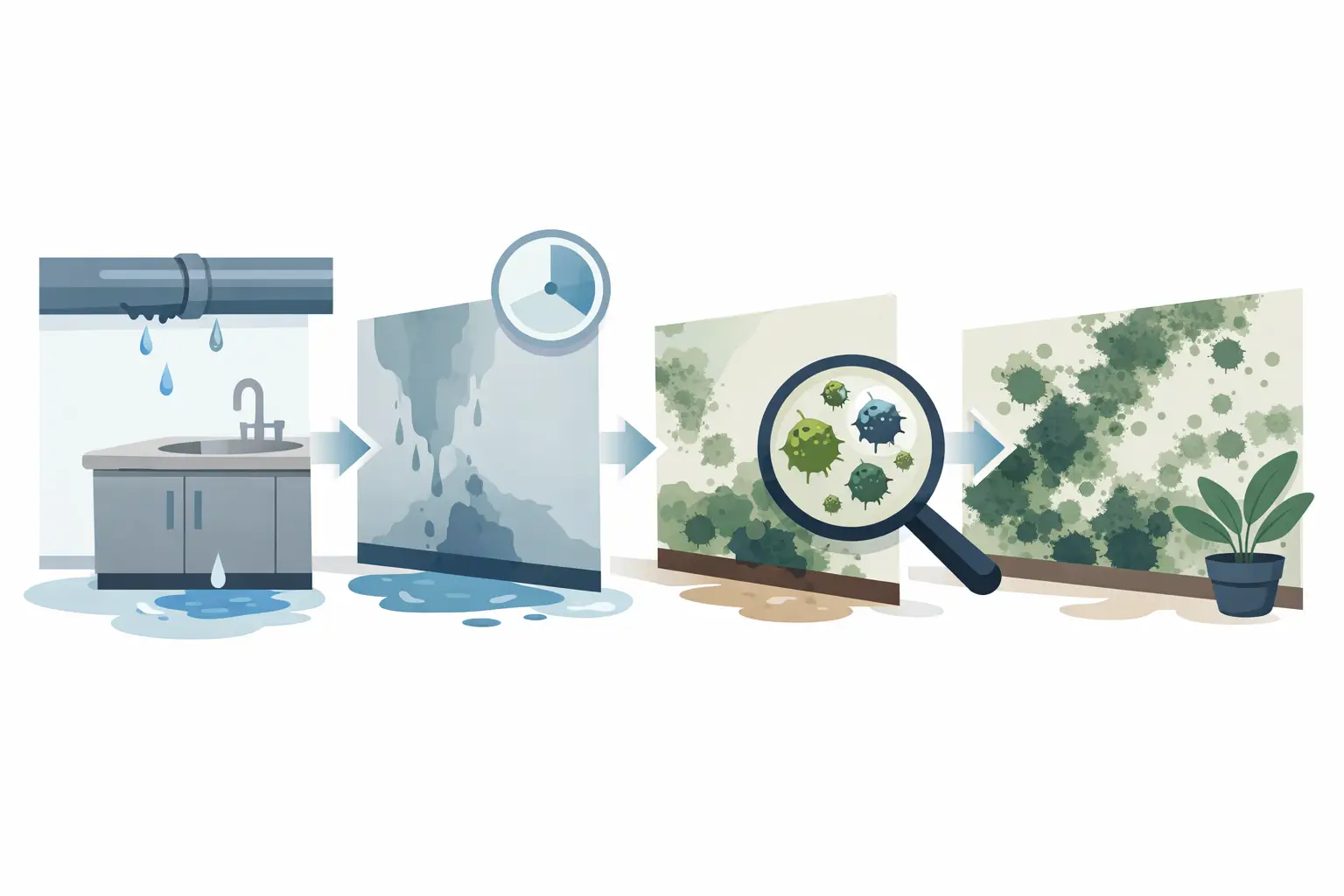
A leaking pipe behind a finished basement wall may seem like a plumbing issue on Monday and become a mold concern before the weekend. That is why the water damage mold timeline matters. In New Jersey homes, moisture from heavy storms, roof leaks, appliance failures, and damp basements can create the conditions mold needs far sooner than many property owners expect.
Mold is not created by water damage alone. Mold spores already exist naturally in indoor and outdoor air. The concern begins when those spores land on wet, porous materials such as drywall, insulation, carpet backing, wood framing, or cardboard and remain wet long enough to grow. Fast drying can prevent a minor water event from becoming a remediation project. Delays allow moisture to move into concealed building materials where the problem is harder to see and more costly to correct.
Water Damage Mold Timeline: The First 24 Hours
During the first hours after a leak, flood, or sewage backup, the priority is stopping the water source and documenting the affected area. Standing water and wet materials can damage finishes immediately, but mold may not be visible yet. That does not mean the risk is gone.
Humidity rises quickly in a closed home, especially during a humid New Jersey summer. Water can wick upward through drywall and baseboards, soak beneath flooring, and enter insulation cavities. A carpet that feels dry on top may still have a wet pad beneath it. Cabinets and wall assemblies can also hold moisture after an appliance line leak, even when the visible floor water has been removed.
Professional drying decisions depend on the water source, the materials affected, and how long they were wet. Clean water from a supply line is not handled the same way as water from a toilet overflow, stormwater intrusion, or a sewer backup. Contaminated water introduces additional sanitation concerns and often requires removal of porous materials rather than simple drying.
24 to 48 Hours: Mold Can Begin Colonizing
Under favorable conditions, mold can begin to colonize damp materials within 24 to 48 hours. The exact timing varies. Temperature, indoor humidity, airflow, the type of material, and the amount of water all affect how quickly growth develops. A small leak found and completely dried on the same day may never become a mold problem. Water trapped behind walls or below flooring for two days is a different situation.
At this stage, homeowners may notice a musty odor before seeing any discoloration. That odor should be taken seriously, particularly after water has entered a basement, attic, crawlspace, or wall cavity. It can signal persistent moisture or hidden microbial activity, even if the affected surface appears normal.
Opening windows alone is rarely a reliable drying plan during humid weather. Outdoor air may add moisture to the home, and household fans cannot confirm whether framing, insulation, or subflooring has reached an acceptable dry condition. Moisture assessment is what separates a surface that looks dry from a structure that is actually dry.
Days 3 to 7: Visible Growth and Hidden Spread
By the third day, mold growth may become more established on wet organic materials. Paper facing on drywall, wood products, carpet backing, dust accumulation, and stored belongings can all provide a food source. Staining may appear as black, green, gray, white, or brown spots, but color alone cannot identify the type of mold or determine the extent of contamination.
This is also when hidden damage becomes more likely. A visible patch near a baseboard may represent moisture inside the wall rather than a surface-only issue. In finished basements common throughout Morris, Sussex, Warren, and Somerset Counties, water can travel behind paneling, beneath laminate flooring, and into insulation without producing obvious signs until the problem has expanded.
Avoid disturbing visible growth by scrubbing aggressively, sanding, or spraying it with household chemicals. Those actions can spread spores to other areas and do not resolve the moisture source. Bleach may lighten staining on some nonporous surfaces, but it does not reliably address mold within porous drywall, wood, carpet, or insulation.
One to Two Weeks: A Small Leak Becomes a Property Issue
After a week or more of unresolved moisture, mold may spread beyond the original wet spot. Materials can begin to deteriorate, odors can intensify, and occupants may experience more noticeable irritation when spending time in the affected area. Individual reactions differ, but people with asthma, allergies, respiratory conditions, or compromised immune systems may be especially sensitive to poor indoor air quality.
For landlords and property managers, this timeframe can also create documentation and habitability concerns. A tenant report of a persistent odor, recurring condensation, or a ceiling stain should be investigated promptly. Painting over stains or replacing a section of drywall without identifying the source can leave moisture and mold behind, setting up a repeat problem.
A certified mold inspection is particularly valuable when the affected area is concealed, the odor persists after drying, visible growth is present, or there has been significant storm or plumbing damage. The inspection process can include a visual assessment, moisture evaluation, and air or surface sampling when appropriate. Testing is not a substitute for correcting a known moisture issue, but it can help clarify conditions, identify potential hidden contamination, and support a properly scoped remediation plan.
Weeks to Months: Established Mold and Recurring Moisture
When a water issue remains unresolved for weeks or months, mold can become an ongoing building condition rather than a one-time cleanup task. Common examples include a slow roof leak above an attic ceiling, a foundation seepage problem in a basement, condensation around poorly insulated ductwork, or a failed shower pan behind tiled walls.
At this point, remediation may require containment, removal of affected porous materials, detailed cleaning of salvageable structural components, controlled drying, and post-remediation verification. The appropriate scope depends on the size of the affected area, the water source, and whether contamination has spread through connected spaces or HVAC pathways.
The trade-off is straightforward: early professional evaluation may feel unnecessary when the leak seems small, but waiting can turn a limited drying project into a larger reconstruction and remediation expense. The goal is not to assume every water event has mold. The goal is to confirm that the building is dry and that concealed areas have not been compromised.
What Homeowners Should Do After Water Damage
Act quickly, but do not guess about hidden conditions. Stop the water source if it is safe to do so, remove valuable dry items from the area, and photograph visible damage for insurance records. If the water came from sewage, flooding, or another contaminated source, keep people and pets away from the affected area until it can be professionally evaluated.
Then pay attention to what happens after initial cleanup. A lingering musty smell, peeling paint, warped flooring, recurring stains, damp drywall, or new allergy-like symptoms in one room can all justify a professional assessment. These signs do not prove mold on their own, but they should not be dismissed after a known water event.
For Northern and Central New Jersey property owners, seasonal storms and humid basement conditions make moisture control a year-round responsibility. A prompt, certified inspection after significant or suspected hidden water damage provides clear answers and helps protect the health, structure, and long-term value of the property.
Leave a Reply