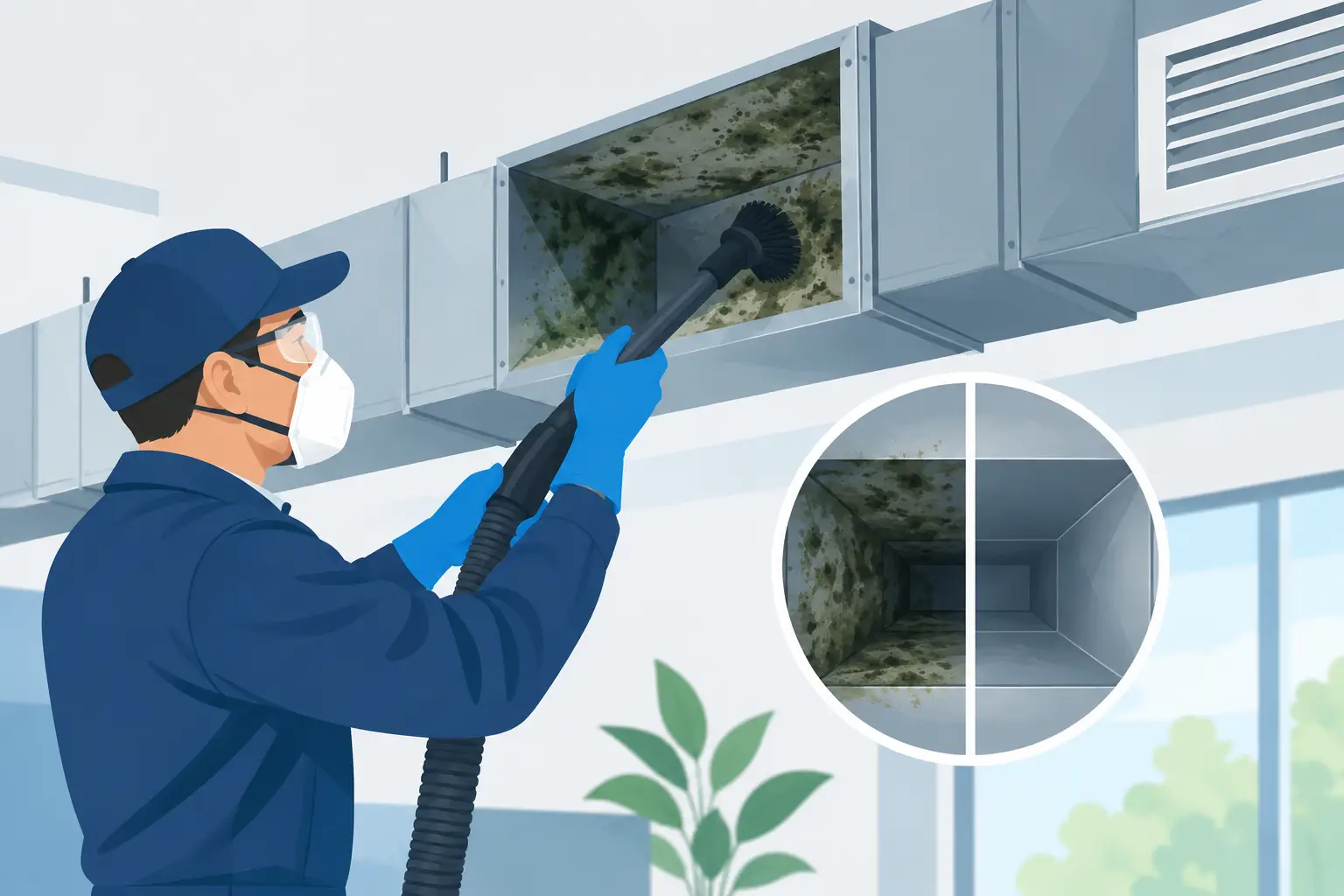
A musty odor that starts when the heat or air conditioning turns on is not a problem to ignore. When homeowners need to address mold in HVAC ducts, the concern is not just what may be growing inside the system. The larger issue is whether moisture, contaminated materials, or poor air handling are allowing the problem to spread through the home.
In Northern and Central New Jersey, HVAC mold concerns often follow basement moisture, roof or plumbing leaks, humid summers, storm damage, or an air conditioner that is not draining correctly. A professional assessment helps determine whether the ductwork is truly affected, where the moisture originated, and what work is necessary to correct the condition safely.
Why Mold in HVAC Ducts Requires a Careful Response
An HVAC system moves air through multiple rooms every day. If mold is present on duct insulation, near supply registers, on the evaporator coil, inside the air handler, or in accumulated debris, operating the system may disturb particles and distribute them beyond the original moisture source.
That does not mean every dark mark inside a vent is mold, or that every musty smell proves contamination in the ducts. Dust, construction residue, soot, and ordinary discoloration can look similar. Likewise, an odor may come from a wet basement, crawlspace, drain pan, or wall cavity rather than the ductwork itself. Guessing can lead to unnecessary cleaning while the real water problem remains active.
A qualified mold professional begins by identifying conditions that support growth. The inspection should consider visible materials, humidity, water intrusion, HVAC performance, drainage, insulation, and the relationship between the affected area and the rest of the property. For New Jersey homeowners and landlords, this fact-based approach protects both indoor air quality and the value of the property.
Signs You May Need to Address Mold in HVAC Ducts
A persistent musty odor when the system cycles is one of the clearest warning signs, especially after a water event or a period of high indoor humidity. Other concerns include visible staining around vents, recurring condensation on registers, debris that appears damp or discolored, or occupants noticing irritation that seems worse in certain rooms.
Pay particular attention if the property has experienced a flooded basement, a failed sump pump, a leaking roof, frozen pipes, or an air conditioning condensate overflow. Homes in Morris, Sussex, Warren, and Somerset Counties can face rapid moisture changes through the year. A small leak in an attic, utility room, or finished basement can affect duct sections that are out of sight.
However, visible mold near a register does not automatically mean the entire duct system is contaminated. The metal boot, drywall, insulation, or a nearby wall cavity may be the affected material. Determining the exact location matters because the remediation plan for a localized surface issue is very different from the plan for contaminated internal duct lining or an air handler.
Start With Inspection and Targeted Testing
Before duct cleaning or remediation begins, the moisture source must be located and corrected. Cleaning a contaminated area without fixing a leak, condensation issue, or drainage failure can create a cycle of repeated mold growth.
A professional inspection typically includes a visual review of accessible ductwork, registers, the blower compartment, evaporator coil area, drain pan, filters, insulation, and nearby building materials. Moisture readings and humidity conditions can help identify hidden concerns. In some cases, carefully selected air or surface samples may help clarify whether suspected growth is present and whether indoor conditions differ from an unaffected area.
Testing is not a substitute for inspection. If there is obvious mold growth and a clear moisture source, the priority is usually to document the extent of damage and develop a proper remediation scope. When the source or material is uncertain, targeted sampling can provide useful information for homeowners, buyers, landlords, and property managers who need defensible answers.
What Safe HVAC Mold Remediation Looks Like
The right response depends on the type of ductwork, the extent of contamination, and whether porous materials are involved. Sheet metal ducts may sometimes be cleaned when contamination is limited and the system can be accessed properly. Flexible ductwork, internal fiberglass insulation, deteriorated duct liner, or heavily contaminated filters may need removal and replacement because porous materials cannot always be restored reliably.
Professional remediation is more than spraying a chemical into vents. A proper scope may include controlled access to affected components, containment where needed, removal of damaged materials, detailed cleaning of appropriate surfaces, HEPA vacuuming, and correction of the moisture condition that allowed growth. The air handler and condensate system deserve special attention, since standing water or a clogged drain can continue feeding the problem.
The HVAC system may need to remain off during parts of the work to prevent particles from moving into unaffected rooms. That decision depends on the conditions found, the location of the contamination, and the remediation plan. After work is complete, the property should be evaluated to confirm that affected materials were addressed and that moisture control measures are functioning.
Why DIY Duct Cleaning Can Make the Problem Worse
Homeowners can take sensible short-term steps, such as replacing a visibly dirty filter with the correct type and reporting leaks promptly. But attempting to clean suspected mold deep inside ductwork can create additional exposure and damage.
Household bleach is not a reliable answer for porous duct insulation, fiberglass liner, or hidden HVAC components. It can also leave moisture behind, produce strong fumes, and give a false sense that the issue has been resolved. Similarly, fogging, fragrance products, and deodorizing sprays may temporarily mask odors without removing contaminated material or correcting the water source.
Improper brushing or vacuuming can dislodge debris into living spaces. Sealing vents without investigating the system can trap moisture or reduce airflow. If mold is suspected after a leak or flood, especially when multiple rooms are involved, professional evaluation is the safer course.
Preventing Mold From Returning to the Duct System
Long-term prevention is mainly a moisture-control issue. Keep indoor humidity in a reasonable range, address plumbing and roof leaks quickly, and make sure air conditioning condensate drains freely. Basements and utility areas often need particular attention because cool surfaces, poor ventilation, and seasonal dampness can produce condensation around ductwork.
Use HVAC filters that match the system manufacturer’s recommendations and replace them on schedule. A filter that is overloaded, damp, or incorrectly fitted can restrict airflow and contribute to system performance problems. Have the HVAC system serviced when it is not cooling, draining, or circulating air as it should.
Insulating ducts in unconditioned areas can reduce condensation, but the installation must be complete and dry. Damaged insulation should not simply be covered up. If a basement or crawlspace repeatedly becomes damp, the building envelope, drainage, dehumidification, and sump system may all need review.
Special Considerations for Landlords and Property Stakeholders
For rental properties, a documented response is especially valuable. Record tenant reports, water events, inspection findings, corrective work, and any recommended follow-up. Fast action helps limit damage, protects occupants, and reduces the chance that a localized issue becomes a larger building problem.
Real estate buyers and sellers should also be cautious when an HVAC system has a strong musty odor or a history of water damage. Duct contamination can be one piece of a broader moisture condition. An independent mold inspection can help define the condition of the property before repairs, negotiations, or closing decisions move forward.
If your home smells musty whenever the HVAC system starts, treat that pattern as useful evidence, not something to cover with air freshener. A professional inspection can identify what is happening behind the registers and give you a clear path toward a cleaner, drier home.
Leave a Reply