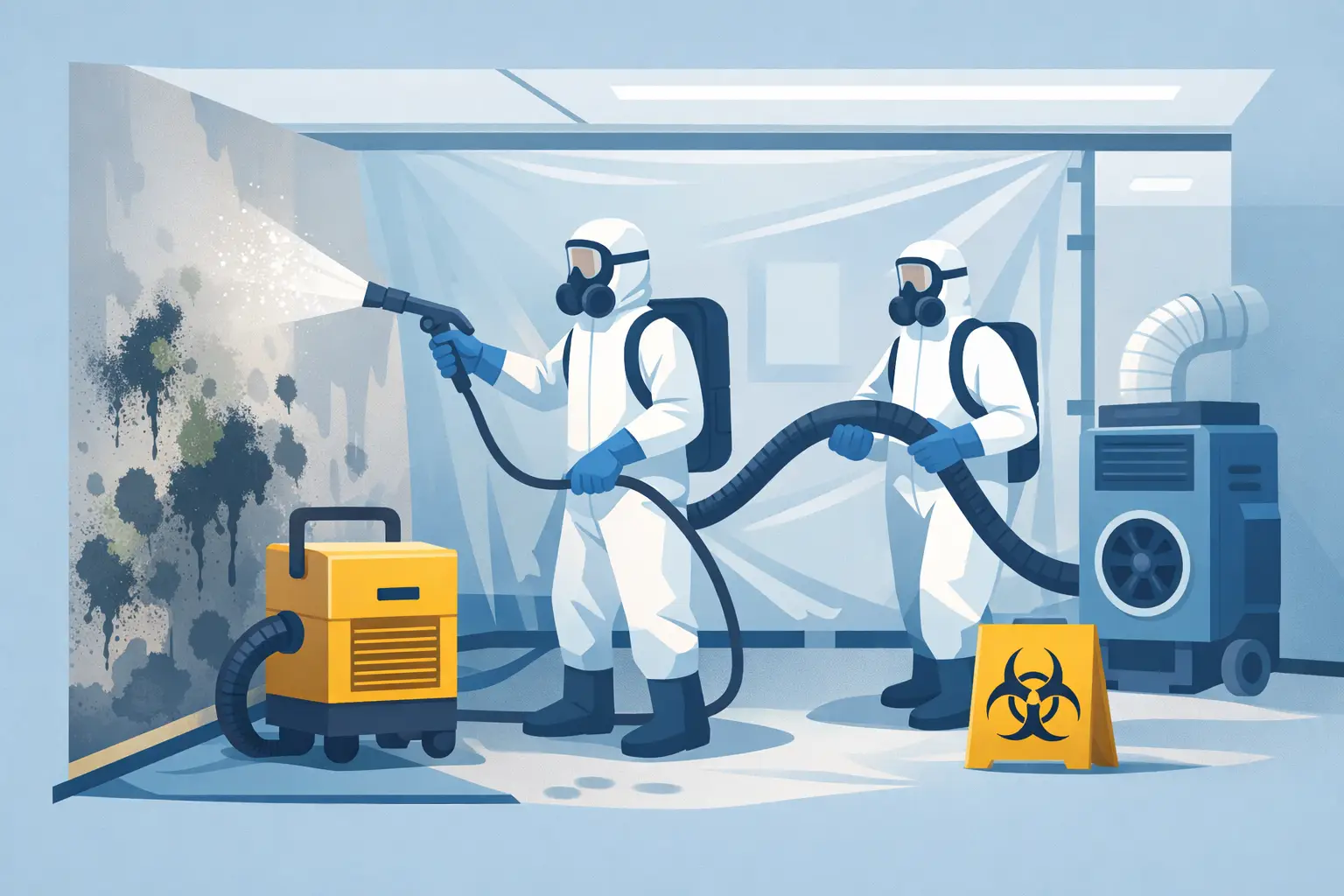
A musty basement after a North Jersey rainstorm is not just an annoyance. It is often the first sign that moisture has created the right conditions for mold to spread behind drywall, under flooring, or inside a crawl space. If you are asking how is professional mold remediation done, the short answer is that it is a controlled, standards-based process designed to find the source, contain contamination, remove damaged material safely, and confirm the area is clean before normal use resumes.
For homeowners in Morris, Sussex, Warren, Somerset, and nearby parts of New Jersey, that process matters because mold problems here are rarely random. Basement seepage, roof leaks, ice dam damage, humid summers, plumbing failures, and storm-related moisture all create repeat conditions for indoor mold growth. A professional remediation company is not just there to wipe off visible staining. The goal is to correct the mold condition in a way that protects indoor air quality and reduces the chance of it coming back.
How is professional mold remediation done in a real home?
Professional mold remediation usually begins well before any demolition or cleaning starts. In many cases, a certified inspection and testing phase comes first, especially when the extent of contamination is unclear or when there may be hidden growth. That step helps determine what is affected, how far the problem has spread, and whether airborne spores are moving into occupied areas of the home.
In a typical New Jersey house, this can mean checking a finished basement wall after a sump issue, opening up a ceiling cavity below an old bathroom leak, or evaluating attic sheathing after ventilation and humidity problems. Surface appearance alone is not enough. Mold often extends farther than homeowners expect, and the moisture source is just as important as the visible damage.
Once the affected area is defined, the remediation team creates a work plan based on the size of the contamination, the type of materials involved, and how close the mold is to living spaces. A small, isolated issue in an unfinished utility area is handled differently than widespread contamination affecting drywall, insulation, and HVAC-adjacent spaces.
The first step is moisture control
No professional remediation should begin without addressing the water source. If a pipe is leaking, a foundation wall is allowing seepage, or humid air is condensing in an attic or crawl space, that condition has to be corrected. Otherwise, even a thorough cleanup can fail.
This is one of the biggest differences between professional remediation and a quick cleanup. Killing or wiping mold without fixing moisture is temporary at best. In homes across Northern and Central New Jersey, recurring mold often traces back to chronic basement dampness, poor drainage, hidden plumbing leaks, or inadequate ventilation in bathrooms and attics.
Drying is also part of this phase. Depending on the situation, professionals may use dehumidification, air movement, or other drying methods to bring materials and the surrounding environment closer to acceptable moisture levels before and during remediation.
Containment protects the rest of the home
After the work area is identified, containment is set up to prevent spores and dust from spreading. This is a critical safety step, especially when mold is disturbed during material removal.
Containment usually involves physical barriers made from plastic sheeting, along with controlled entry points. In many jobs, negative air pressure is created so air flows into the contained area rather than out into the home. HEPA-filtered air scrubbers may be used to capture airborne particles generated during the work.
This matters in occupied homes where bedrooms, kitchens, and shared living areas may be only a few feet away from the affected space. Without proper containment, contamination can spread through foot traffic, air movement, or HVAC circulation. That can turn a localized issue into a much larger indoor air quality problem.
Removal is based on the material, not just the stain
One of the most common homeowner questions is whether mold can simply be sprayed and left in place. Sometimes a non-porous surface can be cleaned successfully. Often, however, mold-damaged porous materials need to be removed.
Drywall, insulation, carpeting, ceiling tiles, and some wood-based materials may not be salvageable when mold growth is established. The decision depends on how deeply contamination has penetrated, how long the material has been wet, and whether cleaning can return it to a safe condition. This is where experience matters. Over-removal can increase cost unnecessarily, but under-removal can leave contamination behind.
During removal, workers use controlled techniques to minimize dust and spore release. Debris is typically bagged or wrapped within the containment area before being moved through the property. The goal is not speed alone. The goal is to remove unsalvageable material without spreading the problem.
Cleaning the structure and the air
After damaged material is removed, the remaining structural surfaces are cleaned. Depending on the conditions, this may involve HEPA vacuuming, damp wiping, wire brushing, sanding, or other detailed cleaning methods appropriate for the material. The right approach depends on what the surface is, how heavy the contamination is, and whether visible growth is only part of the issue.
In some cases, staining may remain even after the mold itself has been removed. Cosmetic staining and active contamination are not the same thing, which is another reason professional evaluation matters. A clean-looking surface is not always a remediated surface, and a stained surface is not always still contaminated.
Air cleaning is often used during and after this phase. HEPA-filtered devices help reduce airborne particulates in the contained area. This is especially important when remediation involves demolition, overhead work, or confined spaces where spores can stay suspended.
How is professional mold remediation done when hidden mold is involved?
Hidden mold changes the scope of the job. If mold is inside wall cavities, beneath flooring, behind cabinets, or above ceilings, professionals may need to perform selective demolition to expose the full extent of damage. This is common after slow plumbing leaks or long-term humidity problems where the visible mold is only the edge of the affected area.
In these cases, inspection findings guide the remediation. Moisture mapping, air sampling, surface sampling, and direct visual assessment can help determine where containment needs to extend and which materials should be opened. A careful, evidence-based approach is better than guessing, especially in finished basements and occupied homes where unnecessary demolition creates extra cost and disruption.
For New Jersey property owners, hidden mold is a frequent issue in lower levels, around window leaks, and in attics with poor ventilation. It often goes unnoticed until an odor develops or renovation work exposes it.
Verification matters
A professional mold remediation job is not complete just because the visible mold is gone. The area should be evaluated to confirm that removal and cleaning were successful and that moisture conditions have been corrected.
Depending on the project, post-remediation verification may include a visual assessment, moisture checks, and, when appropriate, clearance testing. Independent testing can be especially valuable when there were elevated airborne spores, tenant concerns, real estate implications, or health-related sensitivities in the home.
This step gives homeowners something more reliable than a contractor’s opinion. It provides a documented basis for confidence that the area has been remediated properly. In higher-stakes situations, that documentation can matter for landlords, buyers, sellers, and insurance-related records.
What homeowners should expect during the process
Professional mold remediation can be disruptive, but it should not feel chaotic. Homeowners should expect a clear explanation of the affected areas, what will be removed, how containment will be maintained, and what steps are being taken to protect the rest of the home.
It is also fair to ask whether testing is recommended before or after remediation, whether HVAC precautions are needed, and how moisture issues will be addressed so the mold does not return. In many situations, especially where the source or extent is uncertain, certified mold inspection and testing provide the roadmap for effective remediation. That is part of why service-driven companies like Mold Remedy focus so heavily on proper identification before cleanup begins.
If you suspect mold in your home, the most useful next step is not buying stronger spray. It is getting clear answers about what is wet, what is contaminated, and what a safe remediation plan should look like. When the process is done correctly, it protects more than the surface you can see. It protects the air your household lives in every day.
Leave a Reply