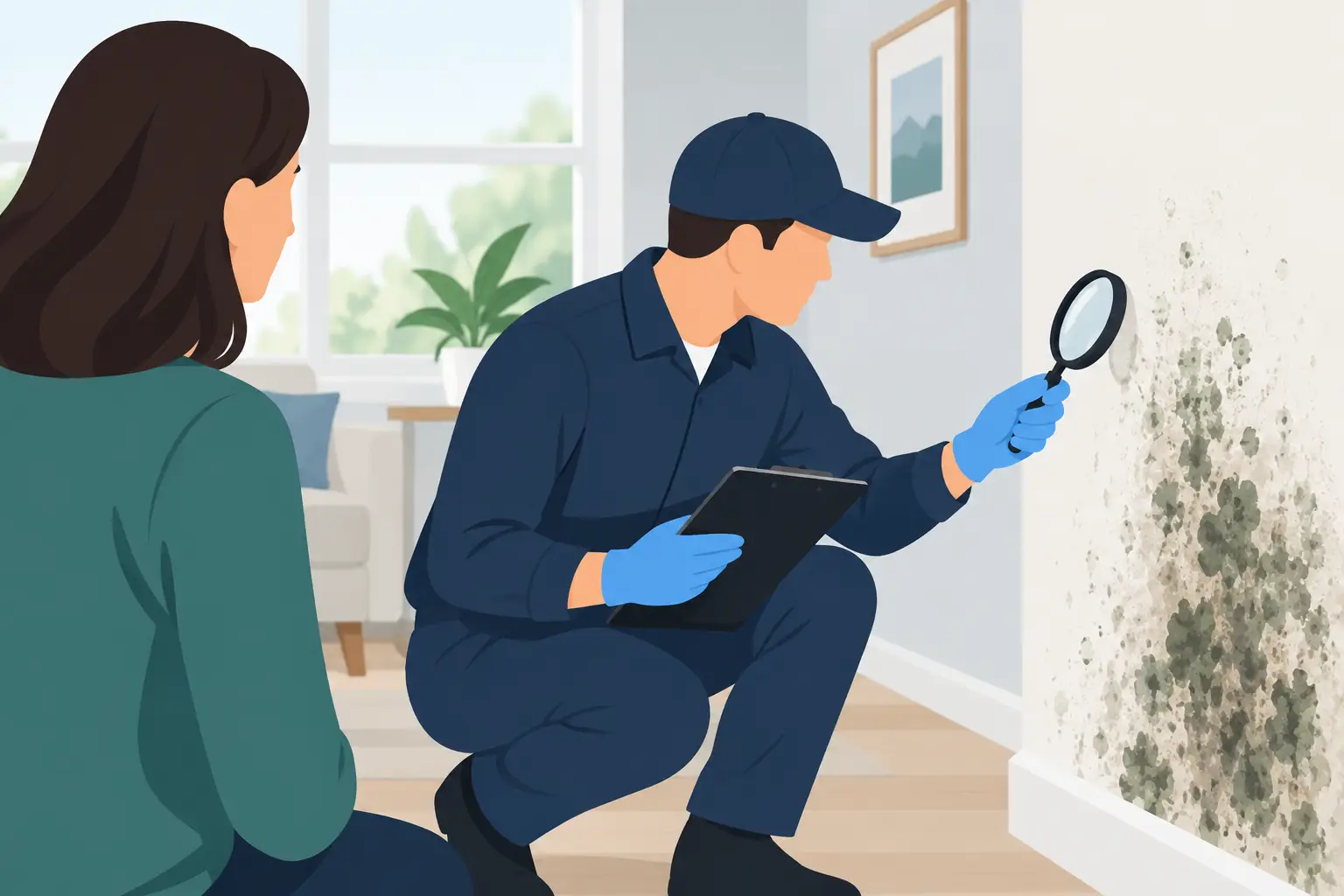
A basement can smell musty for months before a homeowner sees a single spot of growth. Then a contractor arrives, performs a quick visual check, and recommends thousands of dollars in demolition. At that point, the question is not just whether mold is present. Homeowners need to ask: are mold inspectors independent, and does the inspection give them an unbiased picture of what their property actually needs?
The answer depends on the company’s business model, scope of work, credentials, and willingness to document its findings. An inspector who also performs remediation is not automatically untrustworthy. But when the same company identifies the problem, defines the project, and profits from the cleanup, homeowners should understand the potential conflict and know how to protect themselves.
What independence means in a mold inspection
An independent mold inspector has no financial stake in selling the remediation work that may follow. Their role is to assess moisture conditions, identify suspected mold growth, determine the likely extent of impact, recommend appropriate testing when it will answer a useful question, and provide a written report.
A remediation contractor’s role is different. The contractor uses the inspection findings to contain, remove, clean, and correct mold-affected materials according to the project scope. In the strongest separation of duties, one qualified professional assesses the property and writes the protocol, while another company performs the remediation.
That separation can reduce pressure to recommend more work than necessary. It can also give a homeowner a clearer basis for comparing remediation proposals. Still, independence alone does not guarantee a quality inspection. A truly useful assessment must be thorough, evidence-based, and focused on the moisture source that allowed mold to grow.
Are mold inspectors independent when they also offer remediation?
Sometimes, but homeowners should ask more questions. Many mold companies offer both inspection and remediation because customers want one accountable provider and a faster path from discovery to resolution. This can be practical after a burst pipe, roof leak, sewage backup, or storm-related water intrusion, especially when time matters.
The trade-off is straightforward: a company that performs remediation has a financial interest in the recommended scope. A responsible company manages that conflict by documenting conditions carefully, explaining why each recommendation is needed, avoiding fear-based sales tactics, and allowing the customer to seek a second opinion.
Be cautious if an inspection consists only of a brief walk-through followed by a large estimate. Visible mold does not always reveal what is behind finished walls, under flooring, inside insulation, or around HVAC components. On the other hand, not every small, localized area requires extensive demolition, air sampling, or whole-house treatment. The scope should match the evidence.
For larger projects, disputed claims, real estate transactions, health-sensitive occupants, or situations where the source and extent are uncertain, hiring a separate inspector can provide valuable protection. An independent assessment is also helpful when an insurer, landlord, tenant, or property manager needs clear documentation from a neutral party.
What a credible inspection should include
A professional mold inspection is more than a visual search for dark staining. The inspector should investigate the conditions that support mold growth: water intrusion, elevated humidity, plumbing leaks, condensation, poor ventilation, damp building materials, and previous water damage.
In Northern and Central New Jersey, basements are a frequent concern. Older foundations, high seasonal humidity, groundwater pressure, blocked gutters, storm exposure, and poorly draining exterior grades can all keep lower levels damp. In Morris, Sussex, Warren, and Somerset counties, a home may also have concealed moisture from ice dams, roof leaks, crawl spaces, or unconditioned areas where warm indoor air meets cold surfaces.
A credible report should clearly distinguish among observed growth, suspected concealed growth, moisture damage, and conditions that warrant further investigation. It should identify the probable moisture source whenever possible. Removing mold without correcting the leak or humidity problem invites the same issue to return.
The report should also state the limits of the inspection. No noninvasive inspection can see through every wall or under every floor. If evidence points to a hidden problem, the inspector may recommend targeted exploratory openings, moisture mapping, or material sampling rather than guessing.
When mold testing helps – and when it does not
Mold testing can be useful, but it is not a substitute for inspection. Air and surface samples can help establish a baseline, compare indoor and outdoor conditions, support a clearance decision after remediation, or investigate concerns where no visible growth is found.
Testing is especially valuable when there is a persistent musty odor, a history of water damage, unexplained allergy-like symptoms that improve away from the building, or concern about contamination in hidden areas. Surface sampling can help document suspect material. Air sampling may help identify unusual airborne mold conditions when collected and interpreted in context.
However, testing should not be sold as a stand-alone answer. A laboratory result does not locate a leak, assess damaged building materials, or tell a homeowner exactly how much removal is necessary. Mold is naturally present outdoors, and indoor results require professional interpretation. If there is obvious visible mold and an active moisture problem, the priority is typically to correct the moisture source and safely address the affected materials.
Ask whether the company uses appropriate sampling methods, documents where samples were collected, and explains what the results mean in plain language. A report that simply lists mold types and spore counts without connecting them to the building conditions is incomplete.
Questions to ask before hiring a mold inspector
Before scheduling an inspection, ask whether the company performs remediation work and whether it can provide an inspection-only service. There is nothing wrong with requesting a separate assessment before approving a major project.
You should also ask about the inspector’s training and certifications, the type of equipment used to identify moisture, whether the inspection includes moisture readings and thermal imaging when appropriate, and what you will receive in writing. Credentials matter, but so does the professional’s process. A certified inspector should be able to explain the evidence behind every recommendation.
For a remediation proposal, ask which materials must be removed, why containment is needed, how dust and spores will be controlled, how the underlying moisture issue will be corrected, and how the work will be verified at the end. For substantial projects, post-remediation verification by an independent inspector can provide added confidence that the affected area was cleaned properly and is dry.
Avoid companies that guarantee a home is “mold-free.” Mold spores exist naturally in normal environments. The practical goal is to correct moisture problems and return the indoor environment to normal, dry, and clean conditions – not to make impossible promises.
Choosing the right approach for your New Jersey property
A separate inspector and remediation contractor are often the best choice when the project is significant or the facts are unclear. That model creates an additional layer of oversight and can make it easier to evaluate competing proposals. It may cost more upfront, but it can prevent unnecessary work and provide better documentation.
A qualified full-service provider may be appropriate when the cause and scope are obvious, the affected area is limited, and the company gives you a detailed, transparent assessment. The key is not whether one company can handle both steps. The key is whether the recommendation is supported by documented moisture findings, visible conditions, sampling when justified, and a sensible remediation plan.
If your home has a recurring odor, recent water intrusion, visible growth, or a damp basement that never seems to dry out, do not rely on a quick estimate alone. Ask for evidence, insist on a written scope, and make sure the moisture problem is addressed before the cleanup begins. That is how you protect your family, your property, and the value of the work you pay for.
Leave a Reply