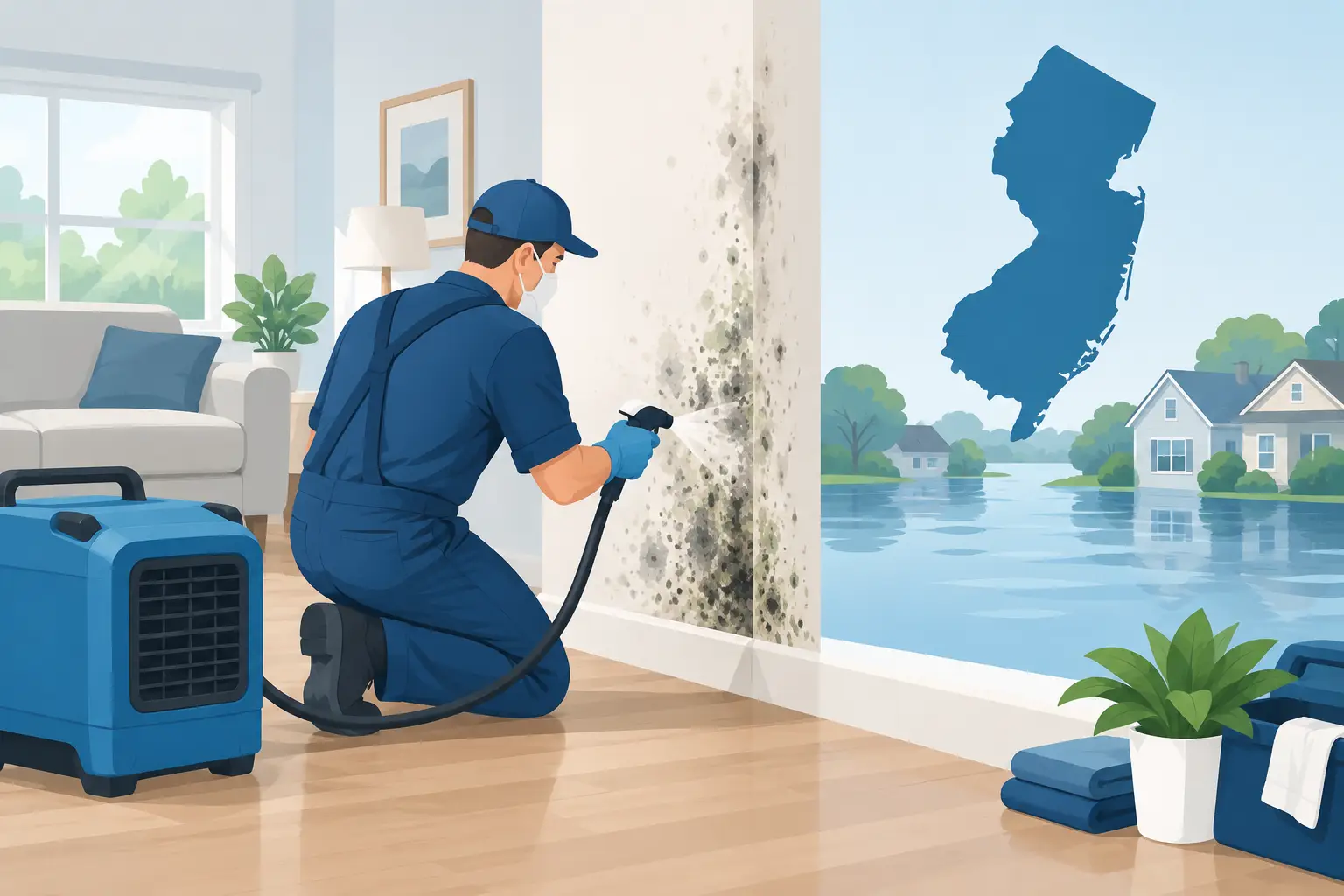
A flooded basement can look manageable once the standing water is gone. That is often the point when the more serious risk begins. Flood mold recovery is not simply cleaning visible staining or running a few fans. It is the process of finding where water traveled, removing moisture from building materials, identifying microbial growth, and restoring the affected area without spreading contamination through the home.
For homeowners, landlords, and property managers in Northern and Central New Jersey, speed matters. Heavy rain, storm runoff, failed sump pumps, frozen pipes, and sewer backups can introduce significant moisture into basements, crawl spaces, finished lower levels, and wall cavities. A musty odor after a flood should not be treated as a cosmetic issue. It is a signal that moisture may still be present or mold may already be growing in concealed materials.
Why Flooding Creates a Mold Problem So Quickly
Mold needs moisture, a food source, and time. Unfortunately, most homes provide plenty of organic material for it to use, including drywall paper, wood framing, carpeting, insulation, furnishings, and dust. After a flood, damp materials can support mold growth in as little as 24 to 48 hours under the right conditions.
The water source affects the recovery plan. Clean water from a supply line is not handled the same way as rainwater that entered through a foundation opening. Floodwater, groundwater, and sewage-contaminated water can contain bacteria, chemicals, and debris in addition to creating mold conditions. Materials exposed to contaminated water may need to be removed rather than dried and retained.
New Jersey homes are especially vulnerable where basements sit below grade, drainage is poor, or older foundations allow water intrusion during intense storms. Even when a basement floor appears dry, moisture can remain behind finished walls, under flooring, inside insulation, or beneath stored belongings. Those hidden areas are where mold frequently takes hold.
The First 24 to 48 Hours After Water Damage
Personal safety comes first. Do not enter an area with standing water if electrical hazards, structural damage, or contamination are possible. If the water came from a sewage backup or outside flooding, avoid direct contact and keep children and pets away from the affected space.
Once conditions are safe, document the damage with photographs and notify the appropriate insurance carrier. Then focus on stopping the water source and beginning professional drying as soon as possible. Waiting for a wet basement to air out on its own can allow moisture to migrate deeper into materials.
Move unaffected belongings out of the area when it can be done safely. Wet cardboard boxes, upholstered furniture, carpeting, padding, and fabric items should not remain packed together in a humid basement. They can hold moisture for days and make drying more difficult.
Avoid applying bleach, fragrance sprays, or paint over visible mold. Bleach is not a complete solution for porous materials such as drywall, carpet, insulation, and unfinished wood. It can also create a false sense that the problem has been resolved while moisture and growth remain behind the surface.
Flood Mold Recovery Requires More Than Visible Cleaning
A proper flood mold recovery plan starts with an assessment of the moisture event and the materials affected. A professional inspection considers the source of the water, how long materials were wet, the extent of visible growth, humidity conditions, and signs of concealed damage.
Moisture Detection and Damage Mapping
Professionals use moisture meters, thermal imaging when appropriate, and visual inspection to identify damp building components. A wall may look normal while its insulation is saturated. Flooring can appear dry from above while moisture is trapped beneath it. This step helps define the actual work area rather than relying only on what can be seen.
In a finished basement, for example, targeted openings may be necessary to inspect wall cavities after significant flooding. This is not needless demolition. It can prevent a much larger problem from developing behind newly cleaned or painted surfaces.
Mold Testing When It Answers a Real Question
Testing is not required for every small, clearly defined mold issue, but it can be valuable after flood damage. Air and surface sampling may help establish whether indoor airborne mold levels are elevated, identify questionable growth, or document conditions before and after remediation.
Testing is particularly useful when there is a persistent musty odor, occupants report irritation that improves away from the property, visible growth is limited but moisture exposure was widespread, or a landlord or buyer needs objective documentation. Results should be interpreted alongside a physical inspection. A lab report alone does not locate the moisture source or tell you what materials must be removed.
Containment, Removal, and Controlled Cleaning
When mold contamination is extensive or has affected porous materials, remediation should be performed under controlled conditions. The goal is not to disturb mold spores and distribute them to clean parts of the house. Professional containment may include isolated work areas, negative air pressure, protective barriers, and HEPA-filtered air control.
Damaged drywall, insulation, carpet padding, and other materials that cannot be reliably cleaned and dried are removed. Structural framing and other salvageable surfaces are cleaned using methods appropriate to the material and the level of contamination. The work area is then dried to acceptable moisture conditions before rebuilding begins.
There is a trade-off homeowners should understand: saving materials can reduce immediate costs, but retaining wet or contaminated porous materials can create a longer and more expensive mold problem. The right decision depends on the water category, duration of exposure, material type, and confirmed moisture readings.
When Professional Mold Remediation Is Necessary
A small surface area of mold from a minor, quickly resolved leak may be manageable with limited cleaning and moisture correction. Flooding is different. Professional evaluation is strongly recommended when water affected multiple rooms, remained for more than a day, involved sewage or outdoor floodwater, soaked carpeting or drywall, or produced a lasting odor.
You should also seek help when mold returns after cleaning, when moisture readings remain elevated, or when the affected area includes HVAC components, crawl spaces, finished basements, or concealed cavities. These conditions are difficult to assess accurately without specialized equipment and experience.
For property owners in Morris, Sussex, Warren, Somerset, and nearby New Jersey counties, a local professional understands common regional conditions such as high summer humidity, foundation seepage, storm-driven water intrusion, and damp below-grade spaces. Certified inspection and remediation services provide a documented, standards-based path forward when the scope is uncertain.
Preventing Mold After the Recovery Work Is Done
Flood recovery is incomplete if the original moisture pathway remains. Once the area has been dried and remediated, address the cause of water entry. That may mean repairing a foundation crack, improving exterior grading, cleaning gutters, extending downspouts, servicing a sump pump, correcting a plumbing leak, or installing dehumidification for a chronically damp basement.
Keep indoor humidity in check, particularly in lower levels during New Jersey’s humid months. A dehumidifier can help, but it is not a substitute for correcting active leaks or groundwater intrusion. Monitor basement walls, stored items, and floor edges after major storms. Early detection gives you a much better chance of limiting damage.
Before rebuilding, confirm that affected materials are dry and that remediation work has been properly completed. In larger or more complex projects, post-remediation verification can provide added confidence that the area meets the project goals before new drywall, flooring, or finishes conceal the structure again.
A dry basement is not just more comfortable. It protects the air your household breathes, preserves the value of the property, and gives you confidence that the next heavy New Jersey rain will not restart the same problem.
Leave a Reply