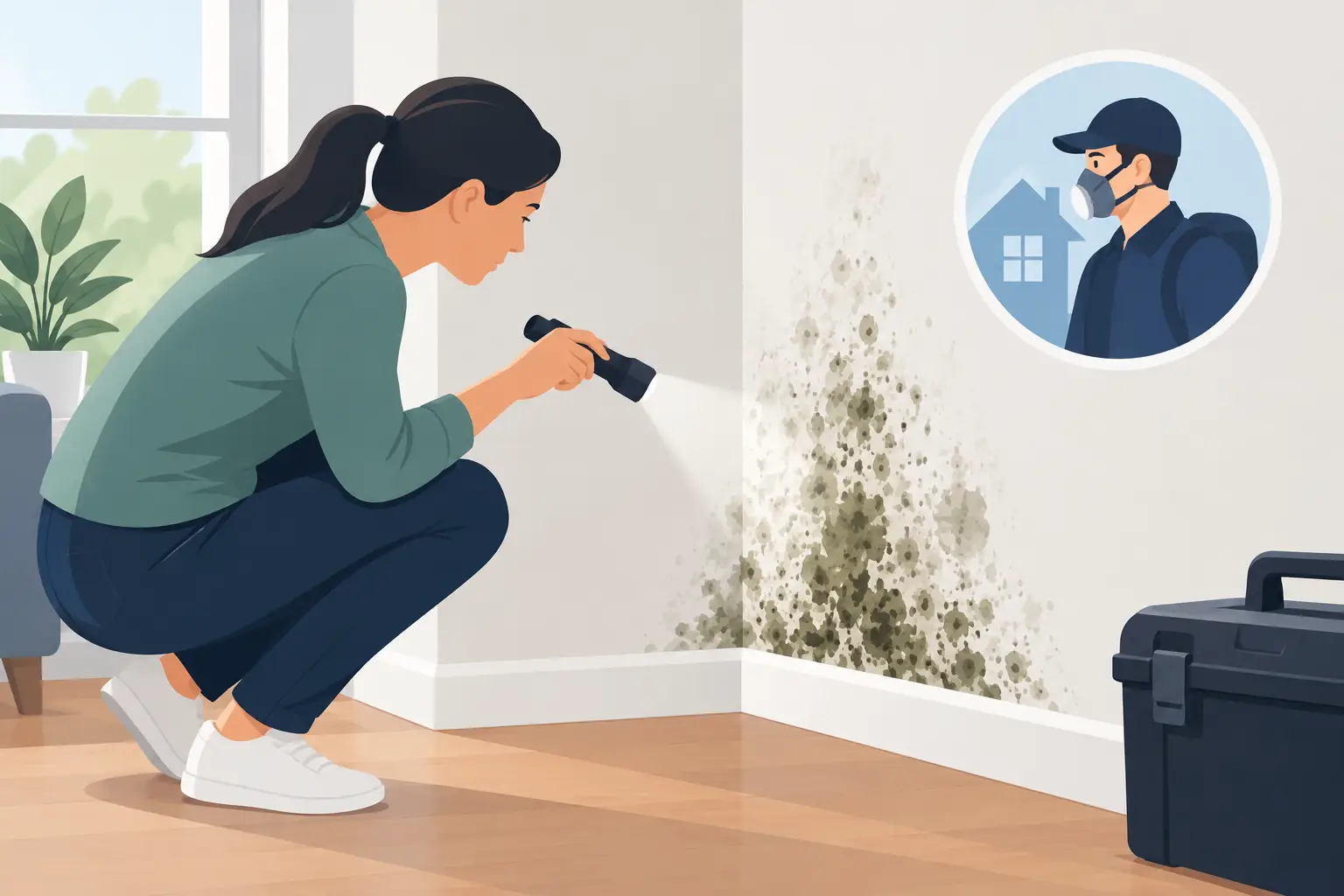
A musty odor that returns after cleaning is not a housekeeping problem to ignore. It can be the first sign that moisture is feeding fungal growth behind a wall, beneath flooring, or inside a building cavity. Hidden mold discovery gives New Jersey homeowners a way to identify the source before a small leak becomes a larger indoor air quality and property damage issue.
In Morris, Sussex, Warren, Somerset, and nearby counties, homes routinely face conditions that make concealed mold more likely: humid summers, wet basements, snowmelt, storm-driven roof leaks, aging plumbing, and poorly ventilated bathrooms. Mold does not need a flooded room to grow. A slow pipe drip or a brief water intrusion that never fully dried can be enough.
Why Hidden Mold Is Different From Visible Growth
Visible mold gives property owners a clear signal to act. Hidden mold does not. It often grows where moisture is trapped and airflow is limited, including behind drywall, under carpeting, around window framing, beneath cabinets, and inside HVAC components.
This is why painting over a stain, spraying a deodorizer, or running a dehumidifier for a few days may not solve the underlying problem. Those actions can reduce an odor or improve the appearance of a surface, but they do not confirm whether damp materials remain inside the structure.
The concern is not simply whether mold is present. Mold is common outdoors, and some background level of airborne spores exists in nearly every building. The real question is whether there is an abnormal indoor moisture condition supporting active growth. A professional inspection is designed to answer that question with evidence, not guesswork.
Signs That Can Point to Concealed Mold
A persistent earthy or musty smell is one of the most common warning signs. The odor may be stronger after rain, when the air conditioner runs, after a shower, or when a basement has been closed up for several days. If the smell comes and goes, that does not mean the problem has resolved. Changes in humidity can make an existing issue more noticeable.
Other signs deserve attention as well. Watch for recurring water stains, peeling paint, warped baseboards, bubbling drywall, soft flooring, discolored caulk, condensation on windows, or a section of wall that feels unusually cool or damp. In rental properties, repeated complaints about odors or dampness should be documented and investigated promptly.
Health symptoms alone cannot identify mold in a home. Allergies, respiratory irritation, and headaches can have many causes. However, when occupants notice symptoms that seem to improve when they leave the property, alongside odors or moisture damage, an indoor environmental assessment may be appropriate. A qualified professional can evaluate the building conditions without making assumptions based on symptoms alone.
Where Certified Inspectors Look First
Effective hidden mold discovery starts with locating moisture. Mold testing has value when it is part of a complete inspection, but a lab result without an understanding of the building can leave important questions unanswered.
A professional inspector typically begins with the property history. Recent roof work, plumbing repairs, sewage backups, appliance leaks, foundation seepage, ice dams, and storm damage can all direct the investigation. Even a leak that was repaired months ago may have left wet drywall, insulation, or subflooring behind.
The inspection then focuses on high-risk areas. Basements and crawl spaces are frequent trouble spots in New Jersey homes because masonry walls, slab edges, sump systems, and poor drainage can introduce moisture over time. Bathrooms, laundry rooms, kitchens, attics, utility closets, and rooms below roof penetrations also require close review.
Moisture meters, thermal imaging equipment, and visual inspection help identify suspicious areas without opening every wall. These tools are valuable, but they have limits. A thermal image may show a temperature difference, not mold itself. A moisture meter may indicate elevated moisture but cannot determine the exact cause on its own. The inspector must interpret the readings in the context of the building and may recommend limited, targeted investigation where evidence supports it.
When Mold Testing Helps – and When It Does Not
Air and surface sampling can help document conditions, compare affected and unaffected areas, or clarify a situation when mold is suspected but not visible. Samples should be collected using a defined plan and interpreted alongside moisture findings, visible conditions, and the history of the home.
Air sampling can provide a snapshot of airborne fungal material at the time of collection. It may be useful when an odor is present, when occupants need documentation, or when a concealed source is suspected. Still, a normal air sample does not automatically rule out hidden mold. Air movement, weather, HVAC operation, and the location of a concealed growth area can affect results.
Surface samples can help identify material on a specific area, but they are not a substitute for finding the moisture source. If visible mold growth is extensive and the cause is obvious, testing may not be the first priority. The immediate need may be to control moisture, define the affected materials, and plan proper remediation.
For homeowners, the practical takeaway is simple: testing should answer a useful question. It should not be used as a stand-alone reassurance tool or as a reason to postpone correcting an active leak.
Why DIY Investigation Can Make the Problem Worse
Homeowners can and should take reasonable first steps after a leak. Stop the water source if possible, remove standing water safely, and document damage with photos. But tearing into a wall or pulling up flooring without a containment plan can spread dust and mold fragments into other rooms.
DIY test kits are also limited. Many can detect mold from a surface or grow organisms from the air, but they rarely explain whether the result is meaningful, where the moisture is coming from, or what work is needed. Because mold spores are naturally present in the environment, an uncontextualized result can create unnecessary alarm or false confidence.
The same caution applies to bleach, fogging products, and strong fragrances. These may mask odors or discolor a surface, yet they do not reliably address mold within porous materials such as drywall, insulation, carpet padding, or particleboard. If materials have been significantly affected, safe removal and detailed cleaning may be necessary.
What Professional Remediation Should Address
A proper response begins with correcting the moisture condition. That could mean repairing a plumbing leak, improving exterior drainage, addressing a roof failure, controlling basement humidity, or repairing a ventilation problem. Without this step, mold can return after cleaning.
The remediation scope should also match the size and location of the affected area. Small, isolated surface growth may require a different approach than contamination inside wall cavities, under a finished basement floor, or across multiple rooms after a storm or appliance failure. Larger or more complex projects generally require containment, controlled removal of damaged porous materials, HEPA vacuuming, detailed cleaning, and measures to prevent cross-contamination.
For property owners, documentation matters. Before-and-after photos, moisture readings, sampling where appropriate, and a clear scope of work can be especially helpful for landlords, real estate transactions, insurance discussions, and families seeking confidence that the issue was handled responsibly.
When to Schedule an Inspection
Do not wait for a wall to turn visibly black or for a basement to flood. Schedule a professional inspection when a musty odor persists, water damage keeps returning, a leak was hidden for an unknown period, or a previously wet area was never professionally dried. An assessment is also prudent after significant storm intrusion, sewage contamination, or major plumbing damage.
For Northern and Central New Jersey property owners, early investigation can protect more than indoor air. It can prevent structural materials from deteriorating, reduce the scope of future remediation, and preserve the value of the home. A certified mold professional can help determine whether there is a concealed issue, what evidence supports it, and what should happen next.
A home should not leave you guessing about what is behind the walls. When moisture, odors, or recurring damage raise concerns, getting a qualified evaluation early is the clearest path toward a safer, drier property.
Leave a Reply