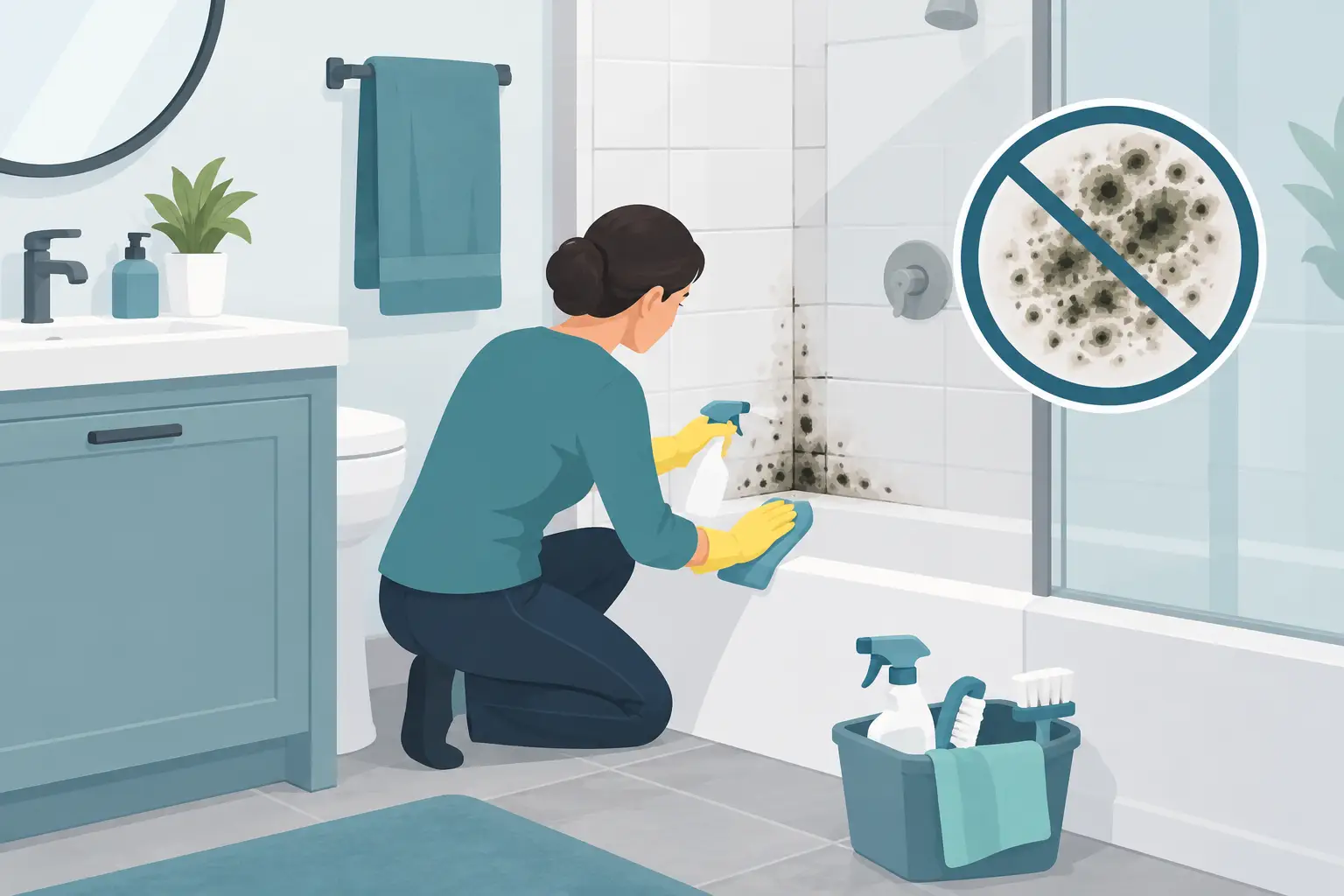
A black patch around the tub caulk, a musty smell after every shower, or bubbling paint near the vanity can signal more than a cleaning problem. To contain bathroom mold effectively, homeowners need to stop moisture, limit disturbance, and determine whether growth is confined to a surface or spreading behind walls, under flooring, or into ventilation pathways.
Bathrooms are especially vulnerable in Northern and Central New Jersey homes. Long humid summers, cold-weather condensation, aging exhaust fans, plumbing leaks, and storm-related water intrusion can all create the damp conditions mold needs. The visible spot may be small, but its source may not be.
How to Contain Bathroom Mold Safely
Containment means preventing mold spores and moisture from reaching clean parts of the home while the underlying issue is identified and corrected. It is not simply spraying a stained area and hoping the discoloration disappears.
Start by reducing moisture immediately. Run the bathroom exhaust fan during bathing and for at least 20 to 30 minutes afterward. If the fan vents into an attic rather than outdoors, or if it barely pulls steam from the room, it may be contributing to the problem instead of solving it. Open a window when weather permits, keep wet towels from staying piled up, and repair active plumbing leaks without delay.
If mold is visible, avoid dry brushing, sanding, scraping, or using a household fan to dry the area. Those actions can release spores into the air and move them to nearby bedrooms, hallways, or HVAC returns. Keep the bathroom door closed when practical and limit access, especially for children, older adults, and anyone with respiratory sensitivities.
Small, isolated surface growth on a hard, nonporous material may be cleaned carefully after the moisture source has been corrected. However, a bathroom is full of materials that can hold moisture beneath the surface: drywall, grout, caulk, insulation, particleboard vanities, subflooring, and painted trim. If material is soft, swollen, crumbling, repeatedly stained, or still smells musty after cleaning, the issue should not be treated as a routine surface-cleaning job.
Find the Moisture Source Before Cleaning
Mold does not grow without a moisture condition. A professional inspection focuses on why the bathroom stayed damp long enough for growth to begin. That answer is often more valuable than the visible mold itself.
A slow supply-line leak beneath a sink can wet the vanity base for months. A failing shower pan can allow water to reach the subfloor after every use. Loose tub caulk can send water into the wall cavity, while roof or window leaks may show up in an upstairs bathroom only after heavy rain. In homes with basements or crawlspaces, elevated indoor humidity can also affect bathrooms that appear to have no direct leak.
Look for clues such as peeling paint, warped baseboards, loose flooring, rust around fixtures, stained ceilings below an upstairs bathroom, or persistent condensation on mirrors and windows. A musty odor that returns soon after cleaning deserves attention, even if no mold is visible. Odor can indicate hidden growth in a wall cavity, under a vanity, or around ductwork.
A moisture meter, thermal imaging, and targeted air or surface sampling can help distinguish a localized surface issue from a concealed moisture and mold condition. Testing is not necessary for every small spot, but it can be valuable when the source is unclear, growth keeps returning, occupants report symptoms that improve away from the home, or a property owner needs documented findings for a tenant, buyer, insurer, or contractor.
Why bleach is not a containment plan
Bleach is often treated as a universal mold solution, but it does not correct water intrusion or dry saturated building materials. On porous materials such as drywall, wood, grout, or caulk, it may lighten visible staining without reaching growth beneath the surface. Strong fumes can also make a small bathroom unpleasant or unsafe to occupy during cleaning.
The larger concern is false confidence. If wet drywall remains behind a freshly cleaned wall, mold can return because the environment that supported it was never corrected. Effective containment pairs controlled cleanup with moisture control, removal of damaged materials when needed, and verification that the area is dry.
When Bathroom Mold Requires Professional Containment
Professional assessment is the safer course when growth covers a broad area, returns repeatedly, follows a leak or flood, appears around damaged drywall, or may be hidden behind finished materials. The same is true when there is a strong musty odor without an obvious source.
Bathroom mold can be deceptively contained on the surface while extending into the wall behind a shower or beneath a vinyl floor. Opening those materials without proper controls can spread dust and spores into the home. Certified remediation professionals use work-area containment, controlled removal methods, HEPA-filtered equipment, and cleaning procedures designed to keep affected material from contaminating unaffected rooms.
For larger or concealed conditions, the work may involve isolating the bathroom with plastic barriers, protecting pathways used to remove materials, and maintaining negative air pressure where appropriate. Damaged porous materials may need to be removed rather than cleaned. The exact approach depends on the size of the affected area, the materials involved, the source of moisture, and whether the HVAC system or adjacent rooms may be affected.
Homeowners should be cautious about relying on a contractor who immediately proposes demolition without identifying the moisture source, or one who promises to solve every mold concern with a single chemical treatment. A complete remediation plan should explain what was found, how the area will be contained, what materials must be removed or cleaned, how moisture will be corrected, and how the work area will be evaluated afterward.
Protecting the Rest of the Home During Repairs
Once a bathroom moisture issue is discovered, act promptly, but do not rush into uncontrolled demolition. If a plumber needs to access a wall, ask how dust and potentially affected materials will be managed. Move toothbrushes, medications, linens, cosmetics, and other personal items out of the work area. Keep clean towels and clothing away from the bathroom until the area has been properly cleaned and dried.
If a leak has reached a ceiling below the bathroom, avoid puncturing or tearing into the wet area unless a qualified professional has advised it. Saturated ceilings can sag or fail, and opening them can release contaminated debris. Photograph visible damage, note when the issue was first noticed, and document any plumbing repairs or water events. This record can be useful for insurance discussions, landlord communication, and remediation planning.
For landlords and property managers, quick action also protects the property and the people living in it. A tenant’s report of dampness, odors, or recurring bathroom mold should lead to a documented moisture investigation, not just a repainting visit. Repainting over a stain can conceal evidence temporarily while the damage continues behind the wall.
Preventing Mold From Returning
A remediated bathroom still needs moisture management. Use an appropriately functioning exhaust fan every time the shower or tub is used. Fan timers are useful because they keep ventilation running after the room is empty. Repair deteriorated grout and caulk before water reaches the wall system, and inspect under-sink plumbing periodically for drips or swollen cabinet materials.
Keep indoor humidity under control, particularly during New Jersey’s humid months and after major storms. A dehumidifier may help in persistently damp homes, but it should not substitute for repairing a leak, improving ventilation, or correcting drainage around the property. If condensation remains common despite using the fan, the bathroom may need a ventilation evaluation.
Bathroom mold is a warning that moisture has exceeded what the room can handle. Addressing it early protects indoor air quality, preserves finishes and structural materials, and reduces the chance that a manageable bathroom issue becomes a larger remediation project. When the source is uncertain or the growth may be concealed, a certified inspection provides the clear next step homeowners need.
Leave a Reply