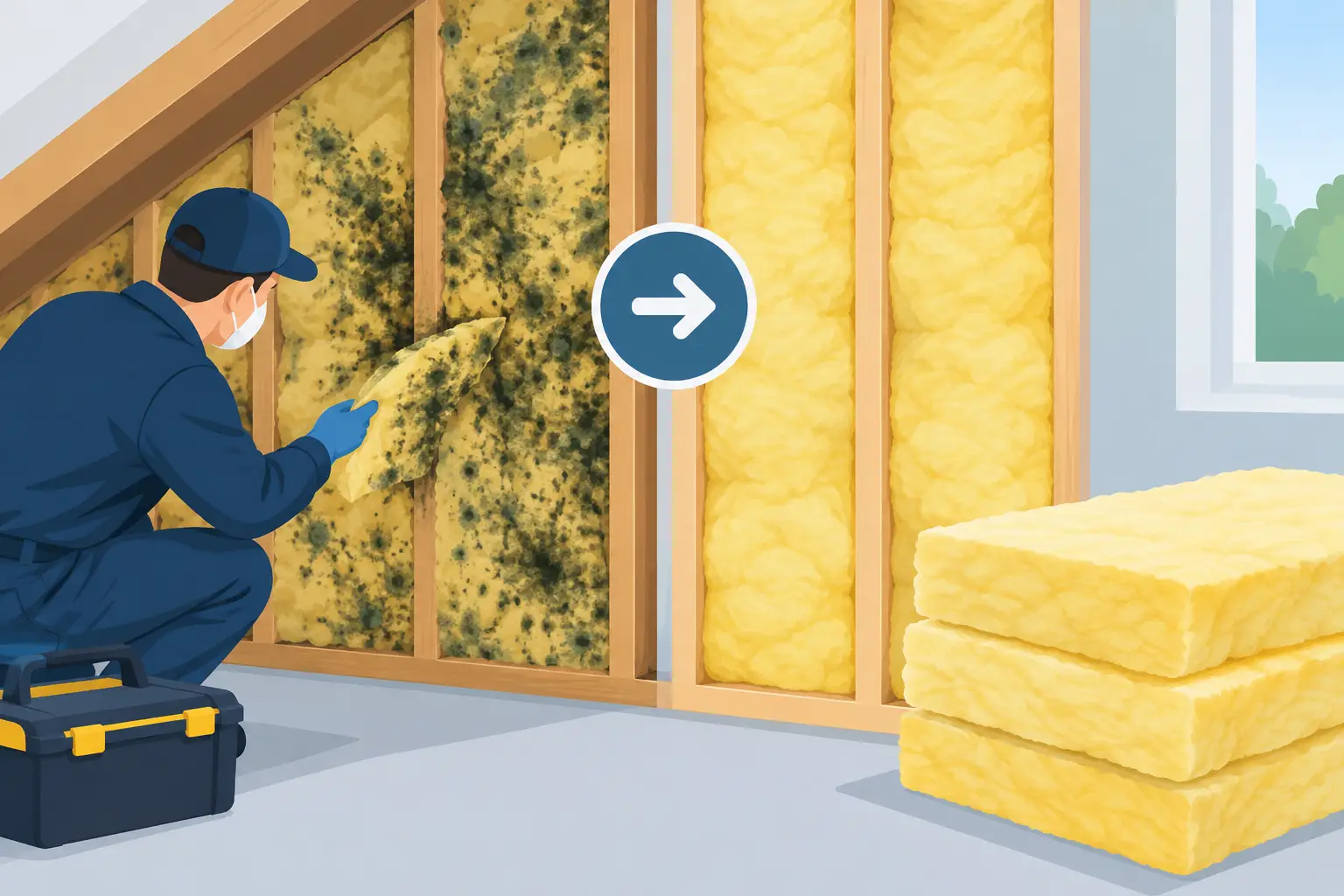
A wet basement wall, a slow roof leak, or a storm-related plumbing failure can leave a problem homeowners cannot see from the room: mold damage insulation. Insulation is designed to hold air, but many common types can also hold moisture, dust, and mold contamination after a water event. Covering it with new drywall or running a dehumidifier may hide the odor temporarily, but it does not confirm that the affected material is clean or dry.
For homeowners and property managers in Northern and Central New Jersey, this issue is especially common after heavy rain, foundation seepage, ice-dam leaks, burst pipes, and long-running bathroom or laundry moisture. A professional mold assessment helps determine whether insulation can remain, needs controlled removal, or is part of a larger hidden moisture problem.
Why Insulation Is Vulnerable to Mold Damage
Insulation often sits inside wall cavities, attic floors, crawlspaces, and basement rim joists – places where air movement is limited and leaks can go unnoticed. When water reaches these areas, drying can be slow. That creates conditions where mold can grow on the paper facing of fiberglass batts, dust collected within the material, surrounding wood framing, or cellulose insulation itself.
The material type matters. Fiberglass fibers do not provide a food source for mold, but the facing, trapped debris, and nearby building materials can. Cellulose insulation is paper-based and can retain moisture, making it more likely to support mold growth after prolonged wetting. Foam insulation is generally less absorbent, yet mold may still develop on its surface or behind it when moisture is present.
The larger concern is not simply whether a homeowner sees dark spotting on insulation. It is whether a water source remains active, whether contamination has spread through the cavity, and whether damp insulation is preventing framing and sheathing from drying.
Signs of Mold Damage Insulation Behind Walls or Ceilings
Visible mold is a clear reason to schedule an inspection, but hidden insulation problems often appear first as changes in the room. A persistent musty odor near an exterior wall, ceiling, basement, or attic access point is one warning sign. So are water stains, peeling paint, warped drywall, condensation, or a room that feels unusually humid after a known leak.
Pay close attention if any of the following occurred before the odor or staining began:
- A roof, window, plumbing, or appliance leak
- Basement flooding or recurring foundation seepage
- Wind-driven rain or storm damage
- A bathroom, kitchen, or laundry ventilation failure
These events do not automatically mean all insulation is contaminated. The duration of wetness, amount of water, material type, and access to drying all affect the outcome. However, insulation enclosed behind drywall cannot be evaluated reliably by smell alone.
Professional inspectors may use moisture meters, thermal imaging, visual examination, and strategically selected air or surface samples when appropriate. Testing is not a substitute for finding the moisture source, but it can help clarify the scope of suspected mold conditions and support a more accurate remediation plan.
Can Moldy Insulation Be Cleaned?
In many cases, porous insulation affected by mold or contaminated water should be removed rather than cleaned. Fiberglass batts, blown-in cellulose, and similar materials are difficult to clean thoroughly because contamination can settle throughout the fibers or paper backing. Trying to spray or fog insulation does not remove damaged material, correct the moisture source, or prove that contamination is gone.
There are limited situations where insulation may be dry, unaffected, and able to stay in place. For example, a short-lived, clean-water leak that is discovered immediately may affect only a small, accessible area. A qualified professional still needs to verify that the cavity, insulation, and adjacent framing have dried properly.
Replacement is usually the safer path when insulation has sustained prolonged moisture exposure, visible mold growth, sewage or floodwater contamination, a strong persistent odor, or significant water damage. The decision should be based on conditions inside the assembly, not on whether the drywall surface looks normal again.
What Professional Removal and Replacement Should Address
Removing damaged insulation without controlling the area can spread dust and mold particles into occupied rooms. This is why remediation involves more than pulling out wet material. The work should begin with identifying and stopping the moisture source, whether that means repairing a roof leak, correcting drainage, addressing a plumbing issue, or improving ventilation.
For a contained mold condition, trained remediation professionals establish appropriate protections for the work area, remove affected porous materials, and clean remaining structural surfaces using methods suited to the materials and extent of contamination. HEPA-filtered equipment and controlled work practices help limit cross-contamination during removal.
The cavity must then be dried and evaluated before new insulation and drywall are installed. Reinsulating too early can trap moisture against wood framing or sheathing and restart the problem. Where conditions warrant it, post-remediation verification or follow-up testing can provide additional confidence that the area has been properly addressed before reconstruction.
This sequence matters for landlords and property owners as much as homeowners. Documenting the source, assessment findings, remediation scope, and drying results creates a clearer record of how the issue was handled. It also reduces the risk of spending money on cosmetic repairs while concealed moisture remains.
New Jersey Moisture Problems That Put Insulation at Risk
New Jersey homes face several recurring moisture patterns. Older basements in Morris, Sussex, Warren, and Somerset Counties may have stone or block foundations that allow seasonal seepage. Finished basements can conceal damp insulation behind framing for months. Attics may develop condensation when bathroom fans terminate improperly, air leaks allow warm indoor air upward, or roof ventilation is inadequate.
Summer humidity adds another layer of risk. Cool basement walls and HVAC components can create condensation when humid air enters the space. In winter, ice dams and roof leaks may wet attic insulation while leaving only subtle staining on the ceiling below. A one-time storm can be serious, but repeated minor wetting is often what creates the most persistent mold conditions.
The practical response is to investigate moisture early. Keep gutters and downspouts directing water away from the foundation, repair plumbing leaks promptly, use properly vented bath fans, and maintain indoor humidity at a reasonable level. These measures help prevent recurrence, but they do not replace a professional inspection after a significant leak, flood, or mold odor.
When to Call a Mold Professional
Call for a professional assessment when you find visible growth on insulation or drywall, notice a musty odor that returns after cleaning, experience water intrusion, or suspect a hidden leak in a wall, attic, crawlspace, or finished basement. Prompt evaluation is particularly valuable before buying or selling a property, reopening a water-damaged room, or replacing drywall after a repair.
A certified mold inspection and testing provider can help distinguish a small surface issue from a concealed contamination problem. That distinction protects your budget as well as your indoor environment. Removing more material than necessary is disruptive, but leaving damaged insulation in place can allow moisture and odor problems to continue behind newly finished surfaces.
If your home has had a leak or dampness event, do not wait for staining to become obvious. A careful evaluation of the concealed areas now can protect the air your family breathes and prevent a manageable repair from becoming a larger reconstruction project later.
Leave a Reply