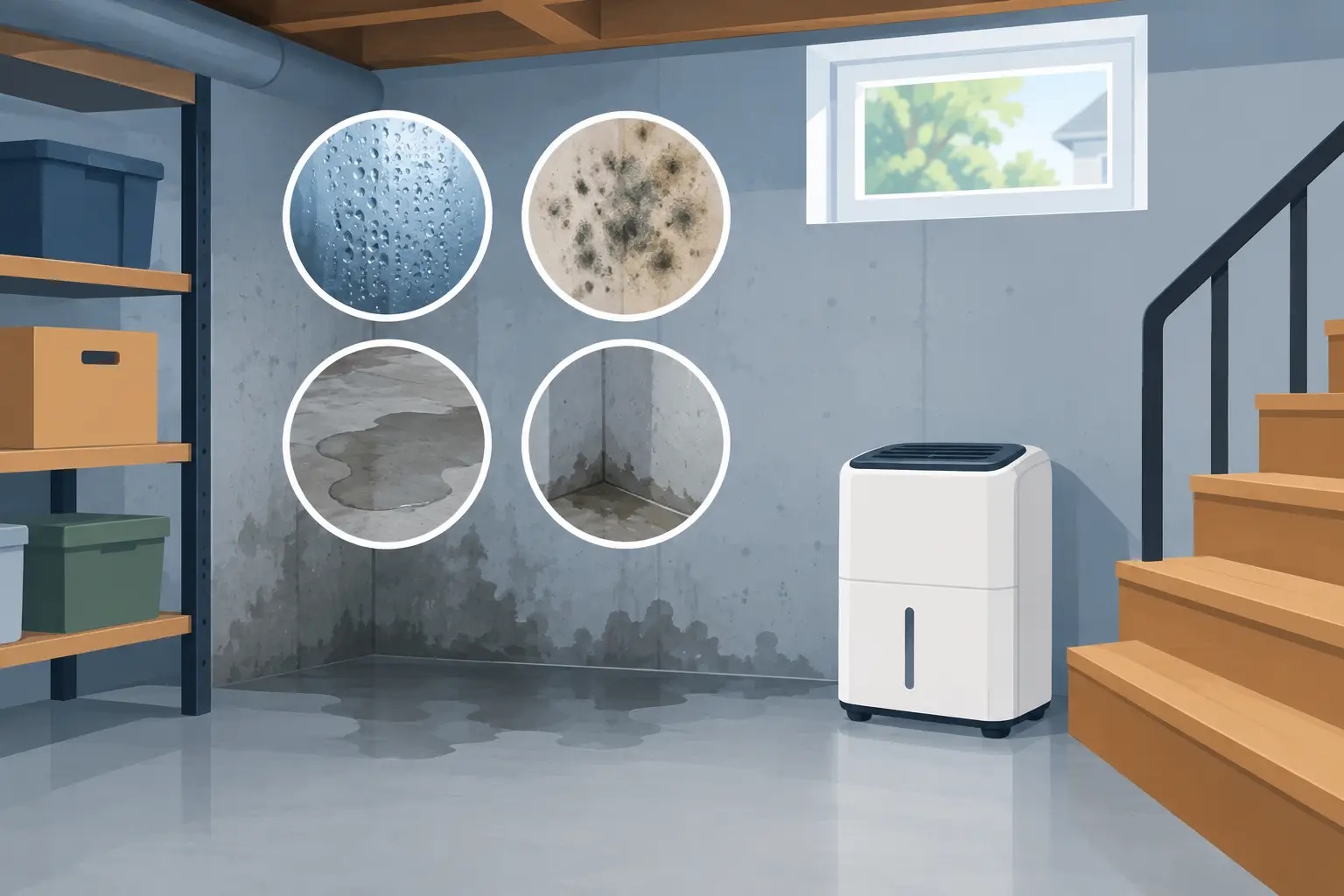
A basement can feel dry enough during a quick walk-through and still hold damaging levels of moisture in the air. New Jersey basement humidity is a common problem because our homes contend with humid summers, cold winters, heavy rain, snowmelt, aging foundations, and changing groundwater conditions. When moisture remains trapped below grade, it can create the conditions mold needs to grow on framing, drywall, stored belongings, carpeting, and other porous materials.
A musty odor, damp feeling, peeling paint, or condensation on pipes should not be dismissed as a normal basement issue. These signs often point to an unresolved moisture source. The sooner that source is identified, the better chance you have of protecting indoor air quality, your property value, and the parts of the home that are difficult and costly to repair.
Why Basement Humidity Is So Common in New Jersey
Basements sit below ground, where surrounding soil holds moisture for long periods after rain or snow. In Morris, Sussex, Warren, Somerset, and nearby counties, properties may also experience seasonal shifts in the water table, runoff from sloped lots, or pressure against older foundation walls. Even a basement with no obvious flood history can take on moisture through hairline cracks, unsealed penetrations, deteriorated masonry, or poorly directed exterior drainage.
Summer creates another challenge. Warm, humid outdoor air enters a cooler basement through open windows, doors, rim joists, and gaps around utility lines. As that warm air cools, it can condense on concrete walls, metal ductwork, cold-water pipes, and floors. This is why opening basement windows does not always dry the space. On a humid July day, it may make the problem worse.
In winter, indoor air patterns change. Heated air rises through the home, and replacement air can be drawn into lower levels through gaps in the structure. Cold foundation surfaces can then support condensation, particularly in unfinished basements with limited insulation. The source may vary by season, but the result is the same: persistently elevated relative humidity and a favorable environment for mold growth.
When New Jersey Basement Humidity Becomes a Mold Risk
Relative humidity is the percentage of moisture air is holding compared with the maximum amount it can hold at a given temperature. For most homes, basement humidity should generally be kept below 60%, with a target range around 30% to 50% when practical. A properly placed hygrometer can provide useful information, but one reading alone does not tell the full story. Humidity can vary significantly between the center of the room, a closed storage area, and a damp corner behind finished walls.
Mold does not require a dramatic flood to develop. A slow pipe leak, repeated condensation, damp cardboard boxes, wet carpeting after a storm, or moisture moving through a concrete foundation can be enough. Mold growth may be visible as spotting or discoloration, but it can also remain concealed behind paneling, beneath flooring, inside wall cavities, or around insulation.
A persistent earthy or musty odor is particularly meaningful. Odor does not identify the specific type or amount of mold present, but it is a reason to investigate. Covering the smell with air freshener or paint does not correct the moisture condition that caused it.
Warning Signs That Need Attention
Watch for changes that recur after rain, during humid weather, or when the basement is closed for several days. These include visible staining on walls or ceilings, bubbling paint, white mineral deposits on masonry, warped baseboards, rust on appliances or metal fixtures, condensation on windows and pipes, and damp or deteriorating stored items.
Pay attention to how the space feels as well. A clammy basement, a dehumidifier that runs constantly without improving conditions, or air that smells musty after the HVAC system starts can signal a problem beyond ordinary seasonal humidity. For landlords and property managers, tenant reports of odors or dampness should be documented and addressed promptly, especially when a finished basement is used as living space.
Finding the Moisture Source Before Treating the Mold
A dehumidifier can reduce moisture in the air, but it is not a substitute for correcting water intrusion. If exterior water is entering through the foundation, if a plumbing line is leaking, or if an appliance drain is malfunctioning, the underlying issue must be repaired. Otherwise, humidity and mold conditions are likely to return.
Professional assessment begins with the building conditions. This may include checking visible surfaces, plumbing areas, sump systems, drainage patterns, foundation cracks, windows, HVAC components, and areas where moisture is likely to become trapped. In a finished basement, targeted inspection may be needed around exterior walls, under carpeting, behind stored contents, and near prior water-damaged materials.
Mold testing can be appropriate when visible growth is limited or absent but odors, symptoms, or moisture evidence raise concern. Air and surface sampling, when performed and interpreted correctly, can help establish whether mold conditions are affecting the indoor environment and where further investigation should focus. Testing should support a clear inspection strategy, not replace one. A sample result without an understanding of the moisture source does not solve the problem.
What Homeowners Can Do Right Away
Homeowners can take sensible steps to limit additional moisture while arranging an inspection or repair. Run a properly sized dehumidifier and empty or drain it consistently. Keep basement windows closed during humid weather, especially when outdoor air feels heavy. Move boxes, furniture, and stored belongings away from foundation walls so air can circulate and hidden dampness is easier to spot.
Also check that gutters are clear and downspouts discharge well away from the foundation. Grade should direct surface water away from the home, not toward it. If a basement has a sump pump, confirm that it is operating and that the discharge line is not returning water near the foundation.
Do not rely on these measures if materials are already wet, mold is visible, or water damage is recurring. Bleach, household sprays, and surface wiping may not address mold embedded in porous materials or hidden behind finishes. Disturbing a larger contaminated area without containment can spread spores and debris into other parts of the home.
When Certified Mold Inspection and Remediation Are Needed
Professional help is warranted when there is visible mold, a recurring musty odor, moisture after storms, a known leak, water damage involving drywall or carpeting, or concern about contamination in a finished basement. It is also the right step when a home is being sold, a tenant has raised an indoor air quality concern, or an insurer requires documentation after water damage.
A qualified mold professional can distinguish between a humidity issue that can be corrected with ventilation and drainage improvements and a contamination issue requiring controlled remediation. Where remediation is necessary, the work should focus on containment, removal of affected materials when appropriate, cleaning of remaining surfaces, and moisture correction. Simply treating visible staining while leaving wet building materials in place is not a reliable solution.
Mold Remedy provides certified inspection, mold testing, and remediation-focused guidance for homeowners and property stakeholders facing basement moisture concerns across Northern and Central New Jersey. The goal is not to create unnecessary alarm. It is to identify what is happening, determine how far the issue extends, and recommend a safe, standards-based path forward.
If your basement smells damp after every storm or the humidity stays high despite your efforts, treat that pattern as useful evidence. A timely professional evaluation can turn an uncertain basement problem into a defined repair plan before mold and moisture damage gain more ground.
Leave a Reply