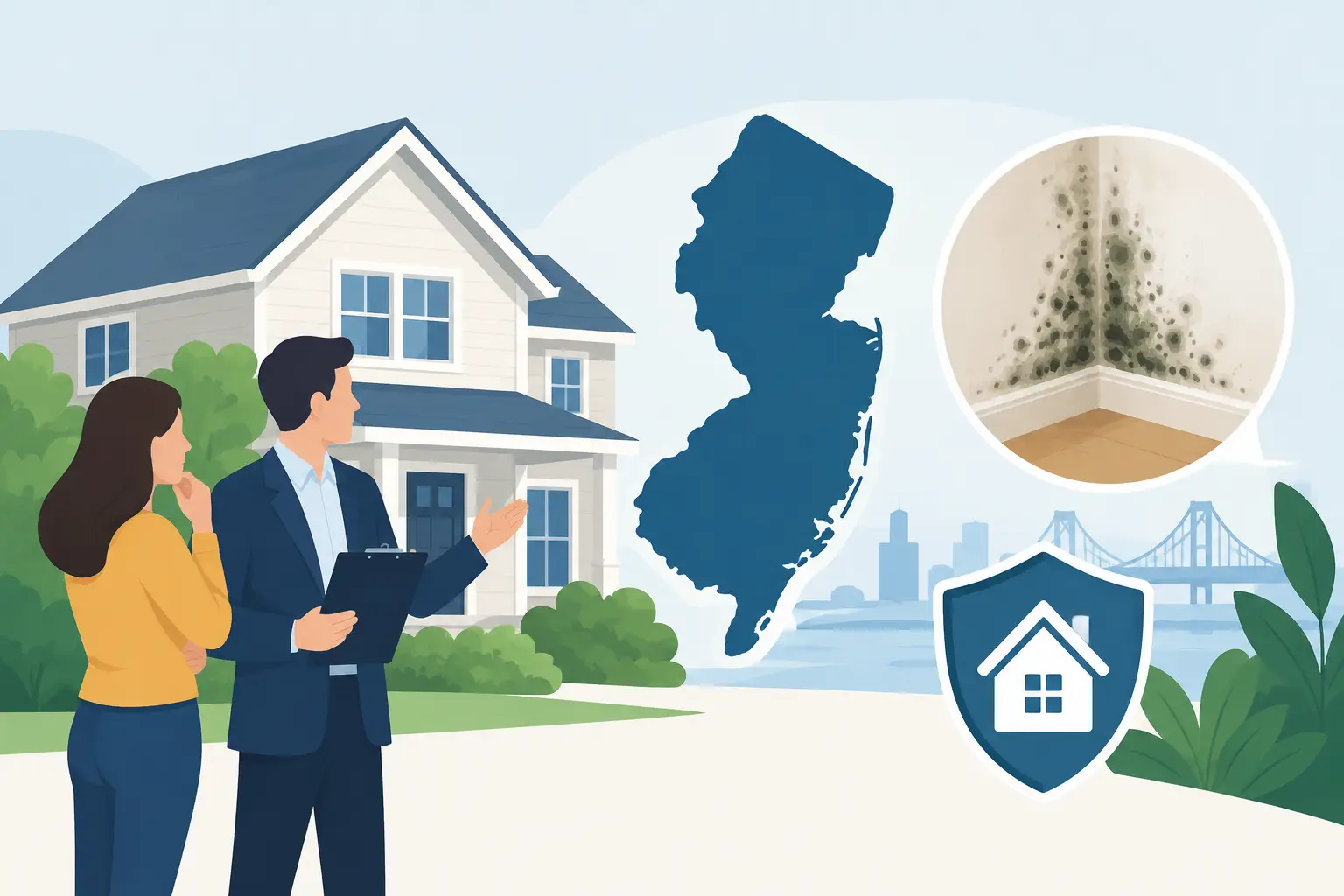
A musty basement after a Morris County rainstorm is more than an unpleasant home-maintenance issue. It can become a dispute between a landlord and tenant, a concern during a home sale, or evidence of a concealed water problem. New Jersey mold laws do not create one simple statewide rule for every mold situation. Instead, responsibility is shaped by housing standards, habitability duties, disclosure requirements, insurance terms, and the facts behind the moisture source.
For homeowners, landlords, and occupants, the practical message is clear: document the problem early, correct the water intrusion, and use qualified professionals when growth is widespread, hidden, or connected to an occupied living area.
How New Jersey Mold Laws Apply to Rental Housing
New Jersey does not have a single mold statute that sets a universal acceptable spore count or requires every visible spot to be laboratory tested. Mold is often handled through broader laws requiring rental housing to be safe, sanitary, and fit for human habitation.
A landlord’s responsibility generally depends on the cause and the condition of the unit. A recurring roof leak, plumbing failure, flooding event, wet wall cavity, or failed bathroom ventilation can create conditions that violate housing or health standards if left unresolved. The issue is not merely whether mold is visible. The key question is whether the property has a moisture condition that threatens habitability or sanitation.
Tenants should report leaks, water damage, dampness, and visible growth in writing as soon as they notice it. A clear report should identify the location, when the condition began, whether it is spreading, and whether there are related issues such as peeling paint, ceiling staining, soft drywall, or a persistent odor. Photos and dated records matter, particularly when a problem returns after an incomplete repair.
Landlords should respond by finding and stopping the source of moisture first. Painting over staining, applying bleach to a wall, or running a dehumidifier without correcting a leak does not resolve the underlying condition. A defensible response includes an inspection, repairs to the moisture source, proper drying, and remediation appropriate to the extent of contamination.
When Code Enforcement May Be Involved
Local health departments, housing inspectors, and code officials may become involved when a rental property has serious sanitation, water intrusion, or maintenance violations. Enforcement is local, so procedures can differ among municipalities in Somerset, Sussex, Warren, Morris, and surrounding counties.
An inspection report or violation notice can be significant, but it is not the only useful evidence. Professional moisture readings, photographs of concealed damage uncovered during repairs, air or surface sampling when appropriate, and a written remediation scope can also help establish what occurred and what was done to correct it.
Tenants should avoid withholding rent, arranging major repairs, or ending a lease based solely on internet advice. New Jersey landlord-tenant remedies are fact-specific. When the housing condition is serious or a dispute has developed, legal guidance and local code enforcement information may be necessary.
What New Jersey Mold Laws Do Not Do
One common misunderstanding is that New Jersey has a statewide legal mold threshold that automatically determines whether a building is safe. There is no single number that works that way. Mold testing results require professional interpretation because indoor conditions vary by building, weather, ventilation, materials, and the outdoor spore level on the day samples are collected.
Another misconception is that every mold issue requires laboratory testing. Testing can be valuable when growth is hidden, when occupants report odors or symptoms without an obvious source, when documentation is needed for a dispute, or when post-remediation verification is appropriate. If there is clearly visible growth caused by a known leak, the immediate priority is usually to stop the water and remove damaged materials correctly. Testing should answer a specific question, not replace a thorough inspection.
New Jersey also does not treat every dark stain as proof of a dangerous “toxic mold” condition. Mold can affect indoor air quality and can aggravate respiratory conditions, especially for sensitive occupants. But species identification alone does not tell the full story. The size of the affected area, the degree of moisture damage, whether materials are porous, and the likelihood of hidden contamination all affect the proper response.
Home Sales, Disclosures, and Mold History
For sellers, mold concerns often arise after an inspection identifies staining, elevated moisture, a basement odor, or evidence of prior water damage. New Jersey residential transactions commonly involve seller disclosure practices, buyer inspections, and contract negotiations. A seller should not assume that a fresh coat of paint makes a known moisture history irrelevant.
Known leaks, flooding, prior mold remediation, foundation seepage, roof problems, and water-damaged building materials can all be material to a buyer’s decision. The details matter. A fully documented repair after a one-time appliance leak is different from recurring water entry in a finished basement.
If mold was previously remediated, retain records showing the source repair, the remediation work performed, and any post-remediation assessment. Documentation can reduce uncertainty for a buyer and help distinguish a completed repair from an unresolved condition. For buyers, a general home inspection may identify warning signs, but a dedicated mold and moisture inspection may be warranted when there is a musty odor, visible staining, recent storm damage, or a history of basement dampness.
Insurance Coverage Depends on the Water Event
Homeowners often expect insurance to cover mold cleanup automatically after discovering growth. Coverage usually depends on the policy language and the cause of the moisture. Sudden and accidental water damage, such as a burst supply line, may be treated differently from long-term seepage, deferred maintenance, repeated humidity, or gradual plumbing leakage.
Many policies limit mold-related coverage or provide it only when mold results from an otherwise covered water loss. Flood-related losses may also fall outside a standard homeowners policy. Do not wait until remediation is complete to review the policy and notify the carrier when an insured event may be involved. At the same time, do not delay emergency drying and reasonable measures to prevent additional damage.
Photograph the affected areas before removal when it is safe to do so. Keep invoices, moisture documentation, drying records, and samples of damaged materials if an adjuster requests them. Insurance claims and health-protective cleanup move on different timelines, so organized records are essential.
Professional Standards Matter During Remediation
New Jersey property owners should be cautious about contractors who promise to “kill the mold” without identifying why it grew. Dead mold and mold fragments can still remain in a building, and chemical treatment cannot restore water-damaged drywall, insulation, carpeting, or framing that has not been properly dried and cleaned.
Professional remediation should be tailored to the conditions found during the assessment. Depending on the scope, that can include containment, controlled removal of contaminated porous materials, HEPA vacuuming, detailed cleaning, moisture correction, and verification that the affected area is dry and free of visible debris. Industry standards and documented work practices are particularly valuable when contamination is extensive, involves HVAC components, follows a storm or sewage event, or affects an occupied rental unit.
Certification, training, and insurance should be part of the contractor-selection process. Ask what moisture source was identified, which materials must be removed versus cleaned, how cross-contamination will be controlled, and what documentation will be provided at the end of the job. A vague proposal that only says “mold treatment” leaves too much unresolved.
When to Call for a Mold Assessment
A professional assessment is a prudent first step when the mold keeps returning, the odor persists after cleaning, water entered behind walls or beneath flooring, or a vulnerable family member lives in the home. It is also appropriate before a major renovation or real estate closing when there are signs of prior water damage.
Northern and Central New Jersey homes commonly develop mold conditions around foundation seepage, wet basements, attic condensation, ice-dam roof leaks, failed sump pumps, and humid crawlspaces. These problems may look small at the surface while affecting insulation, framing, or wall cavities behind it.
New Jersey mold laws can help define responsibility, but they do not dry a wet structure or prove that a cleanup was complete. The most protective step is to address the moisture source promptly and obtain clear, professional documentation before a manageable water issue becomes a larger property and indoor-air-quality problem.
Leave a Reply