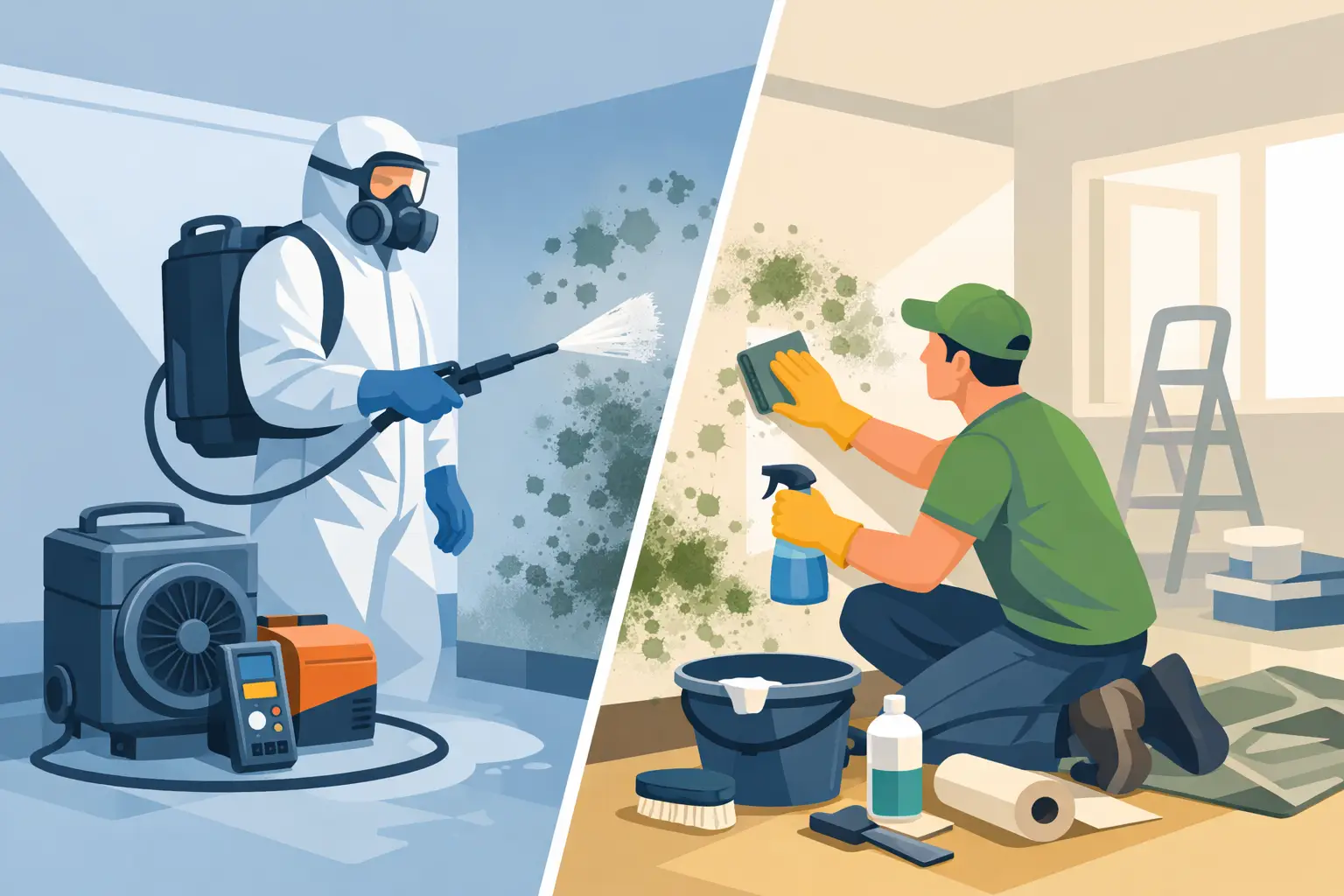
A small spot of mold on a bathroom tile may be manageable with careful cleaning. Mold spreading behind basement paneling after a storm, a plumbing leak, or months of damp air is a different problem entirely. The decision between professional remediation vs DIY affects more than the appearance of a room. It affects whether moisture is corrected, contamination is contained, and the property is returned to a condition that is safe for occupants and protected from recurring damage.
For New Jersey homeowners and property managers, this distinction matters often. Basements, crawl spaces, older plumbing, roof leaks, humid summers, and severe weather can all create conditions where mold grows out of sight. The right response depends on the size of the issue, the materials involved, the source of moisture, and whether there are signs that contamination has traveled beyond one visible surface.
Professional Remediation vs DIY: What Actually Changes
DIY cleanup focuses on what can be seen. Professional mold remediation is a controlled process designed to identify the full affected area, prevent cross-contamination, remove damaged materials when necessary, and address the moisture condition that allowed mold to grow.
That difference is critical because visible growth is not always the full extent of the problem. Mold can develop behind drywall, beneath flooring, inside insulation, around window frames, and within HVAC components. A homeowner may clean a surface successfully while missing the damp building material behind it. If that material remains wet or contaminated, the musty odor and mold growth can return.
Professional remediation also begins with assessment rather than assumptions. Certified inspectors use visual findings, moisture readings, and, when appropriate, air or surface sampling to help determine what is present and where the problem may extend. Testing is not simply about naming a mold type. It can help establish a clearer picture of indoor conditions, identify hidden concerns, and support a remediation plan that fits the property.
When DIY Mold Cleanup May Be Reasonable
DIY cleaning can have a limited place when mold is confined to a small, accessible, nonporous surface and the moisture source has already been corrected. For example, a small amount of surface growth on shower tile caused by poor ventilation may be cleaned if the area can be dried completely and the bathroom ventilation issue is addressed.
Even then, homeowners should use care. Do not dry-brush moldy material or use fans that can spread particles through the room. Wear appropriate personal protective equipment, keep the work area isolated as much as possible, and avoid mixing cleaners. Bleach is also not a universal answer. It may whiten a surface, but it does not correct moisture and is not appropriate for every material or condition.
DIY becomes far less suitable when porous materials are involved. Drywall, ceiling tiles, insulation, carpeting, upholstered furniture, paper-backed materials, and untreated wood can retain moisture and support growth beneath the surface. Cleaning alone may not remove contamination from those materials.
Signs You Should Call a Mold Professional
A professional inspection or remediation assessment is the safer choice when the problem is larger, recurring, hidden, or tied to water damage. Homeowners in Morris, Sussex, Warren, Somerset, and surrounding counties should be particularly cautious after basement flooding, roof leaks, burst pipes, or storm-related water intrusion.
Call for professional help when you notice any of the following:
- A persistent musty odor, especially when no visible source is obvious
- Mold that returns after cleaning or spreads beyond one small area
- Water-damaged drywall, flooring, insulation, ceiling materials, or stored contents
- Growth near HVAC equipment, vents, crawl spaces, or inside wall cavities
- A recent flood, sewage backup, major leak, or long-term humidity problem
- Occupants with respiratory sensitivities or other concerns who need a clearer assessment of indoor conditions
These signs do not automatically mean a home has a severe mold problem. They do mean the situation deserves more than a surface-level response. A qualified professional can determine whether a targeted cleanup is sufficient or whether containment, material removal, and verification are needed.
Why Containment Matters During Mold Removal
One of the biggest risks of do-it-yourself remediation is cross-contamination. Disturbing moldy drywall, insulation, carpeting, or framing can release particles into adjacent rooms. Without proper containment and work practices, a cleanup effort can move contamination from a basement, bathroom, or utility room into cleaner parts of the home.
Professional remediation crews use controlled work areas based on the scope of the project. This may include physical barriers, negative air pressure, HEPA-filtered equipment, protected pathways, and careful bagging and disposal of affected materials. The goal is not merely to remove visible mold. It is to keep the removal process from creating a larger indoor air quality concern.
This is especially important in occupied homes. Families may need to continue using parts of the property while work is underway, and landlords may need to protect tenants and document a responsible response. A written scope of work helps clarify what will be contained, removed, cleaned, and repaired.
Moisture Control Is the Real Long-Term Fix
Mold remediation without moisture correction is temporary. If a basement remains humid, a roof leak continues, a foundation crack allows water entry, or a bathroom exhaust fan does not vent properly, mold can return even after a thorough cleanup.
A professional assessment looks for the condition behind the growth. In New Jersey homes, common sources include seepage through basement walls, sump pump problems, grading and drainage issues, condensation on cold surfaces, plumbing leaks, ice dam damage, and humidity trapped in poorly ventilated rooms.
The correction may be straightforward, such as repairing a leak and improving ventilation. In other cases, it may involve drying structural materials, repairing damaged building components, addressing drainage, or using dehumidification to maintain appropriate indoor humidity. The remediation plan should account for this source control. Otherwise, the property owner is paying to remove a symptom while leaving the cause in place.
Cost: DIY Savings vs. the Cost of Rework
DIY is often appealing because it seems less expensive. For a truly minor, surface-level issue, it may be. But the initial savings can disappear if mold returns, hidden damage is discovered later, or contaminated material was improperly handled.
Professional remediation costs more because it includes trained labor, protective measures, containment equipment, HEPA filtration, disposal procedures, moisture investigation, and a defined scope of work. The price should reflect the actual conditions, not a one-size-fits-all treatment. A small isolated area and a water-damaged finished basement should not receive the same recommendation.
For property owners, the more useful question is not simply, “What is the cheapest way to clean this?” It is, “What will resolve the moisture problem and prevent this from becoming a larger repair?” That perspective protects indoor air quality, building materials, and property value.
What to Expect From a Professional Mold Assessment
A credible mold professional should explain the process in plain language. The assessment typically begins with a conversation about leaks, odors, past flooding, visible staining, and areas where occupants notice symptoms or discomfort. The inspector then evaluates accessible spaces, checks for moisture, and looks for conditions that could support hidden growth.
Air or surface sampling may be recommended when it can answer a meaningful question, such as whether indoor conditions differ from outdoors, whether a suspected area warrants further investigation, or whether a remediation project needs additional documentation. Sampling should support the overall assessment, not replace it.
If remediation is needed, expect a clear plan describing affected areas, containment measures, removal or cleaning methods, moisture corrections, and post-work cleaning. Ask about training, insurance, experience with water-damaged materials, and how the company determines that the work area is ready to return to normal use.
Protect the Home Before a Small Problem Grows
Mold is not a situation where homeowners need to panic, but it is also not something to dismiss when the source is unknown or the damage is spreading. A small, controlled surface cleanup may be appropriate in limited circumstances. Hidden growth, recurring odors, water-damaged materials, and storm-related moisture call for a more careful approach.
If you are unsure what is behind a stain, a musty basement smell, or a recurring patch of mold, start by identifying the moisture source and getting a professional assessment. Clear information early can prevent unnecessary demolition, repeated cleaning, and a much larger repair later.
Leave a Reply