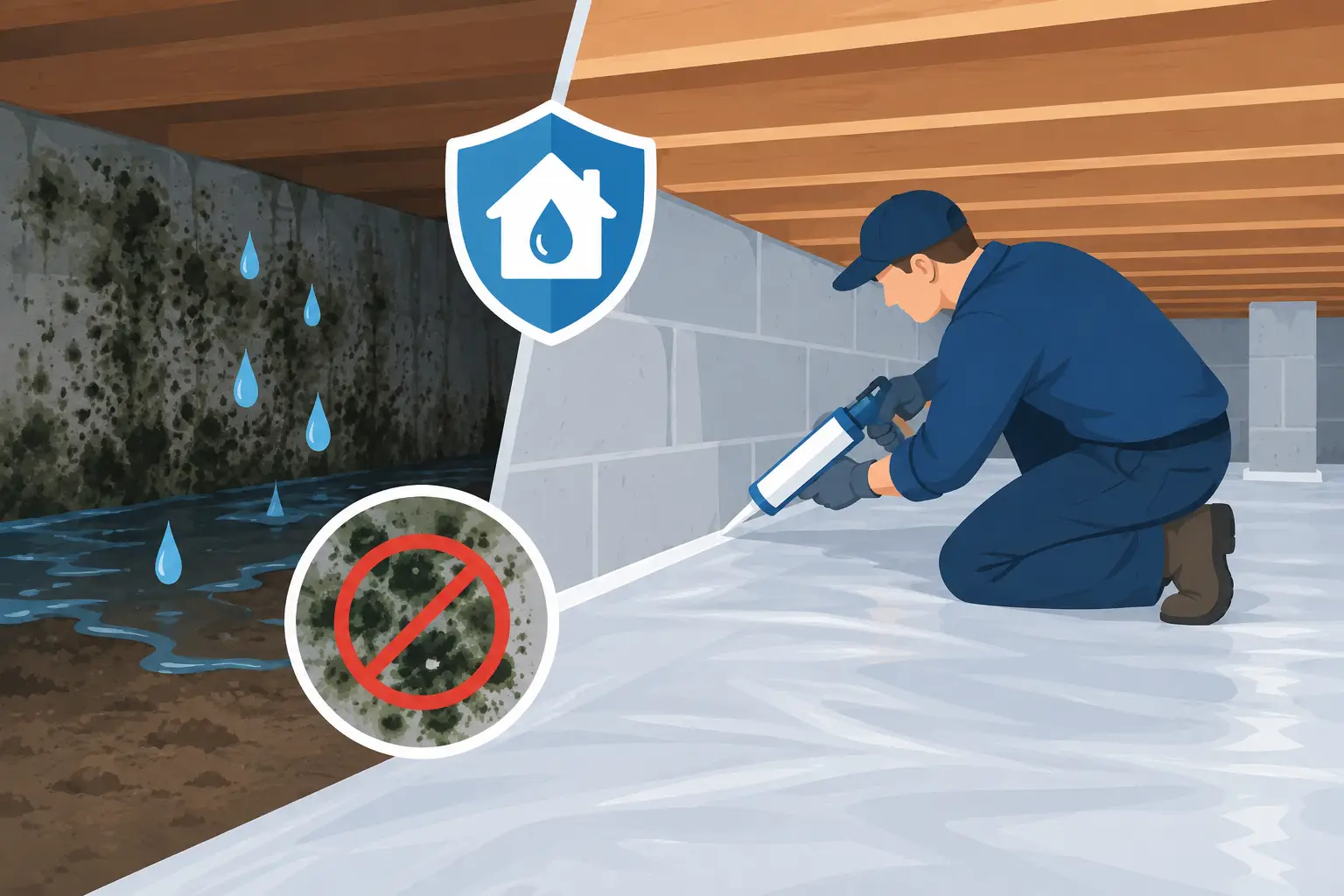
A crawl space can look dry from the access door and still hold enough moisture to support mold beneath your home. To seal crawl space moisture effectively, you must identify where the water vapor or liquid water is coming from first. Covering damp soil or closing vents without correcting drainage, leaks, or existing contamination can trap the problem where you cannot see it.
For homeowners in Morris, Sussex, Warren, Somerset, and nearby New Jersey counties, crawl space moisture is a common concern after heavy rain, snowmelt, plumbing failures, and long periods of summer humidity. The goal is not simply to make the space look cleaner. It is to control moisture conditions that can damage framing, insulation, subflooring, and indoor air quality.
Why crawl space moisture affects the rest of the house
The air in a crawl space does not stay in the crawl space. As warm air rises through a home, it can pull air upward from below through gaps around plumbing, wiring, ductwork, and framing. This process can carry musty odors, moisture, mold spores, and other contaminants into living areas.
That means a persistent odor in a first-floor bedroom, a damp feeling near interior floors, or recurring mold around baseboards may have an origin below the house. Carpet, furniture, and painted walls can be perfectly dry while the crawl space remains damp enough for microbial growth.
Moisture also changes building materials. Wood framing can absorb water, insulation can sag or lose effectiveness, and metal components can corrode. Over time, elevated moisture can contribute to wood decay and create conditions that attract pests. For landlords and property owners, these issues can become larger repair costs and potential disclosure concerns if left unaddressed.
Find the moisture source before you seal the crawl space
A vapor barrier or crawl space encapsulation system can be part of a sound solution, but it is not a substitute for diagnosis. Professional moisture investigation begins by determining whether the issue is groundwater, surface water, humidity, a plumbing leak, condensation, or a combination of sources.
Exterior drainage is often the first place to look. Gutters that overflow near the foundation, downspouts that discharge too close to the home, negative grading, and damaged foundation drains can send rainwater directly toward a crawl space. In older New Jersey homes, changing soil conditions and aging drainage systems can make a formerly manageable issue much worse during storms.
Plumbing leaks deserve equal attention. Slow leaks at supply lines, drains, water heaters, or appliances may create a localized damp area that goes unnoticed for months. Condensation can also form on cold water pipes or uninsulated ductwork when humid air enters the crawl space.
Humidity is more complicated. A traditionally vented crawl space may seem as if it should dry out through outdoor airflow. In a humid New Jersey summer, however, outside air entering a cooler crawl space can condense on surfaces and raise humidity rather than reduce it. Whether vents should remain open, be sealed, or be incorporated into a conditioned crawl space plan depends on the home’s construction, mechanical systems, and moisture conditions.
Signs moisture may already be feeding mold growth
Visible mold is a clear warning sign, but it is not the only one. Mold frequently grows on the underside of subflooring, joists, insulation paper, stored materials, and other hidden surfaces. A professional inspection can identify conditions that homeowners cannot safely or reliably assess from a small access opening.
Pay close attention if you notice several of these conditions:
- A musty odor that is strongest near first-floor rooms, closets, or floor registers
- Damp, fallen, stained, or compressed crawl space insulation
- White mineral deposits, dark staining, or water marks on masonry and foundation walls
- Condensation on pipes, ductwork, or the underside of the subfloor
- Warped flooring, soft spots, elevated indoor humidity, or repeated mold growth elsewhere in the home
These signs do not all prove mold is present. They do show that moisture control should not be delayed. Certified mold testing, including appropriate air or surface sampling when conditions warrant it, can help clarify whether a hidden contamination problem requires remediation.
What properly sealing a crawl space usually involves
The right scope depends on the source and severity of moisture. A minor issue caused by one leaking pipe does not necessarily require full encapsulation. On the other hand, a crawl space with exposed soil, recurring stormwater intrusion, wet insulation, and moldy framing may need a coordinated moisture-control and remediation plan.
A typical professional approach may include exterior drainage corrections, plumbing repair, removal of wet or mold-damaged porous materials, and cleaning or remediating affected structural surfaces using proper containment and safety procedures. Once active water sources are addressed, a heavy-duty ground vapor barrier can limit moisture evaporating from exposed soil.
More extensive systems may seal foundation walls and piers, close and condition vents when appropriate, and add a crawl space-rated dehumidifier or conditioned-air strategy. A sump pump and drainage mat may be necessary where groundwater or repeated flooding is present. These measures work together. Installing a vapor barrier over a floor that regularly floods will not solve the flooding.
Seams, edges, columns, and penetrations matter. An incomplete barrier with loose seams or gaps around piers allows moisture to bypass the material. Likewise, sealing a crawl space without considering combustion appliances, fuel-burning equipment, ducts, and ventilation requirements can create safety concerns. This is one reason crawl space work should be planned around the whole home, not treated as a weekend plastic-sheet project.
Do not seal over existing mold
Encapsulation is not mold remediation. If mold is present on joists, subflooring, insulation, or debris, sealing it into a crawl space can preserve the moisture conditions that allowed it to grow and make later work more difficult. Damaged insulation and contaminated materials may need removal, while structural surfaces require cleaning under controlled conditions.
The correct process protects the rest of the home from cross-contamination. Depending on the work area and extent of growth, that may include containment, negative air controls, HEPA filtration, and careful removal procedures. A professional assessment should also determine whether moisture has affected adjacent walls, flooring, or HVAC components.
When professional mold testing is worth it
Not every damp crawl space needs laboratory sampling. If there is a confirmed plumbing leak and no visible growth, the immediate priority may be repair and drying, followed by a focused inspection. But testing can be valuable when odors persist, mold is suspected in concealed areas, occupants have health concerns, or a property owner needs documentation before or after remediation.
Air sampling may help compare indoor conditions with outdoor baseline conditions when used as part of a complete inspection. Surface sampling can help identify suspicious material when visual findings are unclear. Neither test should be viewed in isolation. Results require interpretation alongside moisture readings, building conditions, visible evidence, and the history of leaks or flooding.
For real estate transactions, tenant concerns, or post-remediation verification, clear documentation can provide needed confidence that the condition was investigated rather than merely covered up.
Protect the crawl space after moisture control work
Once the source is corrected and the space is properly sealed, maintenance remains essential. Check gutters and downspouts before major storm seasons, keep exterior grading moving water away from the foundation, and inspect plumbing connections periodically. If the crawl space uses a dehumidifier, confirm that its drain line remains clear and that it is maintaining an appropriate humidity level.
After a major storm, basement flood, or plumbing event, inspect promptly. New Jersey weather can change quickly, and water that remains under a home for even a short period can reactivate a mold issue. A musty odor is not something to mask with fragrance or ignore until warmer weather.
If your crawl space smells damp, shows visible staining, or has a history of water intrusion, treat it as an indoor air quality concern as well as a maintenance issue. A certified inspection can identify the moisture pathway, determine whether mold is present, and help you make a repair decision that protects your home from the ground up.
Leave a Reply