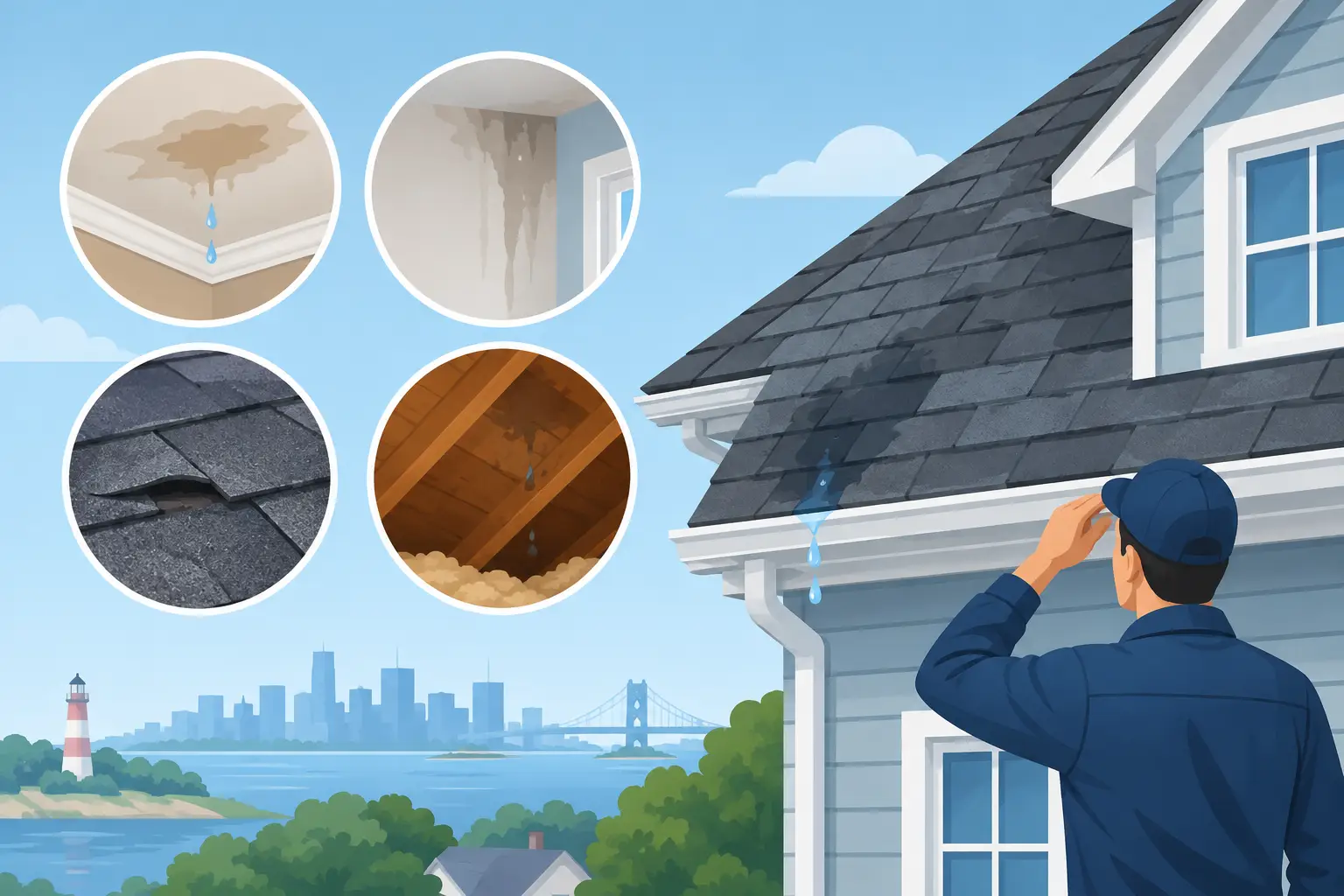
A roof leak does not always announce itself with water dripping into a bucket. In many New Jersey homes, the top signs of roof leaks begin quietly: a faint ceiling stain after a hard storm, damp insulation in the attic, or a musty odor in a second-floor closet. By the time visible water appears, moisture may have already traveled through framing, insulation, wall cavities, or ceiling materials.
That matters because Northern and Central New Jersey homes face repeated moisture exposure from heavy rain, wind-driven storms, snow buildup, freeze-thaw cycles, and humid summer weather. A small failure around flashing, shingles, vents, or roof penetrations can become a much larger water-damage and mold concern when it is not found and corrected promptly.
Water Stains on Ceilings or Upper Walls
Brown, yellow, or rust-colored stains on a ceiling are among the clearest warning signs. They often form as water moves through drywall or plaster, carrying dirt and materials from the roof structure with it. The stain may look dry when you notice it, but that does not prove the leak has stopped.
Pay close attention to stains that grow after rain, appear near chimneys or skylights, or develop where a ceiling meets an exterior wall. Water does not always enter directly above the stain. It can follow roof decking, rafters, wiring, or pipes before reaching the visible ceiling surface.
Fresh paint may hide discoloration temporarily, but it will not solve the underlying moisture source. Before repairing cosmetic damage, identify whether active water intrusion is still occurring and whether the affected materials have remained damp long enough to support mold growth.
Peeling Paint, Bubbling Drywall, or Soft Surfaces
Moisture trapped behind paint can cause it to blister, peel, or separate from the wall or ceiling. Drywall may bubble, sag, feel soft when gently pressed, or develop a cracked, uneven appearance. These symptoms can result from a roof leak, although plumbing leaks, condensation, and ice damming can create similar damage.
The location helps narrow the possibilities. Damage on upper-level ceilings, around exterior-facing walls, near attic access points, or beneath roof valleys deserves a roof-related inspection. If the problem is near a bathroom or a pipe run, a plumbing source may also need to be ruled out.
Do not puncture a bulging ceiling unless you understand what is above it and can safely control the water. A water-filled ceiling can fail suddenly. Keep people out of the immediate area, move belongings if it is safe to do so, and contact qualified professionals for guidance.
Musty Odors in the Attic, Closet, or Upstairs Rooms
A persistent musty odor is often a moisture signal, even when no obvious mold is visible. Roof leaks can wet attic insulation, roof sheathing, framing, stored belongings, and the backside of finished ceilings. These concealed areas may dry slowly, especially after multiple storms or during humid weather.
Attics are especially important to check because a leak may remain confined there for weeks or months before reaching finished living space. Look for damp insulation, darkened wood, water streaks on rafters, or a stale odor that becomes stronger after rain. Avoid disturbing suspected mold growth or wet insulation unnecessarily, since disturbance can spread particles into the air and makes the condition harder to evaluate.
A musty smell does not identify the source or type of microbial growth by itself. Professional inspection and, when appropriate, targeted air or surface sampling can help determine whether a moisture problem has created an indoor air quality concern.
Visible Mold Near Ceilings, Windows, or Attic Areas
Mold needs moisture, so visible growth around a ceiling, crown molding, attic hatch, skylight, or exterior wall should never be treated as only a cleaning issue. It may be evidence of an unresolved roof leak or moisture pathway.
Growth can appear as black, green, gray, white, or brown spotting. Color alone does not establish what kind of mold is present or how extensive the contamination may be. More importantly, visible material may represent only the portion of the problem that can be seen. Damp drywall, insulation, and framing behind finished surfaces can support concealed growth.
For small, isolated moisture events, the appropriate response depends on the material affected, the size of the area, how long it stayed wet, and whether the building has occupants with respiratory sensitivities. When growth is widespread, repeatedly returns, involves porous building materials, or follows a significant leak, a professional mold assessment is the safer path.
Drips, Damp Spots, and Changes After Storms
Some roof leaks are intermittent. They may occur only during wind-driven rain, when snow melts, or after leaves clog a gutter and force water where it does not belong. That is why homeowners should compare indoor conditions before and after storms.
A drip from a recessed light, a damp spot around a vent, or moisture near a chimney after rainfall should be treated as an active warning. Water near electrical fixtures creates an added safety concern. Turn off power to the affected area only if it can be done safely, avoid touching wet fixtures, and seek professional assistance.
Keep a simple record of when the issue appears, what the weather was like, and where you saw it. Photos of stains, damp materials, and exterior damage can help roofing and moisture professionals trace a difficult leak path. This documentation can also be useful for landlords, property managers, and insurance discussions.
Damaged Shingles, Flashing, Gutters, or Roof Penetrations
Exterior roof conditions often explain indoor symptoms. Missing, curled, cracked, or lifted shingles can allow water beneath the roof covering. Damaged flashing around chimneys, dormers, skylights, vents, and wall intersections is another common source of intrusion. These transition points receive concentrated water flow and are vulnerable when sealants or metal components age.
Clogged gutters and downspouts can also contribute to leaks by allowing water to back up along roof edges. In winter, ice dams may force melting snow under shingles and into the home. New Jersey’s changing winter temperatures make this a real concern, particularly on poorly insulated or poorly ventilated roof systems.
Homeowners should not climb onto a wet, steep, icy, or visibly damaged roof. A ground-level visual check with binoculars may reveal obvious problems, but a roofing professional should evaluate the roof safely and determine the needed repair. Roof repair stops the source. It does not automatically address wet building materials or mold that may have developed indoors.
Higher Energy Bills or Unexplained Attic Moisture
Wet insulation loses performance. If an upstairs room suddenly feels harder to heat or cool, or utility bills increase without another clear explanation, inspect for moisture issues in the attic and ceiling assembly. Damp insulation may compress, clump, or show staining, reducing its ability to control indoor temperatures.
Condensation can complicate this picture. In some homes, bathroom exhaust fans vent into attics, attic ventilation is inadequate, or warm indoor air escapes through ceiling gaps. These conditions can create moisture that resembles a roof leak. A proper inspection distinguishes rain-related intrusion from condensation and identifies whether more than one issue is present.
What to Do When You Suspect a Roof Leak
The priority is to limit additional water exposure without creating a safety risk. Move furniture and valuables away from the affected area, place a container under an active drip if safe, and document what you find. If water is near electrical equipment, there is ceiling sagging, or storm damage has made the roof unsafe, do not attempt a DIY repair.
Next, arrange for a qualified roofing professional to locate and correct the exterior water entry point. If the leak has affected drywall, insulation, wood framing, or other interior materials, consider a professional moisture and mold inspection as well. This is particularly important when there is a musty odor, visible growth, recurring staining, or a leak that may have existed for more than a day or two.
Certified assessment can help establish the extent of moisture damage, identify hidden affected areas, and guide a remediation plan based on actual conditions rather than guesswork. For homeowners and property stakeholders in Morris, Sussex, Warren, Somerset, and surrounding New Jersey counties, prompt evaluation after a roof leak can protect indoor air quality, preserve building materials, and reduce the chance of a manageable repair becoming a larger remediation project.
A dry ceiling is reassuring, but it is not always proof that the problem is over. When the signs point to roof-related moisture, address the source and verify that the affected areas are truly dry before returning the space to normal use.
Leave a Reply