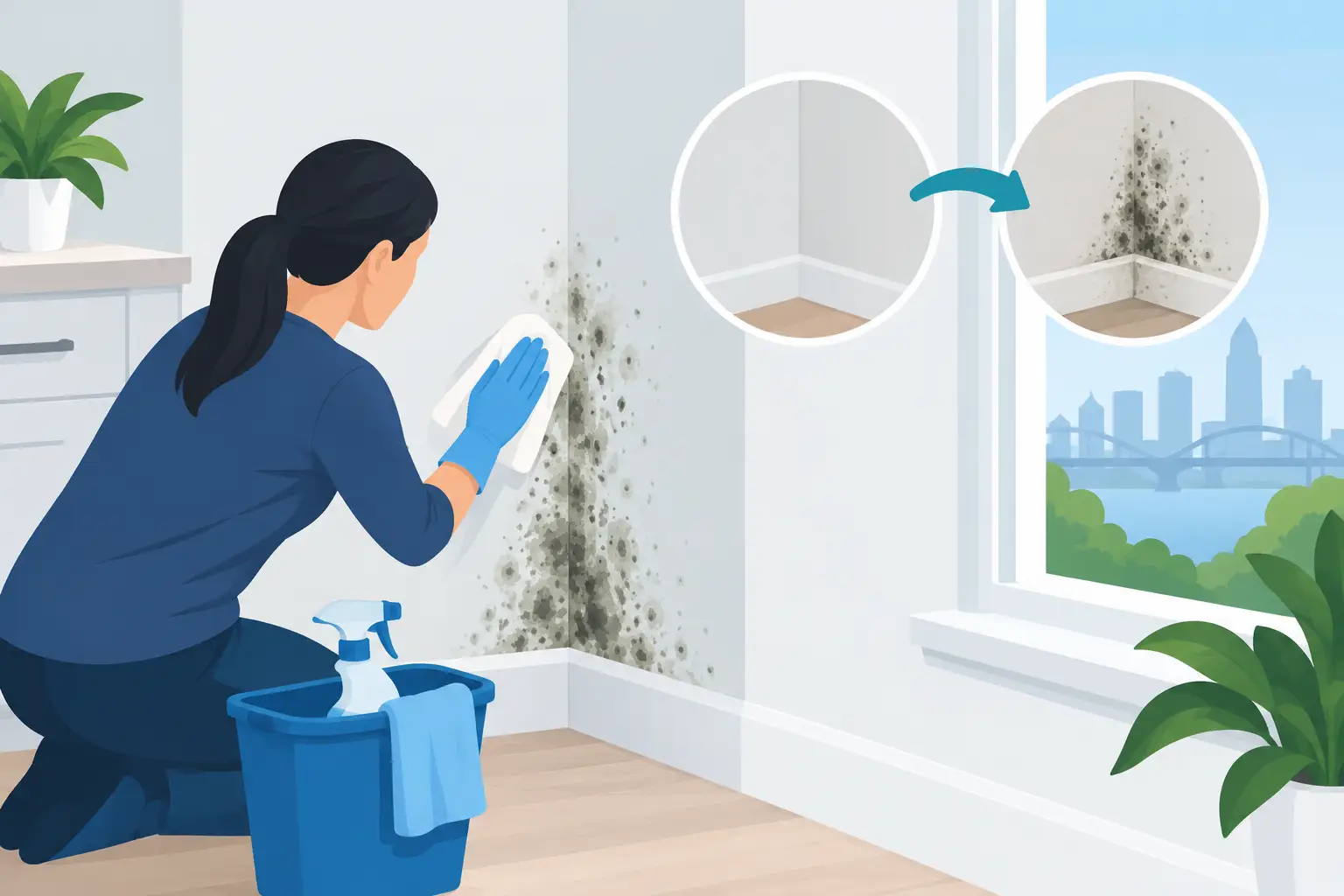
A black spot disappears after a scrub, the musty smell seems better, and the room looks clean. Then, weeks later, mold is back in the same corner, along the baseboard, or behind a stored item. This is why mold returns after cleaning: the visible growth was treated, but the moisture source, hidden contamination, or damaged material was not fully addressed.
For New Jersey homeowners and property managers, repeat mold growth is especially common after basement leaks, roof issues, plumbing failures, humid summers, and storm-related water intrusion. Cleaning is not the same as remediation. A lasting solution requires identifying where water is coming from, determining how far contamination has spread, and correcting conditions that allow mold to grow.
Why Mold Returns After Cleaning
Mold needs moisture, a food source, and time. Homes provide plenty of food sources, including drywall paper, wood framing, carpeting, dust, insulation, and fabrics. If water remains available, mold can return even after a surface has been wiped, sprayed, or painted.
The most common reason is that the original water problem was never fully repaired. A slow pipe leak inside a wall, condensation around an uninsulated duct, water entering through a foundation crack, or a roof leak that only appears during wind-driven rain can keep building materials damp. The surface may dry temporarily, while the material behind it stays wet enough to support growth.
Mold also returns when cleaning only removes what can be seen. Colonies often extend beyond the visible stain. A small patch on a basement wall may be connected to contamination behind finished walls, under flooring, inside a cabinet, or within damp insulation. Surface cleaning can improve appearance without removing the underlying source.
Cleaning Can Spread or Leave Behind Contamination
Many homeowners understandably reach for bleach, a household cleaner, or a mold spray. These products may lighten staining on nonporous materials, but they do not solve every mold condition. On porous materials such as drywall, ceiling tiles, carpet, insulation, and unfinished wood, mold roots can grow into the material itself. Moisture and microbial growth can remain below the surface even when the area looks cleaner.
Aggressive dry scrubbing is another concern. Disturbing mold without appropriate containment and controlled cleaning can release spores and debris into nearby rooms. Those particles can settle elsewhere, particularly if fans or the HVAC system are running. That does not mean every small spot requires a major project, but it does mean the response should match the extent of the problem and the materials involved.
Painting over a stained area is also not remediation. Paint can conceal discoloration for a time, but it traps the underlying issue from view. If moisture continues, mold may reappear through the paint or spread into adjacent materials.
Porous materials may need removal
Whether a material can be cleaned or should be removed depends on its condition, the amount of contamination, and how long it has been wet. A nonporous tile surface can often be cleaned once the moisture issue is corrected. Water-damaged drywall or insulation, however, may need controlled removal because it can hold moisture and support concealed growth.
This is one reason professional assessment matters. The goal is not to remove more material than necessary. It is to identify damaged materials accurately and avoid leaving contaminated areas behind.
Hidden Moisture Is Common in New Jersey Homes
Northern and Central New Jersey homes face several conditions that make repeat mold growth more likely. Older basements may have limited drainage, aging foundations, or finished walls installed too close to masonry. Seasonal humidity can raise indoor moisture levels. Heavy rain, snowmelt, and storms can expose weaknesses in roofs, siding, gutters, window flashing, and sump systems.
Basements are a frequent trouble spot in Morris, Sussex, Warren, and Somerset Counties. Even when there is no standing water, damp concrete, groundwater seepage, poor grading, and humid air can elevate moisture behind finished basement walls. Homeowners may notice a musty odor long before they see visible mold.
Bathrooms, laundry rooms, attics, crawl spaces, and areas near HVAC equipment also deserve attention. In these spaces, mold may be driven by condensation rather than a dramatic leak. A bathroom exhaust fan that vents into an attic instead of outdoors, for example, can introduce repeated moisture into framing and insulation. A dehumidifier may reduce symptoms in some cases, but it cannot correct a plumbing leak or water intrusion through the building envelope.
The Musty Odor Is a Warning Sign
A persistent musty smell after cleaning should not be ignored. Odor alone does not identify the exact type or quantity of mold, but it can indicate that moisture or hidden microbial growth remains. If the smell returns when the air conditioner runs, after rain, or when a room has been closed, that pattern can help point to the source.
Do not assume the odor is coming from the location where it is strongest. Air movement can carry odors from wall cavities, crawl spaces, basements, or HVAC components into living areas. A careful inspection considers the building as a system rather than treating one visible stain as the whole problem.
When Mold Testing Helps Explain Recurring Growth
Not every visible mold issue requires testing before action. When the source is obvious and contamination is limited, correcting the moisture issue and properly cleaning or removing affected materials may be straightforward. However, testing can be valuable when mold keeps returning, the source is unclear, occupants report ongoing concerns, or there is a dispute involving a tenant, seller, buyer, or insurance claim.
Professional air and surface sampling can help establish whether indoor conditions suggest an elevated mold concern compared with outdoor conditions and unaffected areas. Results must be interpreted in context. A sample is not a substitute for a thorough moisture investigation, and a clean-looking surface is not proof that hidden areas are dry.
A qualified mold professional uses inspection findings, moisture measurements, building history, visual evidence, and sampling when appropriate to develop a defensible plan. This approach is particularly useful after water damage, when a wall cavity or flooring system may have been affected without obvious exterior signs.
What Proper Remediation Does Differently
Professional remediation focuses on the cause and the affected area, not simply the visible mold. The process typically begins with locating and stopping the moisture source. Depending on the situation, this may involve plumbing repair, foundation water management, roof repair, improved ventilation, or humidity control.
Affected areas are then evaluated to determine which materials can be cleaned and which require removal. Containment may be used to limit the movement of dust and spores during work. Materials are cleaned or removed using methods appropriate for the surface, followed by detailed cleaning of the contained area. Drying is verified so the same moisture conditions do not restart the problem.
The scale of the work depends on the property. A small amount of surface mold caused by a one-time, quickly corrected issue is different from recurring growth in a finished basement after repeated seepage. In larger or concealed conditions, attempting a quick cleanup can increase the eventual repair scope by allowing moisture damage to continue behind walls or under floors.
Steps Homeowners Can Take Before Help Arrives
If you discover mold returning after a prior cleanup, avoid repeatedly spraying or painting the area. Take clear photos, note when the problem appears, and look for patterns such as rain, plumbing use, high humidity, or HVAC operation. If a leak is active, stop the water source if it is safe to do so and protect nearby belongings.
Keep indoor humidity controlled, improve ventilation where practical, and avoid placing furniture or storage tightly against damp basement walls. Do not run fans directly across visible mold, since that can disturb particles. Most importantly, do not delay an evaluation if the affected area is growing, there is a strong odor, water damage is recurring, or mold may be hidden behind finished materials.
A recurring mold problem is not a housekeeping failure. It is usually a building moisture problem asking for a more complete answer. A professional inspection and standards-based remediation plan can protect the home, clarify the scope of the issue, and give you a realistic path to keeping the area dry for good.
Leave a Reply