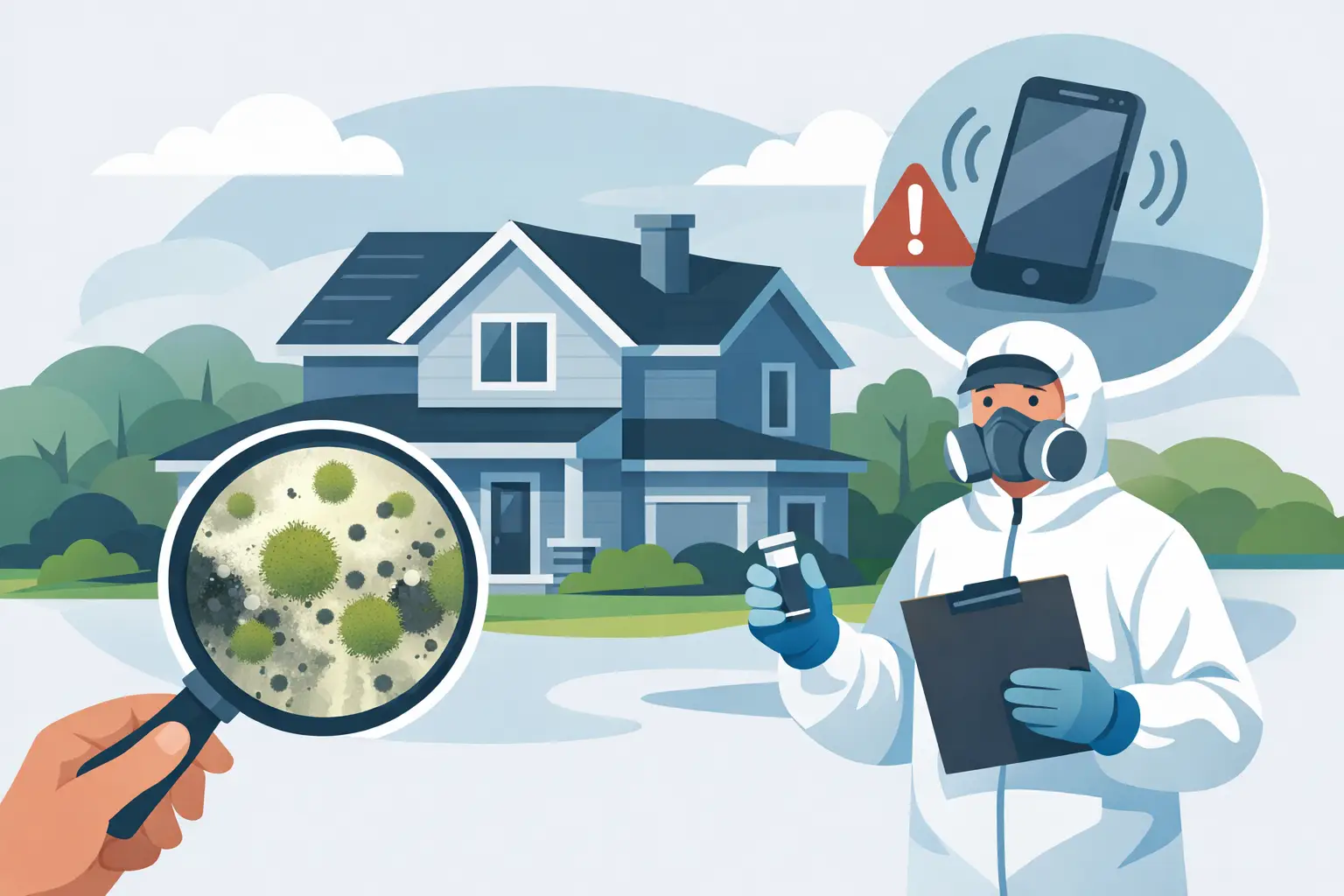
A musty basement after a heavy Sussex County rainstorm is not something to ignore and hope will fade. The odor may be the first sign of moisture trapped behind finished walls, beneath flooring, or inside building materials where mold can grow out of sight. Professional Sussex County mold testing gives homeowners, landlords, and property managers a clear picture of what is present, where moisture is coming from, and what needs to happen next.
Mold concerns are common in this part of New Jersey. Older basements, well water and drainage issues, seasonal humidity, ice-dam leaks, storm damage, and plumbing failures can all create the damp conditions mold needs. Testing is not simply about confirming that mold exists. It is about identifying the source, understanding the extent of the problem, and making informed decisions that protect the property and the people living in it.
When Sussex County Mold Testing Is the Right Step
Visible growth does not always require laboratory testing before action begins. If there is clear mold growth on a small, accessible area and the moisture source is obvious, the priority is often correcting the water problem and safely removing affected material. However, testing becomes particularly valuable when the situation is uncertain, hidden, widespread, or connected to an indoor air quality concern.
A professional assessment is strongly recommended when there is a persistent musty odor but no visible mold, when a leak occurred behind walls or under flooring, or when a basement has repeatedly taken on water. It is also appropriate after roof leaks, pipe breaks, sewage backups, appliance overflows, or storm-related intrusion. Homeowners should not assume materials are dry just because the surface feels dry. Drywall, insulation, subflooring, and wood framing can hold moisture long after the initial event.
Testing can also help resolve questions during a real estate transaction, after remediation work, or when tenants report odors or respiratory irritation that seems to improve away from the property. The goal is not to create alarm over every spore in the air. Mold spores occur naturally indoors and outdoors. The concern is an elevated or unusual indoor condition, especially when it is tied to active moisture, hidden growth, or damaged building materials.
What a Professional Mold Inspection Looks For
A qualified mold inspection starts with the building, not a swab. Sampling without a careful visual and moisture investigation can produce results that are difficult to interpret. A professional inspector evaluates the history of water events, examines likely problem areas, looks for staining and material deterioration, and uses moisture-detection tools to locate damp conditions that may not be visible.
In Sussex County homes, inspections often focus on below-grade spaces and transition points where water enters the structure. Basements, crawl spaces, foundation walls, sump pump areas, attic sheathing, bathrooms, laundry rooms, kitchens, and areas around windows are common places for hidden moisture. Properties near wooded areas or with limited sun exposure may also struggle with sustained humidity and slower drying after storms.
The inspection should identify the cause of the moisture, not just the biological growth. A mold problem caused by a plumbing leak needs a different repair plan than one caused by poor exterior grading, a failing sump pump, condensation on ductwork, or chronic basement humidity. If the water source remains, mold can return even after the affected surfaces have been cleaned.
Air Sampling and Surface Sampling Have Different Roles
Air sampling can compare conditions inside the property with outdoor conditions and with other areas of the home. It may help identify airborne particles associated with a suspected hidden issue, particularly when there is a strong odor or a history of water damage but no visible growth. Air results require professional interpretation because concentrations can change with weather, ventilation, occupancy, cleaning, and normal outdoor conditions.
Surface sampling can help document visible material or identify growth on a specific surface. It may be useful for distinguishing suspicious staining from fungal growth or for supporting a remediation plan. But a surface sample alone cannot determine the full extent of a problem behind a wall or beneath a floor.
Neither method replaces a detailed inspection. The best testing strategy depends on the property, the moisture history, and the question that needs to be answered. A reliable professional explains why a sample is being collected, what the result can show, and what its limitations are.
Why DIY Mold Tests Can Create More Confusion
At-home mold kits may seem like a quick answer, but they frequently create more uncertainty than useful information. Many kits rely on settling plates that can grow organisms from ordinary indoor air. A positive result does not identify a hidden source, establish the extent of contamination, or tell a homeowner whether a material needs removal.
DIY results also do not locate moisture. That matters because moisture control is the foundation of mold prevention. Without determining whether water is entering through the foundation, condensing on a cold surface, leaking from a pipe, or collecting because of poor drainage, the issue is likely to continue.
Professional testing is especially important when significant water damage is involved, when growth may be concealed, or when occupants have health concerns. The inspection should lead to a practical scope of work, not an alarming report with no clear path forward.
What Happens After Mold Is Found
A positive finding should lead to a focused response. First, the moisture source must be stopped or controlled. That may involve plumbing repair, roof repair, drainage corrections, improved ventilation, dehumidification, insulation changes, or repair of a sump pump system. The right solution depends on why the area became damp.
Next, affected materials must be evaluated. Nonporous surfaces may sometimes be cleaned when the growth is limited and the substrate is sound. Porous materials such as wet drywall, insulation, carpeting, padding, and heavily contaminated ceiling tiles often need removal because growth can extend into the material. Simply spraying a chemical over visible mold does not address contamination inside porous surfaces or prevent recurrence.
For larger or more complex conditions, professional remediation should include containment to limit cross-contamination, appropriate removal methods, controlled cleaning, and proper drying. Remediation is not complete because a room looks clean. The area must be dry, the source must be corrected, and the work should be evaluated against the original scope.
Consider Post-Remediation Verification
After significant remediation, independent post-remediation verification can provide added confidence that the work area was properly cleaned and that moisture conditions have been addressed. This is particularly helpful for landlords, home sellers, buyers, and homeowners dealing with an extensive basement, attic, or concealed-wall issue.
Verification is not a substitute for fixing the cause of the damage. It is a final check that the remediation process achieved the intended result. Documentation from inspection, remediation, and follow-up evaluation can also be valuable for insurance discussions and future property records.
Protecting Your Sussex County Home Before the Next Moisture Event
Prevention is practical property protection. Keep gutters and downspouts directing water away from the foundation, monitor sump pumps before major storms, and address plumbing drips promptly. In basements and crawl spaces, maintain humidity at a controlled level and avoid storing cardboard, fabrics, or other absorbent materials directly against damp foundation walls.
Pay attention to changes in the home. A new odor, peeling paint, recurring condensation, warped flooring, or a stain that returns after cleaning deserves investigation. Early assessment is usually less disruptive than waiting until mold has spread into finished walls, insulation, or structural materials.
If your home has had a leak, flood, or ongoing musty smell, timely professional testing can replace uncertainty with a documented plan. The most helpful next step is to identify the moisture source while the evidence is still present, then correct it before a small problem has time to become a larger repair.
Leave a Reply