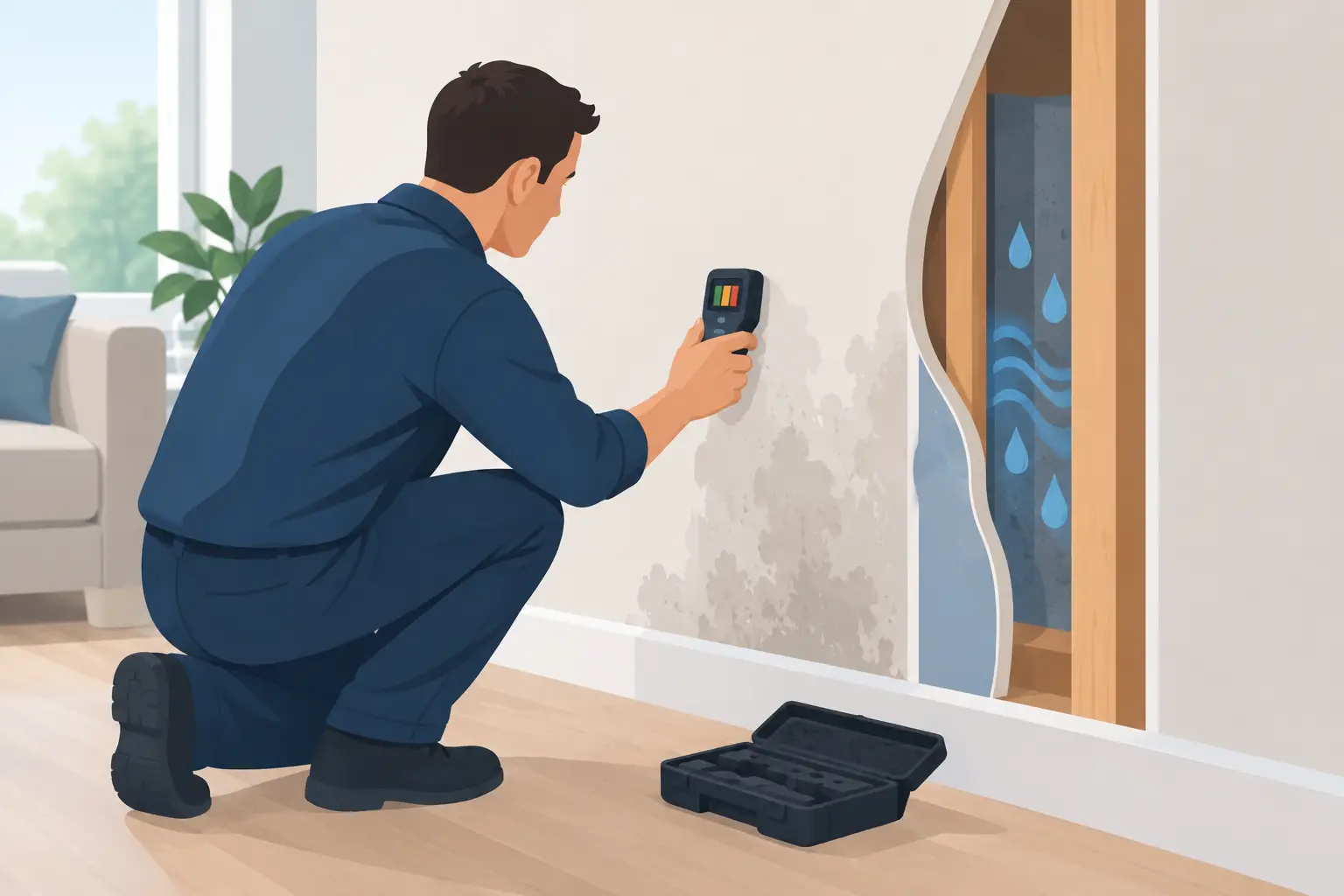
A wall can look perfectly dry while moisture is feeding mold growth inside the cavity. To identify hidden wall moisture before the damage spreads, New Jersey homeowners need to pay attention to subtle changes in odor, paint, materials, and indoor air quality – not just obvious water stains.
This matters in Northern and Central New Jersey, where humid summers, wet basements, aging plumbing, roof leaks, and storm-driven rain can all introduce water behind finished walls. Waiting for visible mold often means the underlying leak or humidity condition has had time to affect insulation, framing, drywall, and adjacent rooms.
Why moisture hides behind walls
Drywall, trim, insulation, and paint can conceal a moisture problem for weeks or months. A slow plumbing leak may wet the back of a wall without reaching the painted surface right away. Wind-driven rain can enter around failed flashing, siding, window trim, or foundation cracks, then travel along framing before it becomes visible somewhere else.
Basement walls create another common challenge. Concrete can transmit moisture vapor even when there is no active flood or obvious leak. If a finished basement wall is built against damp masonry, insulation and drywall may trap that moisture where it cannot dry properly. Condensation from cold-water pipes, uninsulated ductwork, or an oversized temperature difference can cause similar problems.
The visible stain is not always the source. Water follows gravity, building materials, wiring paths, and framing. A ceiling stain below a bathroom, for example, may come from a supply line, drain connection, shower enclosure, or condensation issue rather than the fixture directly above it.
Warning signs of hidden wall moisture
A persistent musty odor is one of the most meaningful signs, particularly when it becomes stronger after rain, during humid weather, or when the heating and cooling system runs. Fragrance products may cover the smell temporarily, but they do not remove the moisture source or potential microbial growth.
Look closely at wall finishes. Bubbling paint, peeling wallpaper, soft drywall, swollen baseboards, cracked caulk, or trim pulling away from the wall can signal material movement from moisture. Discoloration may appear yellow, brown, gray, or dark, but an absence of staining does not clear the wall.
You may also notice rooms that feel unusually humid or persistently cold, especially exterior corners, closets, basement bedrooms, and areas behind large furniture. Condensation on windows is not proof of wall moisture, but frequent condensation can indicate elevated indoor humidity that increases the risk of condensation within colder wall assemblies.
Pay attention to health-related comfort concerns without assuming they confirm mold. Recurrent irritation, coughing, or allergy-like symptoms in one area of the home can justify a closer assessment, especially when paired with odors or water damage. Professional inspection focuses on the building conditions and evidence of moisture rather than trying to diagnose occupants.
How to identify hidden wall moisture without damaging the wall
Start by documenting what you see and when it happens. Note the room, exact location, odor intensity, weather conditions, recent plumbing use, and whether the problem worsens after a storm. This information helps distinguish a roof or exterior intrusion from a plumbing issue, basement seepage, or humidity problem.
Check nearby sources carefully. Inspect under sinks, around toilets, behind washing machines, near water heaters, and around shower walls for drips, loose connections, deteriorated grout, or staining. Outside, look for overflowing gutters, downspouts discharging too close to the foundation, damaged roof components, clogged window wells, or gaps around windows and exterior penetrations.
A moisture meter can provide useful screening information when used correctly. Pin-style meters measure electrical resistance in a small area, while pinless meters scan a broader section beneath the surface. Neither tool identifies mold, and readings can be affected by metal studs, wiring, foil-backed insulation, dense materials, and changes in wall construction. A high reading is a reason to investigate further, not a complete diagnosis.
Infrared cameras can help identify temperature differences that may be consistent with moisture or air leakage. They are valuable for locating areas that deserve closer testing, but a thermal image alone cannot prove a wall is wet. Cold spots may result from missing insulation, air movement, or structural features. Certified inspectors verify suspected conditions with moisture measurements and a physical evaluation.
Avoid cutting exploratory holes into walls based only on an odor or a single meter reading. Opening a potentially contaminated cavity can disturb mold spores and make a localized issue more difficult to contain. It can also conceal the original moisture pattern before an inspector has documented it.
When mold testing and professional inspection are appropriate
Professional help is warranted when there is a persistent musty odor, repeated water intrusion, unexplained discoloration, soft building materials, a history of flooding, or suspected mold behind a finished wall. It is particularly important after a plumbing leak that was discovered late, a roof leak during a major storm, or water entering a basement.
A qualified inspection begins with the moisture source. The goal is not simply to find visible mold but to determine where water is entering, how far it has traveled, what materials are affected, and whether conditions support ongoing growth. Inspectors may use calibrated moisture equipment, thermal imaging, visual evaluation, and targeted examination of accessible areas.
Air and surface sampling can be useful when it answers a specific question. For example, testing may help evaluate a suspect area with no visible growth, compare indoor conditions with outdoor conditions, or document conditions before and after remediation. Sampling should be planned around the building investigation. A lab result without a careful inspection can be misleading because mold levels vary with airflow, activity, weather, and the location of the hidden source.
If concealed mold or wet materials are confirmed, remediation should include containment as appropriate, removal or cleaning of affected materials, drying, and correction of the original moisture problem. Painting over stains, spraying fragrance, or running a dehumidifier without fixing the source may delay the evidence, but it will not reliably protect the wall assembly or indoor air.
New Jersey conditions that make wall moisture more likely
Homes in Morris, Sussex, Warren, Somerset, and neighboring counties face a mix of environmental pressures. Heavy rain can overwhelm poor drainage and expose weaknesses around foundations. Winter temperature swings can create condensation on cold surfaces. Summer humidity can raise moisture levels in basements, crawlspaces, and poorly ventilated rooms.
Older homes may have aging pipe connections, original windows, limited exterior drainage, or basement finishing systems installed before current moisture-control practices were common. Newer homes are not immune. Tightly built homes can hold indoor humidity when ventilation, bathroom exhaust, or HVAC performance is inadequate.
The right response depends on the source. A one-time clean water leak that is found and dried quickly may require limited repairs. A recurring damp basement wall, hidden plumbing leak, or moisture problem with mold growth calls for a more controlled, standards-based assessment and remediation plan.
Protect the home before the problem becomes visible
If you suspect hidden wall moisture, do not wait for a dark stain or wall collapse to take action. Reduce indoor humidity where practical, keep furniture slightly away from cold exterior walls, and address obvious leaks promptly. Do not operate fans into a wall cavity or remove suspect materials without understanding whether mold contamination is present.
A certified mold inspection can provide the clear, documented answers needed to protect your property and the people who use it. When the moisture source is identified early, the repair is usually more focused, the disruption is lower, and the path back to a dry, healthy home is far more manageable.
Leave a Reply