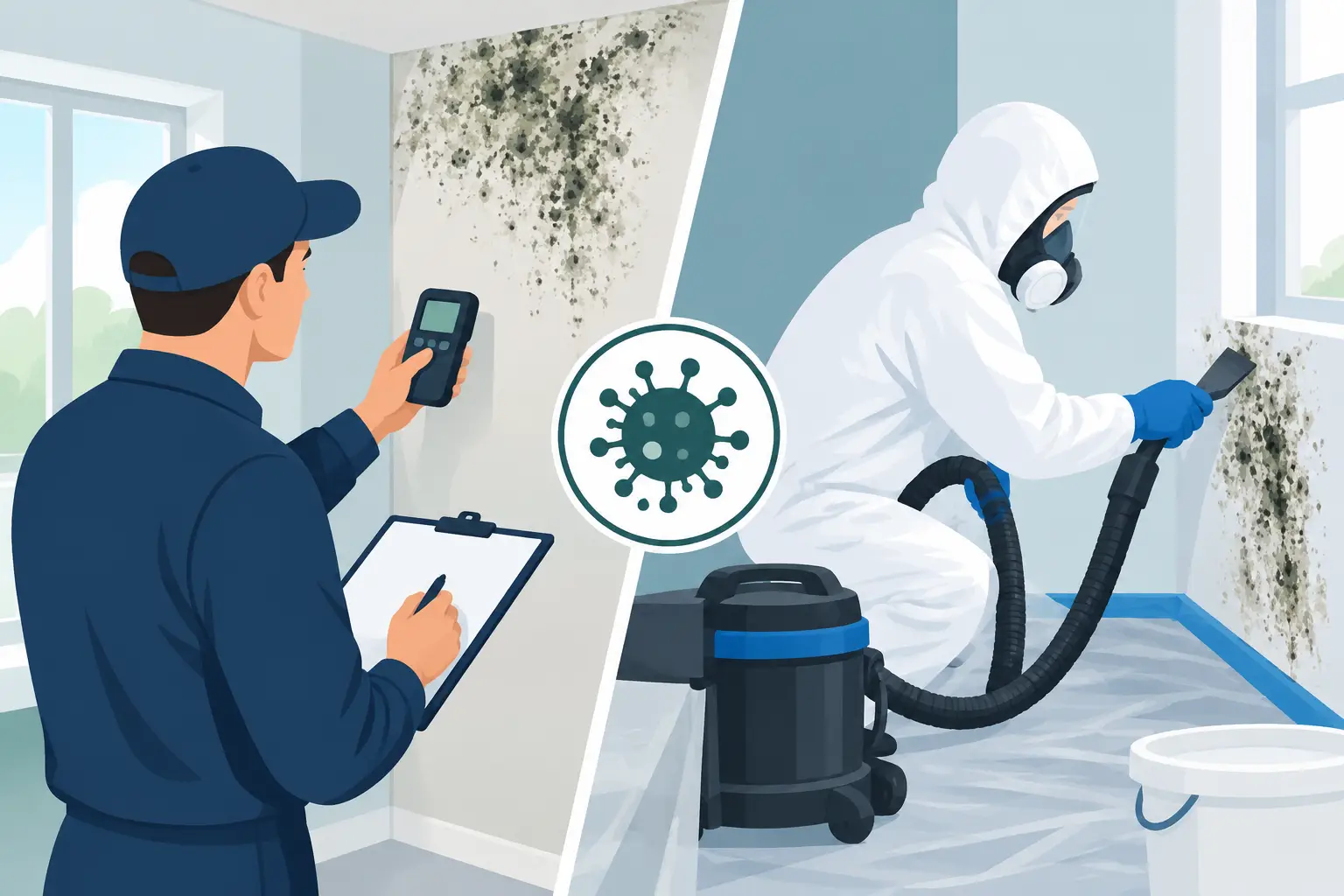
A musty basement after a Morris County storm, a stain below a leaking bathroom, or fuzzy growth behind stored boxes can create one urgent question: who should you call first? Understanding the difference between a mold assessor versus remediation contractor helps you protect your family, avoid an incomplete cleanup, and make informed decisions about your New Jersey property.
These professionals may work on the same mold problem, but they do different jobs. One identifies and defines the problem. The other performs the controlled cleanup. In many situations, the best outcome depends on keeping those roles clear from the beginning.
What a Mold Assessor Does
A mold assessor evaluates conditions in a home or building to determine whether mold is present, where moisture is coming from, how far contamination may have spread, and what level of corrective work is appropriate. Assessment is the fact-finding phase of a mold project.
A qualified assessor begins with a detailed visual inspection. That can include basements, crawl spaces, attics, wall areas near plumbing, HVAC components, window surrounds, and other places where New Jersey homes commonly hold moisture. They look beyond obvious discoloration. Hidden mold can develop under flooring, inside wall cavities, behind cabinets, or in insulation after a leak or flood.
When conditions warrant it, an assessment may include air sampling, surface sampling, moisture readings, thermal imaging, or other diagnostic methods. Testing is not a substitute for an inspection. A lab result only has value when it is interpreted alongside the building conditions, the moisture source, and the locations inspected.
The assessor’s work should lead to a clear scope of concern. Depending on the situation, that may identify the affected materials, likely source of moisture, recommended containment level, and whether additional investigation is needed. Homeowners and landlords can use this information to understand what needs to be corrected before anyone begins removing materials.
When Mold Testing Is Most Useful
Testing is especially helpful when there is a persistent musty odor without visible growth, when occupants have concerns about indoor air quality, or when contamination may be concealed. It can also provide useful documentation for a property transaction, tenant concern, insurance discussion, or post-remediation review.
However, a professional may not need to test every visible mold condition. If there is clear growth caused by an active plumbing leak, the priority is usually to stop the water source and develop a proper cleanup plan. Waiting for a lab report should not become an excuse to leave wet materials in place.
What a Remediation Contractor Does
A mold remediation contractor performs the physical work required to safely address confirmed mold contamination. Remediation is more than spraying a chemical on a stained surface. Proper work focuses on removing or cleaning contaminated materials, controlling spores during the process, correcting conditions that allowed growth, and returning the affected area to a clean, dry condition.
The contractor’s plan should match the size and location of the affected area. A small, contained issue may require limited precautions. Larger growth, contamination involving porous materials, or mold near occupied living areas often requires more extensive containment and work practices.
A professional remediation project may involve isolating the work zone with containment barriers, using negative air equipment, protecting unaffected rooms, removing damaged drywall or insulation, cleaning structural surfaces with appropriate methods, and safely handling debris. The team should also address the moisture cause. Removing mold without fixing a roof leak, foundation seepage, failed sump pump, plumbing issue, or humidity problem invites the same problem to return.
In Northern and Central New Jersey, basement moisture is a frequent driver of repeat mold growth. Older foundation walls, seasonal groundwater, storm runoff, poor grading, and humid summer conditions can all contribute. A remediation contractor should be able to explain what the cleanup includes and what separate repair or moisture-control work may still be necessary.
Mold Assessor Versus Remediation Contractor: The Key Difference
The simplest distinction is this: an assessor determines the nature and scope of the problem, while a remediation contractor carries out the cleanup plan.
That separation can be valuable because it gives the property owner an independent basis for the work. If an assessment identifies a limited area of contamination, you have documentation supporting a focused project rather than relying on guesswork. If conditions are more extensive, the assessment can explain why containment, material removal, and detailed cleaning are justified.
Independence matters most when the mold issue is significant, disputed, hidden, connected to a real estate transaction, or likely to involve insurance. An independent assessment can help reduce conflicts over whether the remediation scope is too small or unnecessarily broad.
At the same time, not every situation requires a separate assessor and remediation contractor. A homeowner with a small, visible moisture problem may first need a professional inspection and straightforward guidance. The right approach depends on the building conditions, the extent of growth, and whether documentation or independent verification is needed.
For projects subject to New Jersey licensing requirements, ask each provider to explain their role, credentials, and how the project will comply with applicable state requirements. Do not assume every company provides the same level of inspection, sampling, containment, or documentation.
Why the Scope of Work Matters Before Cleanup Starts
The most expensive mold jobs are often the ones that begin without identifying the water source or the full extent of damage. A contractor can remove visible growth from a basement wall, but if water continues entering through the foundation or a drain line is still leaking behind the wall, the conditions remain favorable for mold.
Before remediation begins, you should understand what materials are affected, what will be removed, how unaffected parts of the home will be protected, and how the area will be dried. You should also know whether reconstruction, plumbing repair, drainage improvements, or HVAC service falls outside the remediation scope.
A written plan is especially important for landlords and property managers. It creates a record of the reported condition, the investigation, the corrective steps, and any recommendations for preventing recurrence. That clarity is useful for protecting occupants as well as maintaining the property.
How to Choose the Right Professional for Your Situation
Start by describing the conditions accurately. Mention recent leaks, flooding, roof problems, sump pump failures, condensation, damp odors, and any areas that were previously repaired. A trustworthy professional will ask questions about the history of the moisture issue instead of treating every stain as the same type of job.
Ask whether the provider performs a documented inspection, whether sampling is appropriate for your situation, and what their remediation process includes. For cleanup work, ask how they will contain dust and spores, protect occupied areas, remove contaminated materials, and confirm the moisture source has been addressed.
Certification, training, insurance, and clear project documentation matter. So does local experience. A contractor familiar with homes in Somerset, Sussex, Warren, and Morris Counties understands that a damp finished basement may involve more than surface-level cleaning. The underlying cause could be stormwater, foundation moisture, a hidden leak, or long-term humidity management.
Be cautious about two extremes: a company that promises to solve every odor with a quick spray treatment, and a company that recommends major demolition without explaining the evidence behind the scope. Mold work should be based on observed conditions, moisture findings, and appropriate professional judgment.
Should You Request Post-Remediation Verification?
Post-remediation verification is an inspection after cleanup to determine whether the work area appears clean, dry, and properly addressed. For substantial projects, hidden contamination, health-sensitive occupants, tenant disputes, or a planned property sale, verification can provide valuable confidence that the project met its intended goals.
An independent assessor is often well positioned to perform this review because they are evaluating the completed work rather than approving their own work. The review may include a visual inspection, moisture checks, and sampling when justified by the circumstances. A clearance-style result does not replace fixing the building’s moisture problems, but it can confirm that the remediation phase was completed appropriately.
If you see mold, smell persistent dampness, or have experienced a leak or flood, avoid treating the issue as a cosmetic repair. The right professional assessment and a standards-based remediation plan can protect the parts of your home you cannot see – and the people who live in it.
Leave a Reply