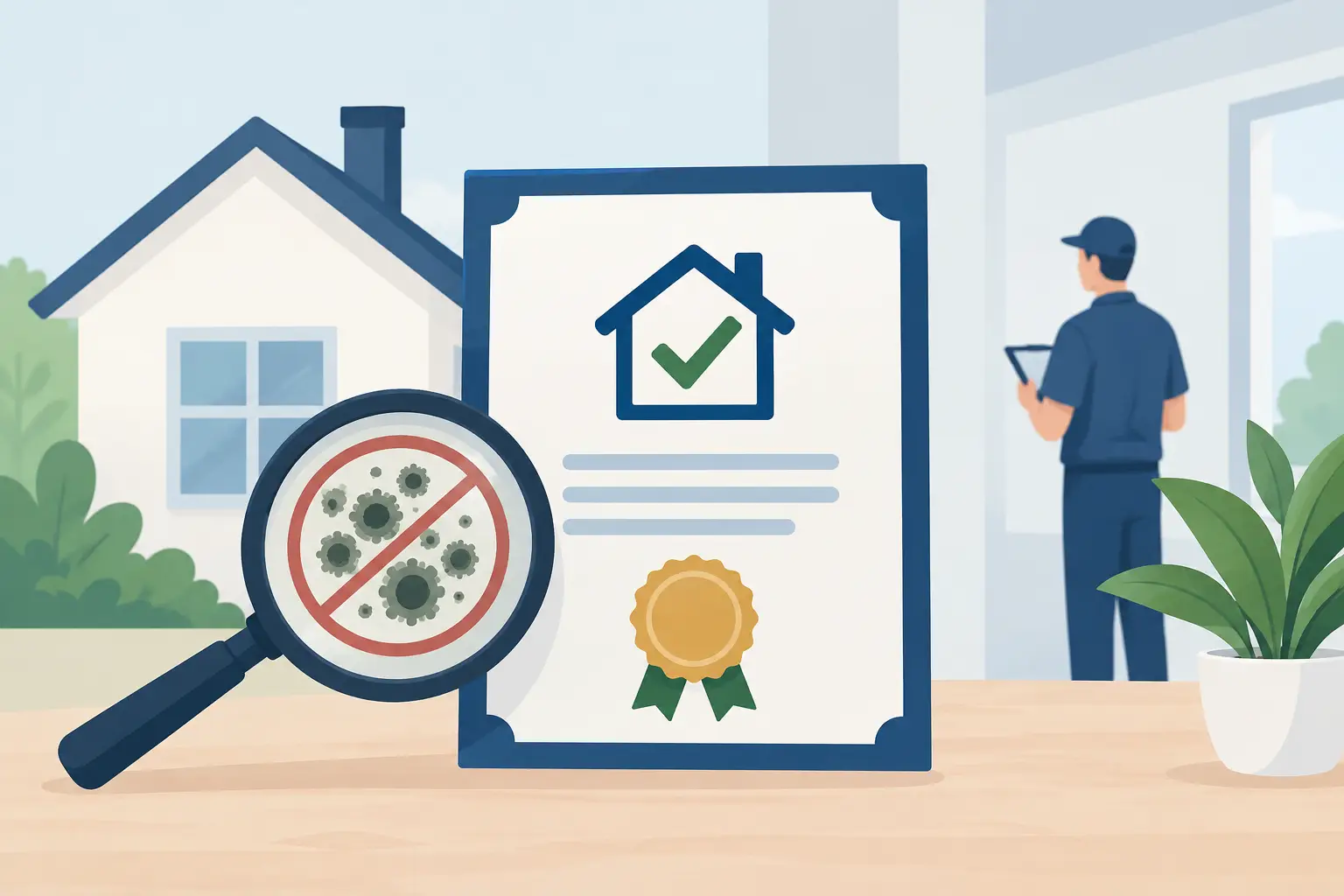
A mold removal project is not finished when the visible staining is gone. It is finished when the affected area has been properly cleaned, dried, repaired, and evaluated. A mold clearance certificate gives homeowners, landlords, and property managers documented evidence that a remediated area met the agreed-upon clearance criteria after the work was completed.
For homes in Morris, Sussex, Warren, Somerset, and surrounding New Jersey counties, this final step matters. Basement humidity, roof leaks, plumbing failures, stormwater intrusion, and damp crawl spaces can all create conditions where mold returns if the moisture source was not corrected. Clearance testing helps confirm that remediation addressed more than what was visible on the wall or ceiling.
What Is a Mold Clearance Certificate?
A mold clearance certificate is a document issued after post-remediation verification. Depending on the scope of the job and the assessment method used, it may also be called a clearance report, post-remediation verification report, or final clearance documentation.
It should not be confused with the initial mold inspection report. The initial inspection identifies suspected moisture issues, visible conditions, and potential mold growth. Clearance happens later, after containment, removal, cleaning, drying, and necessary repairs have been completed.
The document typically records the property area evaluated, the date of the assessment, the methods used, observations from the final visual inspection, and any air or surface sampling results. Most importantly, it states whether the remediated area passed the defined clearance criteria or whether more work is needed.
A certificate is not a lifetime guarantee that mold can never grow again. No document can prevent a future pipe leak, roof failure, or flooding event. What it does provide is evidence that, at the time of the post-remediation assessment, the work area met acceptable conditions based on the inspection and testing performed.
Why Clearance Matters After Mold Remediation
Mold remediation is a controlled process, not simply a cleaning project. Porous materials with significant growth may need removal. Remaining structural surfaces may require detailed cleaning. Containment may be necessary to keep dust and spores from spreading into unaffected areas. The underlying moisture problem must also be corrected.
Without a final evaluation, property owners are left to judge the results by appearance or odor alone. That is not enough. Mold can remain inside wall cavities, beneath flooring, behind baseboards, or within HVAC-related dust if the work was incomplete or the source of moisture continues.
A professional clearance process can help verify that:
- visible debris, dust, and mold-related contamination have been removed from the work area;
- affected materials were handled appropriately and the area was cleaned to a satisfactory condition;
- moisture conditions are dry and stable enough to reduce the risk of immediate regrowth;
- containment has been removed only after the area was ready; and
- air or surface samples, when appropriate, support the visual findings.
For a family living with asthma, allergies, unexplained respiratory irritation, or a musty odor, that documentation provides reassurance based on evidence rather than assumptions. For landlords and property managers, it also creates a clear record of the steps taken to address a reported condition.
How Post-Remediation Clearance Is Performed
The right clearance approach depends on the size of the affected area, the type of materials involved, the history of water damage, and the occupants’ concerns. A small, isolated issue may require a more limited assessment than a basement affected by repeated flooding or a large plumbing leak that spread through multiple rooms.
Visual and Moisture Inspection
Clearance begins with a detailed visual inspection. The assessor looks for remaining dust, debris, staining, damaged materials, visible growth, or signs that the work area was not fully cleaned. They also evaluate whether the original moisture source was corrected.
Moisture measurements are especially important in New Jersey basements, crawl spaces, and areas affected by storm damage. If framing, drywall, subflooring, or other materials remain wet, the risk has not been resolved even if the room looks clean. Drying must be confirmed before the project can be considered complete.
Air and Surface Sampling When Needed
Air sampling can compare conditions in the remediated area with an appropriate outdoor or indoor reference sample. Surface sampling may be used when there is a specific concern about a material or location. These tests are useful tools, but they must be interpreted in context.
There is no single air-sample number that automatically proves every home is safe or unsafe. Mold levels vary with weather, ventilation, outdoor conditions, cleaning activity, and the types of spores present. A qualified professional reviews the sampling data alongside the visual inspection, moisture findings, and the scope of remediation.
That is why clearance should not rely on a single test kit or a single air sample alone. Testing is most meaningful when it supports a thorough inspection and a properly documented remediation process.
Who Should Issue the Mold Clearance Certificate?
For the strongest level of confidence, the party performing post-remediation verification should be qualified to assess the work objectively. In many situations, homeowners prefer an independent mold assessor or testing professional rather than relying solely on the company that performed the remediation.
This separation can reduce conflicts of interest. The remediation contractor is responsible for completing the work correctly. The independent assessor evaluates whether the completed work meets the established clearance criteria. On smaller projects, the same provider may offer both services, but property owners should understand who is evaluating the outcome and what standards are being applied.
Before remediation begins, ask how clearance will be handled. A professional scope should identify the affected areas, the planned remediation methods, the source of moisture, and the conditions that must be met before the project is considered complete. Clear expectations prevent confusion when it is time for final verification.
When New Jersey Property Owners Should Request Clearance
A mold clearance certificate is particularly valuable after a large or complex mold project. This includes contamination caused by flooding, a long-term plumbing leak, sewage-related water damage, roof leaks that affected insulation or ceilings, or growth inside wall cavities and HVAC-adjacent areas.
It is also a smart step when a home is being sold, a rental unit is being returned to service, or a tenant complaint has led to remediation. Documentation can help show that the property owner took the issue seriously and followed a professional process.
Clearance is especially worth considering when vulnerable occupants are involved. Households with young children, older adults, immune-compromised individuals, or people with respiratory sensitivities often need a higher degree of certainty before reoccupying an affected area.
For very small, isolated surface issues, a formal certificate may not always be necessary. It depends on the material affected, how long moisture was present, whether there is a recurring odor, and whether the source of water is clearly resolved. When there is doubt, a professional inspection is the safer decision.
What a Clearance Report Cannot Tell You
A passing clearance result is valuable, but it has limits. It does not mean the entire property has been inspected unless the report specifically says so. It does not confirm conditions behind every unopened wall, under every floor, or in every room outside the defined work area.
It also does not eliminate the need for ongoing moisture control. Keep basement humidity in check, repair leaks promptly, maintain gutters and drainage, and watch for condensation around windows, pipes, and HVAC equipment. Northern and Central New Jersey homes often face seasonal humidity swings and storm-related water intrusion that can restart the mold cycle if ignored.
Read the report carefully. A useful document identifies the areas assessed and explains the basis for the clearance decision. Vague language without inspection details, moisture findings, or sampling information may not provide the protection you expect.
Make the Final Step Count
When mold remediation is necessary, the goal is not simply to make a room look better. The goal is to correct the moisture problem, remove contamination appropriately, and confirm that the affected area is ready for normal use. A properly performed mold clearance certificate gives you a defensible record of that final step.
If your New Jersey home has experienced water damage, persistent odors, visible mold, or a remediation project that needs independent verification, treat clearance as part of the solution, not an optional afterthought. Clear documentation and professional evaluation can protect your family, your property, and your confidence in the work completed.
Leave a Reply