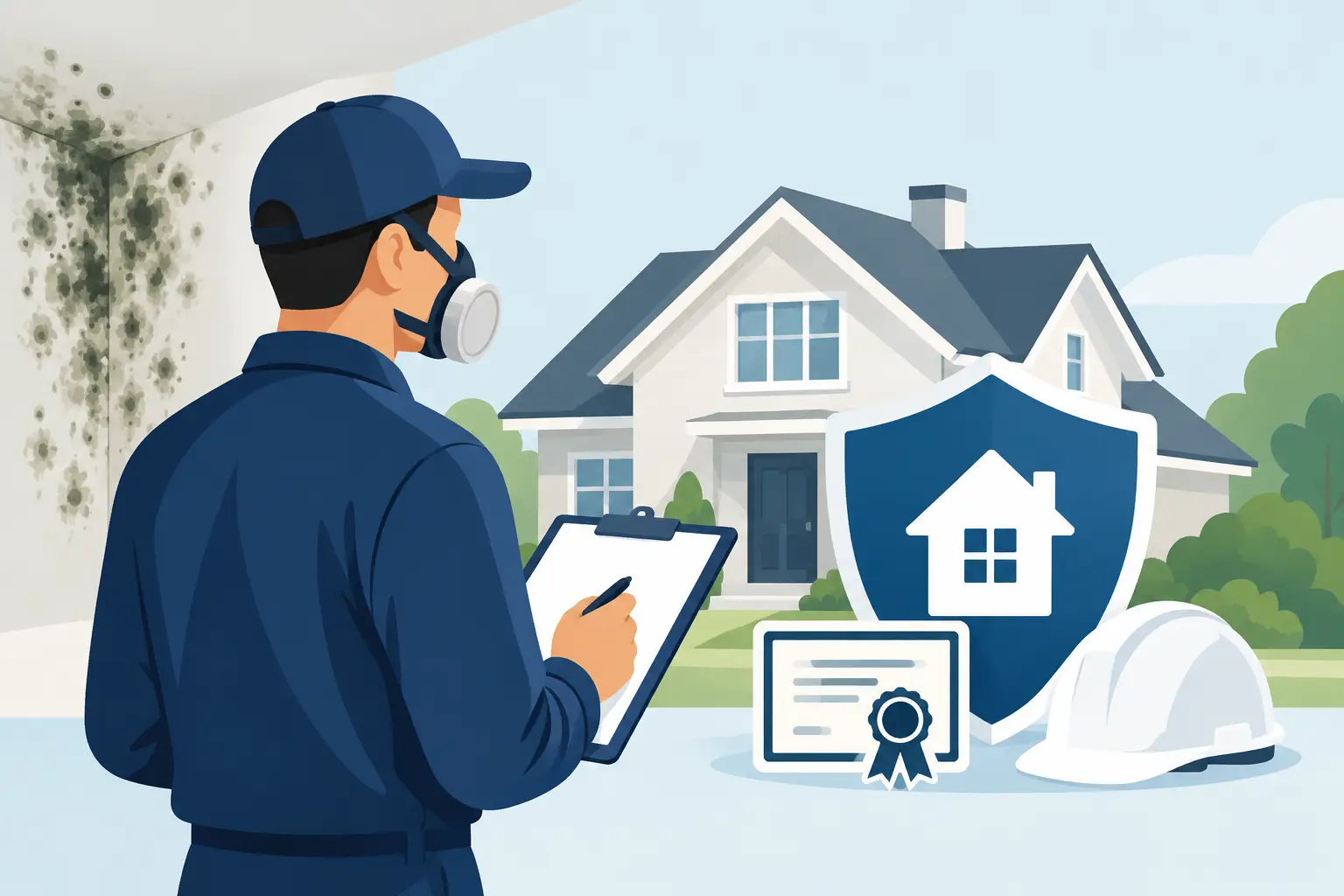
A contractor’s truck, website, or promise to “kill mold” does not prove that the work will protect your home. When moisture has affected drywall, framing, insulation, carpeting, or your indoor air, mold contractor credentials are one of the clearest ways to separate a qualified professional from someone offering a quick cleanup.
For New Jersey homeowners, that distinction matters. Basements in Morris, Sussex, Warren, and Somerset counties often face seasonal humidity, foundation seepage, plumbing leaks, and storm-related water intrusion. Mold can return if the moisture source is missed, if contaminated materials are handled improperly, or if the cleanup stops at what is visible.
Why Mold Contractor Credentials Matter
Mold remediation is not simply a cleaning service. Proper work starts with identifying the source of moisture, defining the affected area, preventing cross-contamination, removing or cleaning materials appropriately, and confirming that the conditions supporting mold growth have been corrected.
Credentials indicate that a contractor has received training in those processes. They do not guarantee perfect work by themselves, but they give you a meaningful starting point for evaluating whether a company understands containment, personal protective equipment, HEPA filtration, drying principles, and post-remediation verification.
A qualified contractor should also be able to explain the plan in plain language. If a company cannot tell you why a wall needs containment, why certain materials must be removed, or how it will address the leak behind the damage, that is a warning sign regardless of the certificate displayed on its website.
Credentials to Look for in a Mold Professional
There is no single credential that makes every mold contractor equally qualified for every type of property damage. The right qualifications depend on whether you need an inspection, testing, remediation, water-damage drying, or a combination of services. Still, several categories are worth asking about.
Industry training and remediation certification
Look for documented education from a recognized mold, restoration, or indoor environmental training organization. Certifications from groups such as the Institute of Inspection, Cleaning and Restoration Certification (IICRC), the American Council for Accredited Certification (ACAC), or other established training bodies can show that a technician has completed coursework and examinations related to mold assessment or remediation.
Ask what the credential specifically covers. A certification in water restoration is valuable after a flooded basement, but it is not identical to training in mold assessment or mold remediation. Likewise, a company may have a certified owner while sending untrained laborers to perform the work. Ask who will be on site, what training the crew has received, and who will supervise the project.
Appropriate insurance coverage
Insurance is a practical credential that homeowners sometimes overlook. Request proof of general liability insurance and workers’ compensation coverage. Mold work can involve demolition, containment barriers, equipment, and work in tight crawlspaces or finished living areas. If an injury or accidental property damage occurs, you do not want uncertainty about who is responsible.
Be direct when reviewing coverage. Ask whether the policy applies to the type of work proposed and whether the contractor can provide current documentation before work begins. A reputable company should expect this question.
State and local business requirements
New Jersey requirements can differ based on the scope of work. Mold remediation may involve related construction, plumbing, electrical, asbestos, lead, or waste-handling considerations, particularly in older homes. A contractor may need additional registrations, trade licenses, or permits when the project extends beyond cleaning and removal.
Ask the company which requirements apply to your project and who will obtain permits when needed. You can also confirm current New Jersey and municipal requirements independently, since regulations and local enforcement practices can change. Credentials should match the actual work being performed, not just the word “mold” in the company name.
Sampling and assessment expertise
Testing is not needed in every situation. If visible mold is present and the moisture source is clear, the priority may be correcting the water problem and planning safe remediation. Testing becomes more useful when there is a persistent musty odor, hidden contamination is suspected, occupants are experiencing concerns, the extent of damage is unclear, or documentation is needed for a landlord, tenant, buyer, seller, or insurance matter.
When testing is appropriate, ask about the professional’s sampling methods and interpretation process. Air samples, surface samples, moisture readings, and visual inspection each provide different information. A lab report without a knowledgeable explanation can create more confusion than confidence.
Inspection, Testing, and Remediation Should Have Clear Roles
One of the most important questions is whether the same company will inspect, test, write the remediation plan, perform the remediation, and provide clearance testing. This arrangement can be convenient, but it can also create a conflict of interest when the company that recommends a large project is also paid to perform it.
There is no universal rule that one company can never provide more than one service. Smaller, straightforward jobs may be handled efficiently by a qualified remediation provider. However, for extensive contamination, real estate disputes, health-sensitive occupants, insurance claims, or a project involving multiple rooms, independent assessment and post-remediation verification can provide stronger documentation.
An independent mold inspector can identify likely moisture pathways, recommend the scope of work, and collect samples when warranted. After remediation, an independent professional can inspect the work area and assess whether containment was removed appropriately, visible dust and debris are absent, moisture conditions are acceptable, and testing is appropriate for the circumstances.
The key is transparency. A trustworthy contractor should explain its role, disclose whether it benefits from the recommended scope, and welcome reasonable third-party verification.
Questions to Ask Before You Hire
Credentials are useful only if they translate into a sound work plan. Before approving an estimate, ask the contractor how it determined the scope of damage and how it plans to protect unaffected areas of the home. You should receive clear answers about containment, air filtration, removal of damaged porous materials, cleaning methods, and disposal.
Ask what moisture issue caused the mold and how it will be corrected. A remediation company may not perform plumbing or foundation repairs, but it should identify the need for them. Cleaning mold from a basement wall without addressing recurring seepage, a failed sump pump, or high indoor humidity is not a lasting solution.
Also ask whether the estimate is written and itemized. The proposal should identify the affected spaces, materials to be removed or cleaned, equipment to be used, any exclusions, and the expected project sequence. Vague estimates that promise to “treat the area” make it difficult to compare companies or hold anyone accountable.
Finally, ask how the contractor determines that the job is complete. “The smell is gone” is not a sufficient standard. Completion should be based on corrected moisture conditions, proper cleanup, a visual inspection, and, when the situation calls for it, post-remediation testing or clearance documentation.
Red Flags That Credentials May Be Misleading
Be cautious when a contractor relies on fear instead of evidence. Statements that every spot of mold requires a whole-house treatment, expensive chemical fogging, or immediate demolition without an inspection should be examined carefully. Mold can be serious, but the proper response depends on the moisture source, material affected, size of the area, and whether contamination may have spread beyond what is visible.
Other warning signs include refusing to provide insurance information, pressuring you to sign immediately, offering a price without inspecting the property, or dismissing questions about containment and cleanup. Be equally cautious of companies that promise to “pass” any mold test. Testing should provide objective information, not a guaranteed sales result.
A contractor should never treat credentials as a substitute for investigation. New Jersey homes vary widely, from older stone-basement properties to newer construction with concealed plumbing failures. The plan should fit your home’s actual conditions.
Choosing Mold Contractor Credentials With Confidence
The best decision usually comes from looking at the full picture: relevant training, current insurance, clear scope of work, moisture-control knowledge, and a willingness to explain the process. References and documented experience with homes similar to yours add useful context, especially after basement flooding, roof leaks, or long-term humidity issues.
If you have a musty odor, visible growth, recent water damage, or concerns about hidden mold, start with a professional evaluation rather than a rushed cleanup. A careful inspection can identify what is affected, what is not, and whether testing or independent clearance is warranted. That clarity helps protect your family, your property, and the value of the work you pay for.
Leave a Reply