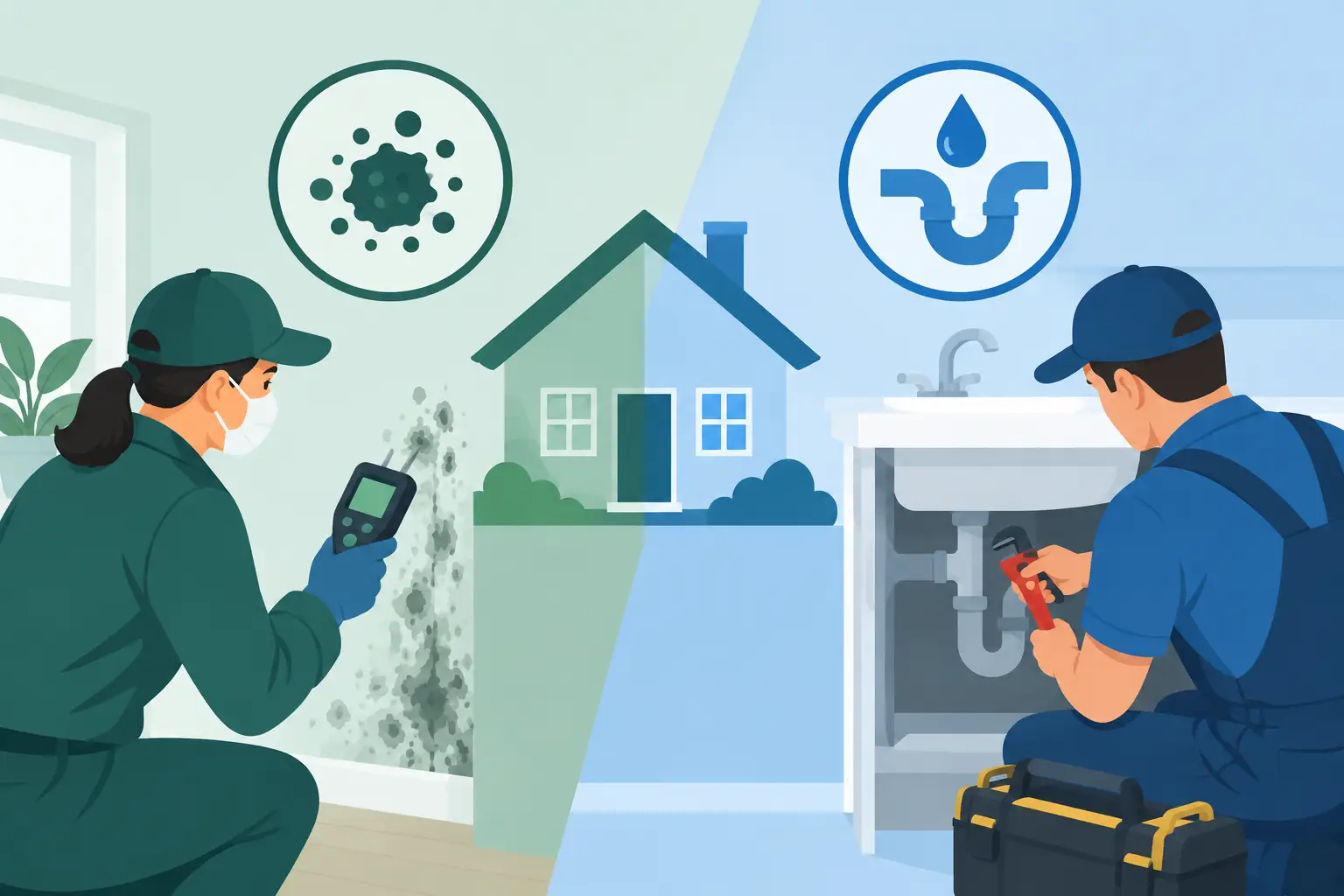
A water stain spreads below the upstairs bathroom. The basement has a musty odor after heavy rain. You can see dark spotting around a pipe connection. In situations like these, deciding between a mold inspector versus plumber is not always straightforward – and calling the wrong professional first can delay the real solution.
For New Jersey homeowners, landlords, and property managers, the answer often depends on one question: Is there an active plumbing failure, or is there evidence that moisture has already created a mold problem? A plumber and a certified mold professional serve different but closely connected purposes. One stops the water source. The other determines whether that water has affected indoor air quality, building materials, or the safety of the property.
Mold Inspector Versus Plumber: The Core Difference
A plumber diagnoses and repairs plumbing-related water problems. That may include leaking supply lines, failed fixtures, clogged drains, sewer backups, broken pipes, water heater leaks, and faulty sump pump connections. Their role is to restore the plumbing system and stop active water from entering the home.
A mold inspector evaluates the conditions created by that water. The inspection looks beyond what is visible to identify moisture intrusion, hidden mold growth, affected materials, and possible airborne mold concerns. A qualified inspector may use moisture meters, thermal imaging, visual assessment, air sampling, surface sampling, and detailed documentation to determine the scope of the issue.
Put simply, a plumber fixes the cause when the cause is plumbing. A mold inspector determines the consequences when moisture has been present long enough to affect the structure or indoor environment.
Neither service replaces the other. A repaired pipe does not automatically mean the wall cavity, insulation, flooring, or surrounding framing is dry and free of mold. Likewise, mold testing cannot repair a leaking pipe. In many cases, the best result requires both professionals in the proper order.
Call a Plumber First for an Active Leak
If water is currently dripping, flowing, backing up, or damaging the property, contact a licensed plumber right away. Stopping the source is the immediate priority. Every additional hour of moisture can expand the affected area and increase the chance of mold growth.
Common situations that call for a plumber first include a burst pipe, leaking toilet supply line, failed water heater, overflowing drain, sewage backup, or an appliance line that is actively leaking. The plumber should identify the failed component, complete the repair, and explain what happened so you can document the event.
After the plumbing repair, do not assume the work is complete if water entered a wall, ceiling, cabinet, crawl space, basement, or finished flooring. Materials can hold moisture where it cannot be seen. Drywall, insulation, carpet padding, particleboard cabinets, and wood framing may remain damp after the visible leak is gone.
This is especially relevant in older Northern and Central New Jersey homes, where finished basements, enclosed utility spaces, aging plumbing, and prior renovations can make moisture paths difficult to trace.
Call a Mold Inspector When Moisture Has Been Hidden or Ongoing
A mold inspection should be a priority when there is a musty smell, visible discoloration, repeated moisture, unexplained respiratory irritation, or concern that water has been present behind finished materials. You do not need to see a large patch of mold to have a legitimate reason for professional assessment.
Mold can begin developing within 24 to 48 hours when moisture and organic materials are present. That does not mean every small leak creates a major contamination issue. A brief, contained leak that is dried immediately may require little more than repair and careful monitoring. The risk rises when the leak was concealed, repeated over days or weeks, or affected porous materials.
A certified mold inspector can help answer questions a plumber generally is not hired to investigate: Is there hidden moisture behind the wall? Has mold spread beneath flooring? Is the basement odor related to fungal growth or simply damp conditions? Are airborne mold levels elevated compared with outdoor conditions? Which materials can be cleaned, and which need controlled removal?
Testing is not a substitute for a thorough visual and moisture assessment. It is a tool used when professional interpretation will help confirm conditions, document findings, or guide a remediation plan. Air and surface samples should be collected and evaluated as part of a broader inspection process, not treated as a simple pass-or-fail test.
Warning signs that deserve mold assessment
Consider a professional mold inspection after plumbing repairs if you notice a persistent musty odor, bubbling paint, warped baseboards, soft drywall, recurring stains, condensation around pipes, or visible growth. The same applies if an area was wet for more than a day or two, especially if drying was incomplete.
Landlords and property stakeholders should also consider inspection when occupants report odors or symptoms tied to a particular room. Clear documentation can help establish the moisture source, affected areas, and appropriate next steps before a small problem becomes a larger dispute or repair expense.
When You May Need Both Professionals
The most common scenario is simple: the plumber stops the leak, then the mold professional evaluates the impact. But the order can change when there is no obvious active leak.
For example, a homeowner may notice mold under a kitchen sink but find no water dripping during a quick check. A mold inspector may identify elevated moisture in the cabinet base and wall, while a plumber traces the cause to a slow drain leak or failing connection that only leaks during use. In that case, inspection and plumbing diagnosis work together.
Another common New Jersey example involves a basement with a stale odor following storms. A plumber may be needed if a sump pump, drain line, or sewer connection is malfunctioning. However, the underlying issue may also involve foundation seepage, poor drainage, high humidity, or a prior flood event. A mold inspection can identify whether those conditions have led to concealed growth or contamination in finished basement materials.
If sewage has entered the home, treat the situation as more than a routine plumbing repair. Sewage is contaminated water and may require professional cleaning, removal of impacted porous materials, and careful moisture control. The visible water may be gone, but the health and sanitation concerns can remain.
Why a Plumbing Repair Is Not a Mold Clearance Test
It is reasonable to expect a plumber to repair a pipe correctly. It is not reasonable to expect that repair alone to verify the condition of every material exposed to water. Plumbers are trained to work on water supply, drainage, fixtures, and related systems. Mold professionals focus on moisture dynamics, contamination pathways, inspection methods, containment, and remediation standards.
A contractor may remove damaged drywall as part of a repair, but proper mold-related work requires attention to the full affected area. That can include protecting clean portions of the home, controlling dust, addressing hidden growth, drying materials to appropriate levels, and verifying that the source of moisture has been corrected.
For homeowners, the practical takeaway is to avoid covering up the evidence too soon. Painting over a stain, replacing a baseboard, or spraying a product on visible mold can make later assessment harder. It may also leave damp or contaminated materials behind the finished surface.
What to Do After You Find a Leak or Suspect Mold
First, stop active water if it is safe to do so. Shut off the local fixture valve or main water supply when appropriate, and call a plumber for active plumbing failures. Move belongings away from wet areas, but avoid disturbing visible mold or tearing open walls before the condition is evaluated.
Take clear photos of stains, wet materials, leaks, and damaged belongings. Note when you first noticed the problem, whether storms or plumbing events occurred, and any recurring odors. This information helps both the plumber and mold inspector understand the history of the issue.
If water affected a small, nonporous area and was cleaned and dried immediately, monitoring may be sufficient. If moisture was hidden, widespread, recurrent, or present for more than 24 to 48 hours, arrange a professional mold inspection. This is particularly important for basements, crawl spaces, bathrooms, laundry rooms, kitchens, and areas below bathrooms – all common moisture-prone locations in New Jersey homes.
Protect the Home by Addressing Both the Cause and the Damage
Choosing between a mold inspector and plumber is not about deciding which professional is more qualified. It is about assigning the right professional to the right part of the problem. The plumber stops the water. The mold inspector determines whether that moisture has created a larger indoor environmental concern.
When in doubt, handle an active leak immediately and seek a certified mold assessment when water damage, odors, staining, or hidden moisture are involved. Acting early protects your property, supports healthier indoor air, and gives you a clear plan before a manageable repair turns into a costly remediation project.
Leave a Reply