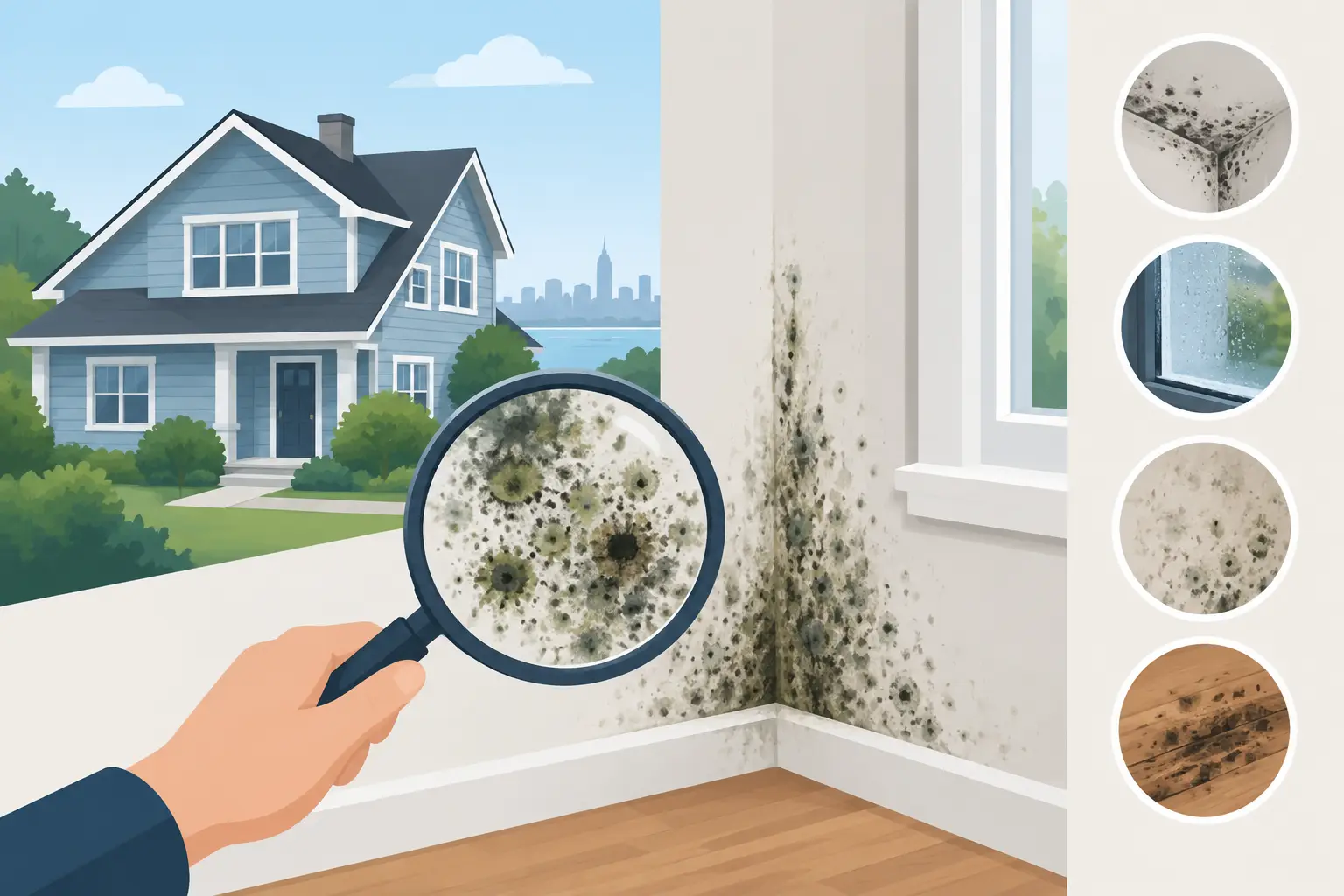
A basement that smells earthy after a rainy week, a ceiling stain that seems slightly larger than last month, or paint beginning to bubble near a window can be more than a maintenance nuisance. When homeowners search for top warning signs house mold, they usually need to know whether a moisture problem has become an indoor air quality and property-protection concern. In Northern and Central New Jersey, where humid summers, heavy rain, snowmelt, older foundations, and storm-related leaks are common, acting early can prevent a smaller issue from spreading behind walls, under flooring, or through HVAC components.
Mold needs moisture and a material to grow on. Drywall paper, wood framing, carpeting, insulation, dust, and stored belongings can all support growth after a leak, flood, condensation problem, or ongoing humidity issue. The visible patch is not always the full extent of the problem. A professional inspection helps identify the moisture source, evaluate concealed areas, and determine whether air or surface sampling is appropriate.
Top Warning Signs of Mold in a House
A persistent musty or earthy odor
A musty odor is often one of the first clues homeowners notice, particularly in basements, crawl spaces, attics, laundry rooms, and closets along exterior walls. The smell may be stronger after rain, when the air conditioner starts, or after a room has been closed for several days.
Odor alone does not prove the presence of mold. It can also come from damp building materials, drains, pet areas, or stored contents. Still, a persistent odor with no obvious explanation deserves a professional evaluation, especially if it returns after cleaning or ventilation. Masking it with air fresheners does not address the underlying moisture condition.
Visible spots, staining, or fuzzy growth
Mold can appear black, green, gray, white, brown, or orange. It may look powdery, fuzzy, slimy, or like scattered dark specks. But color is not a reliable way to identify a mold type or determine risk. What matters most is that unexpected growth or staining points to moisture where it should not be.
Look closely around window sills, bathroom ceilings, under sinks, behind furniture against outside walls, near water heaters, and along basement walls. Also check areas affected by roof leaks, overflowing gutters, appliance failures, or prior flooding. A surface that looks like ordinary dirt may require inspection when it reappears after cleaning or is paired with a damp odor.
Water stains, peeling paint, or bubbling drywall
Discoloration on a ceiling or wall often means water has traveled behind the finished surface. Yellow-brown rings, soft drywall, cracked joint compound, peeling paint, and blistering wallpaper can all indicate a current or previous leak. Even if the material feels dry today, hidden moisture may have supported mold growth during the leak.
A repaired roof or plumbing leak should not automatically be considered resolved if staining remains, odors persist, or the affected material was never opened and dried properly. Professional assessment can help distinguish a cosmetic stain from a condition that requires targeted removal and remediation.
Dampness, condensation, and high humidity
Condensation on windows, cold-water pipes, ductwork, or basement walls is a warning that indoor moisture is not being controlled. In New Jersey homes, this is especially common during humid summer weather and in partially finished basements where cool surfaces meet moist indoor air.
Repeated condensation can wet nearby drywall, insulation, wood, and flooring. A dehumidifier may help manage humidity, but it is not a substitute for correcting a foundation seepage issue, poor grading, plumbing leak, inadequate ventilation, or improperly insulated surface. The right solution depends on where the moisture originates and how long materials have been wet.
Recent leaks, flooding, or storm damage
Not every mold problem is immediately visible after a water event. Water can move under laminate flooring, into wall cavities, beneath cabinets, and behind baseboards. A dishwasher supply line leak, frozen pipe, failed sump pump, roof damage, or basement flood can create conditions for hidden growth if materials are not dried quickly and thoroughly.
Homeowners should treat a water event as a reason to inspect, not merely a reason to clean up visible water. Photograph damage, identify the source, and watch affected spaces for odor, staining, swelling, or changes in materials. When porous materials have remained wet or the scope is uncertain, certified mold testing and inspection provide a clearer basis for next steps.
Warped floors, swollen trim, or deteriorating materials
Wood floors that cup, baseboards that swell, cabinets that separate from walls, and drywall that becomes soft or crumbly all point to prolonged moisture exposure. These signs do not confirm mold by themselves, but they show that the building materials have been affected enough to warrant attention.
Do not assume the issue is limited to what you can see. Water often follows gravity and framing paths, so damage in one room may originate from plumbing, roof intrusion, or exterior drainage elsewhere. A trained inspector can evaluate likely moisture pathways rather than relying on surface appearance alone.
Symptoms that seem tied to a specific space
Some occupants report irritated eyes, coughing, congestion, headaches, or worsening allergy-like discomfort in a particular room or after time in a damp building. These symptoms have many possible causes, including dust, pets, seasonal allergens, cleaning products, and ventilation problems. They should not be used to diagnose mold.
However, when health concerns occur alongside musty odors, visible growth, or known water damage, the property should be assessed promptly. A qualified mold professional can document environmental conditions and recommend an appropriate scope of work. Occupants with significant or ongoing health concerns should also speak with a licensed healthcare provider.
Where New Jersey Homeowners Should Look First
Basements deserve particular attention because they are vulnerable to foundation seepage, sump pump failures, high humidity, and poor airflow. Check finished basement walls, carpeting, stored boxes, rim joists, and the areas behind furniture. If the basement has a persistent damp smell, visible growth may be concealed behind finished materials.
Attics are another overlooked area. Roof leaks, bathroom exhaust vents that terminate improperly, and inadequate attic ventilation can introduce moisture. Look for staining on roof sheathing, wet insulation, or darkened wood near vents and penetrations.
Bathrooms, kitchens, laundry areas, and utility rooms should be checked around plumbing connections and exhaust systems. In rental properties, landlords should take resident reports of leaks and odors seriously. Quick documentation and professional investigation can protect occupants while limiting structural damage and future repair costs.
Why DIY Cleanup Can Miss the Real Problem
A small amount of surface growth on a nonporous material may appear easy to clean. The concern is not just what is on the surface. If moisture remains, if drywall or insulation has been affected, or if the contamination is more extensive than it appears, wiping the area can leave the underlying condition untouched.
Bleach, paint, fragrances, and household cleaners can create a false sense of resolution. Painting over a stained wall does not dry the cavity behind it, and removing a visible spot does not identify whether spores or contamination have spread to adjacent materials. Disturbing larger areas without containment can also distribute debris into other parts of the home.
Professional remediation is based on correcting the moisture source, establishing appropriate containment when needed, removing affected materials safely, cleaning remaining structural surfaces, and verifying that the work addresses the identified conditions. Testing can be useful before or after work when it answers a specific question, but results must be interpreted alongside a visual inspection and moisture assessment.
When to Schedule a Professional Mold Inspection
Schedule an inspection when there is visible suspected mold, a recurring musty odor, a history of flooding or leaks, unexplained moisture damage, or concern that growth is hidden behind finished surfaces. This is also prudent before buying or selling a home with water-damage history, and after a major storm event that affected the roof, basement, or exterior envelope.
For homeowners in Morris, Sussex, Warren, Somerset, and nearby New Jersey counties, local weather and housing conditions make moisture control an ongoing responsibility. A certified inspection can identify whether the concern is active, locate likely sources, and provide a documented remediation plan based on the property rather than guesswork.
The most useful next step is not to wait for a small odor or stain to become a major renovation. Protect the home by documenting what you see, limiting additional moisture, and getting qualified guidance while the affected area is still manageable.
Leave a Reply