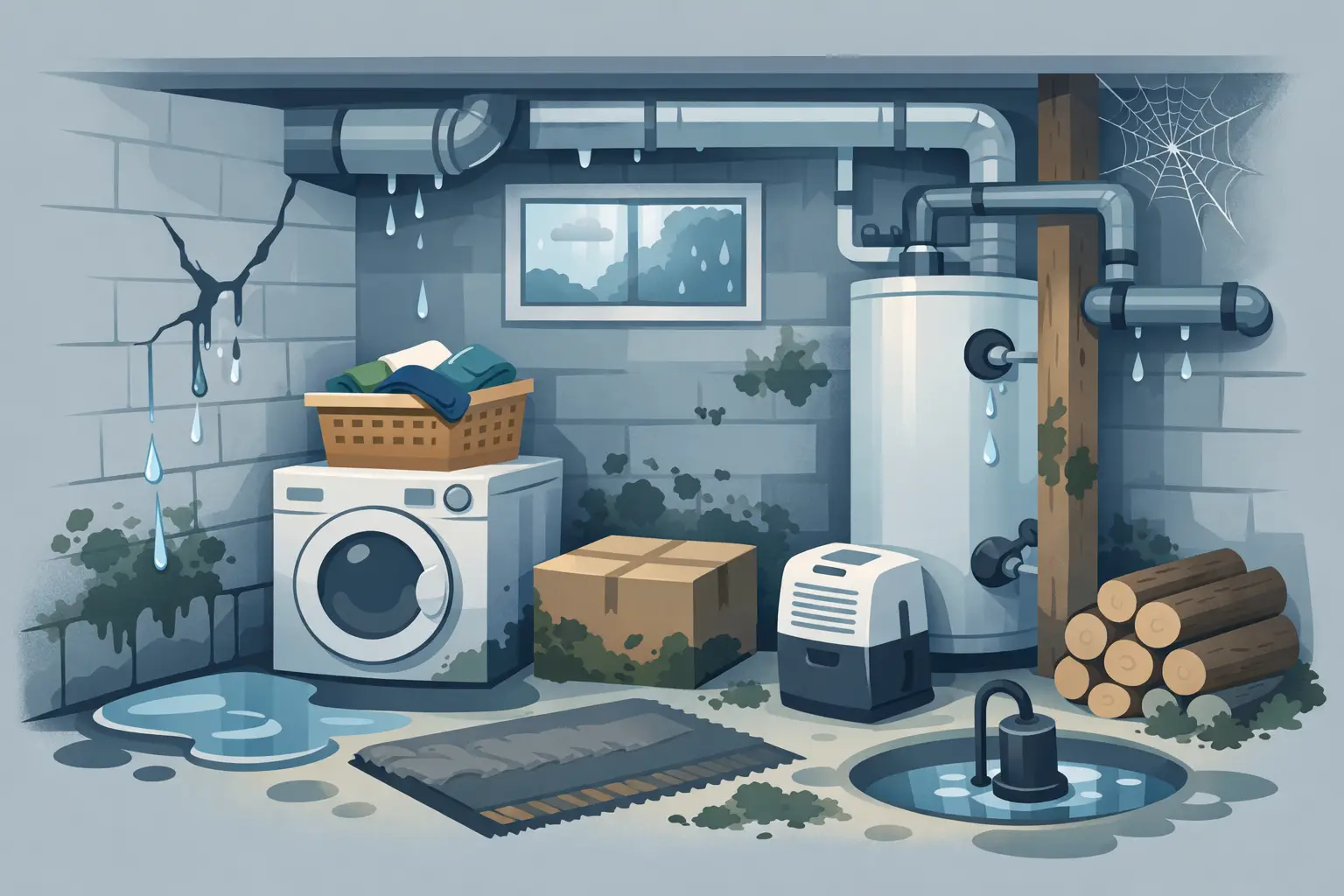
A basement can look clean, feel cool, and still support mold growth behind finished walls, beneath flooring, or around stored belongings. Understanding what causes mold in basements starts with one fact: mold needs moisture. When water, humidity, or condensation remains available long enough, common building materials such as drywall, wood framing, carpet backing, cardboard, and insulation can become a food source.
For homeowners and property managers across Northern and Central New Jersey, basement mold is especially common after heavy rain, foundation leaks, plumbing failures, and humid summer weather. The visible growth is only part of the concern. A persistent musty odor, recurring dampness, or water staining can point to a hidden moisture condition that deserves a professional assessment.
What Causes Mold in Basements?
Mold spores are naturally present indoors and outdoors. They become a property problem when moisture allows them to settle and grow on organic materials. In a basement, that moisture can come from several directions at once: through the foundation, from the air, from plumbing, or from a one-time water event that was never fully dried.
The challenge is that basements often have limited airflow and lower temperatures than the rest of the house. Those conditions slow drying and make it easier for moisture to remain trapped. A dehumidifier may improve the symptoms, but it will not correct a foundation crack, an active leak, wet insulation, or contaminated materials hidden inside a wall cavity.
1. Foundation Water Intrusion
Groundwater and surface water are among the most common sources of basement moisture in New Jersey homes. Rainwater can enter through foundation cracks, gaps around utility penetrations, deteriorated masonry, window wells, or a failed waterproofing system. Homes in areas with sloped lots, high water tables, or older foundations may be more vulnerable.
Even a small amount of seepage matters when it occurs repeatedly. Water that appears only after a storm can soak into baseboards, flooring edges, framing, or stored items before it evaporates. Over time, this creates the damp conditions mold needs.
Poor exterior drainage often makes the situation worse. Clogged gutters, downspouts that discharge too close to the foundation, and grading that directs water toward the home can keep soil saturated beside basement walls. The source may be outside, while the mold growth appears indoors weeks or months later.
2. High Indoor Humidity and Condensation
A basement does not need a leak to develop mold. During New Jersey’s humid months, warm, moisture-heavy outdoor air can enter a cool basement and condense on cold surfaces. Pipes, foundation walls, metal ducts, and concrete floors are frequent condensation points.
Humidity above roughly 60 percent creates a more favorable environment for mold growth, particularly in basements with poor ventilation. Condensation may look minor – a damp pipe, droplets on ductwork, or a clammy wall – but repeated moisture can affect nearby drywall, insulation, and wood.
This is why opening basement windows is not always the right answer in summer. It can bring more humid air inside. Mechanical dehumidification and properly managed HVAC airflow may help control humidity, but the best approach depends on whether the issue is seasonal humidity, groundwater intrusion, or both.
3. Plumbing Leaks Behind Walls or Ceilings
Basements often contain water heaters, washing machines, utility sinks, supply lines, drainpipes, and HVAC equipment. A slow plumbing leak can go unnoticed for a long time, particularly behind finished walls or above a drop ceiling.
Unlike a major burst pipe, slow leaks may not create an obvious flood. Instead, they cause staining, peeling paint, soft drywall, warped trim, or a musty smell that gradually intensifies. Mold can grow on the back side of drywall or within insulation before it becomes visible in the room.
Pay close attention to plumbing joints, appliance hoses, water heater connections, and ceilings beneath bathrooms or kitchens. If a leak is suspected, it should be repaired promptly, and affected building materials should be evaluated for retained moisture and contamination.
4. Flooding, Storm Damage, and Sump Pump Failures
A flooded basement can create mold conditions quickly if materials are not dried correctly. Severe rain, overflowing window wells, sewer backups, broken pipes, and sump pump failures can introduce a significant amount of water in a short period.
The first 24 to 48 hours after a water event are critical. Porous materials may absorb water rapidly, and hidden moisture can remain even after standing water is removed. Carpet padding, drywall, insulation, upholstered furniture, and cardboard boxes are especially difficult to dry completely.
Not all water damage carries the same risk. Clean water from a supply line is handled differently from water affected by sewage, storm runoff, or a drain backup. When the water source is contaminated, professional remediation is particularly important because the concern extends beyond mold to bacteria and other harmful contaminants.
5. Wet or Damp Building Materials
Many basement mold problems begin during or after finishing work. Installing drywall, flooring, or insulation against a damp foundation can trap moisture where it cannot dry. Wood framing placed near wet masonry, carpet installed over a slab with vapor transmission, or improperly insulated walls can all contribute to concealed mold growth.
Finished basements require special attention because visible surfaces can hide significant conditions behind them. A newly painted wall may conceal old water staining. Vinyl flooring may cover a damp concrete slab. A strong musty odor in an otherwise finished space is a reason to investigate, not simply add fragrance or repaint.
A certified mold inspection can help identify where moisture is coming from and whether invasive investigation is warranted. The goal is not to remove materials unnecessarily. It is to locate the extent of the problem so remediation addresses both the contamination and the underlying moisture source.
6. Poor Ventilation and Limited Airflow
Basements are often closed off from the rest of the home. Storage areas, utility rooms, closets, and finished rooms with few returns or supply vents can hold damp air for extended periods. Furniture or boxes placed tightly against exterior walls may further reduce airflow and create cool, stagnant pockets.
Ventilation alone does not solve a water intrusion issue, but limited airflow can allow damp materials to stay wet longer. This is why mold is frequently found behind shelving, under stored belongings, around exterior-wall closets, and beneath basement carpeting.
Avoid storing cardboard directly on the floor or against foundation walls. Use shelving that keeps belongings elevated and allows air to move behind them. This will not prevent mold if the basement is actively wet, but it can reduce damage and make early warning signs easier to spot.
7. HVAC and Appliance Moisture Problems
Air conditioning systems, high-efficiency furnaces, humidifiers, and dehumidifiers all create or manage moisture. When a condensate line clogs, a drain pan overflows, or ductwork sweats, water can accumulate near building materials without immediate notice.
Inspect HVAC equipment for standing water, rust, staining, and drainage problems. Condensation on uninsulated ducts may also indicate that humid air is reaching a cold surface. If mold is present near HVAC components, a qualified professional should assess the area carefully. Disturbing contaminated material near an air-handling system can spread particles through the home.
8. Previous Mold or Water Damage That Was Only Covered Up
Painting over stains, replacing a portion of drywall, or running a fan after a leak may make a basement look better without correcting the problem. Mold often returns because the material remained damp, the leak continued, or contamination behind a wall was never removed.
Recurring growth in the same area is a strong sign that the moisture source has not been resolved. It also means the visible spot may not represent the full extent of the issue. Professional inspection and, when appropriate, air and surface sampling can provide useful evidence about indoor conditions and help guide a proper remediation scope.
When Basement Mold Needs Professional Attention
Small, isolated surface growth can sometimes be addressed after the moisture source is corrected. However, homeowners should avoid treating a basement mold problem as cosmetic when there is a persistent odor, repeated growth, water-damaged drywall, a recent flood, visible growth over a larger area, or concern that mold is hidden behind finishes.
Professional mold testing is not a substitute for a thorough inspection, and testing is not necessary in every visible mold situation. Its value is greatest when the source is unclear, contamination may be concealed, occupants have health concerns, a property transaction requires documentation, or conditions need to be evaluated before and after remediation. Certified professionals can use moisture readings, visual assessment, thermal tools, and targeted sampling to form a defensible picture of what is happening.
Effective remediation requires more than spraying or wiping visible mold. The moisture source must be corrected, affected materials must be handled safely, and the work area may need containment to prevent cross-contamination. For New Jersey homeowners, acting early can protect indoor air quality, preserve finished basement materials, and limit a smaller moisture problem from becoming a larger remediation project.
If your basement smells musty after rain, shows new staining, or never seems to dry out, treat that condition as useful information from your home. A timely professional evaluation can identify the cause before the damage becomes harder and more expensive to correct.
Leave a Reply